

Palestinian Authority President Mahmoud Abbas is seriously considering relieving Prime Minister Mohammad Shtayyeh of his post, a senior Palestinian source said.
This news comes as conflicting reports have circulated about Shtayyeh’s political future.
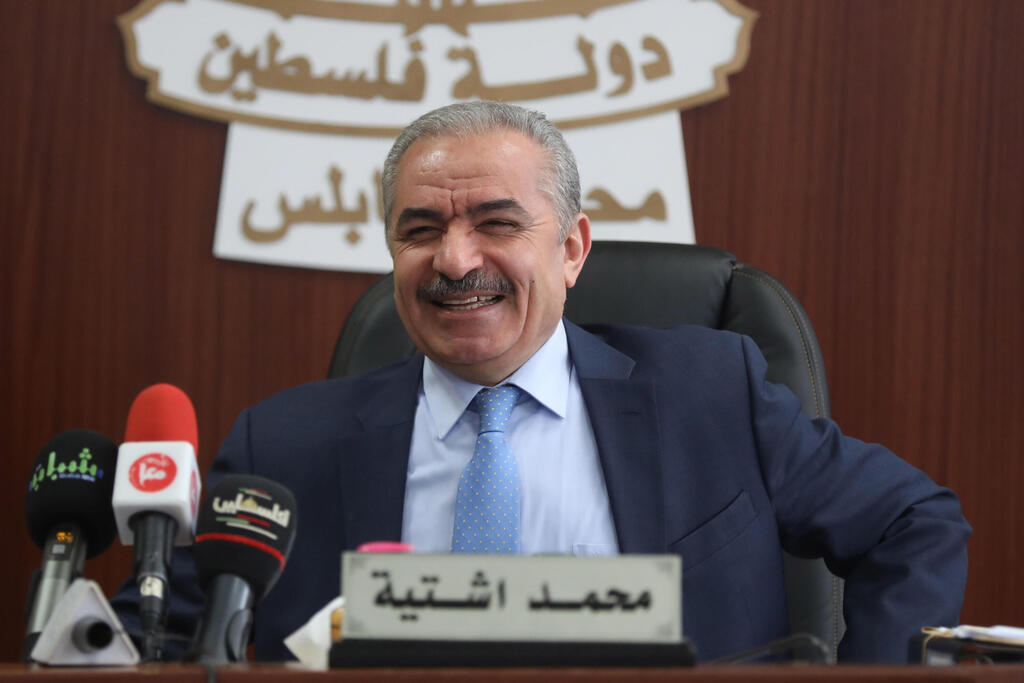
Shtayyeh was appointed prime minister in April 2019. His tenure in office has been marred by several crises, both internal and external, which have made it difficult for him to achieve many of his stated goals.
Ramallah-based political analyst Faris Sarafandi said that a discussion about Shtayyeh’s possible resignation can be divided into two parts.
“The first part is related to Shtayyeh, which is the state of failure that affected all aspects of government work, starting with the corona crisis, passing through the crisis of prisoners’ families whose salaries were cut off, and the current teacher crisis,” he explained.
Sarafandi says this is one of the reasons that the idea of dismissing Shtayyeh has moved to the forefront.
“But the other matter is related to internal conflict within Fatah, which resurfaced largely after the appointment of Hussein al-Sheikh as secretary of the Executive Committee of the Palestine Liberation Organization,” he said.
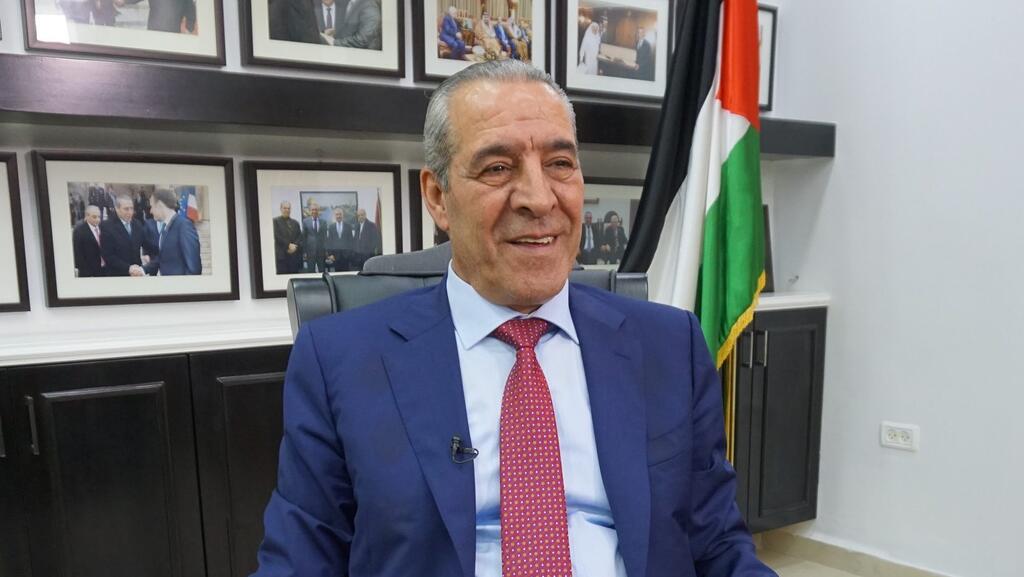
Palestinian Authority Civil Affairs Minister Hussein Al-Sheikh in his office in Ramallah
(Photo: The Media Line)
Al-Sheikh, who had been serving as Palestinian Authority minister of civil affairs, last week was appointed to the top PLO position, making him the frontrunner to succeed Abbas.
“It is quite clear that there are conflicts within the central committee of the Fatah movement that will affect Shtayyeh, and he will pay the price in an attempt to turn things around,” according to Sarafandi.
He says that the issue will not be limited to Shtayyeh’s dismissal but may mean the end of his “active” affiliation with Fatah, the political movement led by Abbas.
“The result of his failure as prime minister led to severe criticism of the movement which has paid the price for his policy,” Sarafandi said.
Fatah’s recent humiliating loss in student council elections at Birzeit University, where the Fatah candidate list lost to a Hamas landslide, led to public criticism of the PA by senior Fatah leaders who are demanding to separate the movement from the PA.
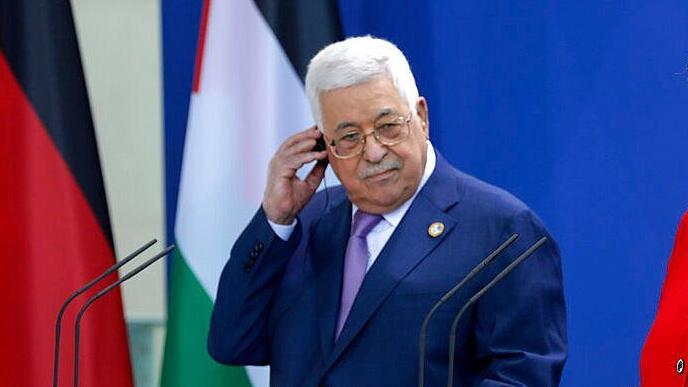
Palestinian President Mahmoud Abbas
(Photo: AP)
They argue that Abbas’ policies are the reason behind the demise of the once most popular Palestinian faction.
Ahmed Rafiq Awad, president of the Jerusalem Center for Future Studies at Al-Quds University, said that leaks about the possible forced resignation of Shtayyeh are “not surprising,” and that this reflects the state of conflict within the PA and the Fatah movement.
In light of the massive political and economic crises facing Shtayyeh, replacing him “will not change the situation,” Rafiq Awad asserted.
“Shtayyeh’s government has been exposed to many crises, bumps, and tests. He came to carry out economic reforms and put in place an economic plan to get out of the stifling financial crisis that the authority is going through due to the scarcity of financial resources. But the coronavirus pandemic and the lack of a political settlement with Israel put his government in a dilemma, and it became unable to perform its duties and meet the demands of the street,” he explained.
The PA is experiencing the worst financial difficulties since its establishment more than a quarter-century ago. The treasury is facing a severe cash crunch, and this could soon affect its ability to pay government salaries and conduct daily business.
Twice this year, Shtayyeh attended meetings with European Union officials in the hopes of persuading them to resume financial aid to the PA.
He urged donor countries to increase their aid so that the government can fulfill its obligations.
The European Union delayed transferring 214 million euros in annual aid to the PA, amid its contentious bid to condition the aid on removing what the EU calls incitement material from Palestinian schoolbooks, something the PA denies is contained in the books.
Most of the aid – some 150 million euros – is earmarked for the PA’s budget, including salaries, while the rest of the aid is for projects and support for various civil society organizations and infrastructure renovations.
“The cessation of American and European financial support also played a major role in the failure of the Shtayyeh government. All the major crises that occurred during his term; therefore, this government was not able to provide effective and satisfactory answers to the street,” according to Rafiq Awad.
The muscle behind attempts to force Shtayyeh out is the powerful al-Sheikh.
Abbas made the appointment of al-Sheikh as secretary-general of the PLO’s Executive Committee, succeeding the late Saeb Erekat, in a move many interpreted as bringing him one step closer to succeeding the 86-year-old Abbas.
Yoni Ben-Menachem, a senior researcher at the Jerusalem Center for Public Affairs, said that al-Sheikh is working with Abbas to prepare the atmosphere for replacing the prime minister.
Ben-Menachem insists that there will be a change because Shtayyeh has lost the trust of al-Sheikh and Palestinian Authority General Intelligence Service chief Maj. Gen. Majid Faraj, who are lobbying Abbas to have Shtayyeh replaced.
Ben-Menachem added that Shtayyeh has political ambitions to succeed Abbas and that this has “angered” al-Sheikh and others within Fatah.
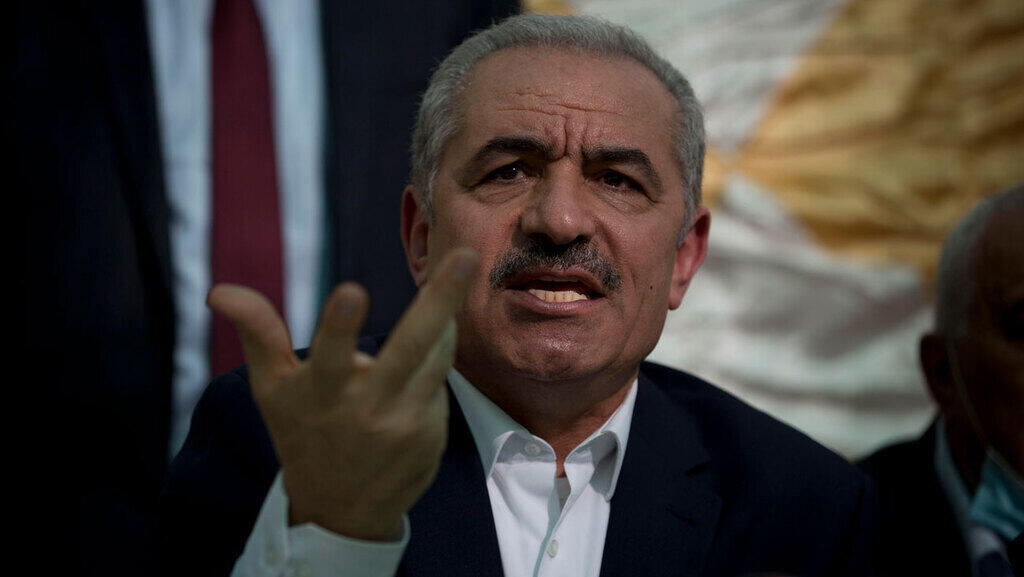
Palestinian Prime Minister Mohammad Shtayyeh
(Photo: AP)
Al-Sheikh enjoys a strong relationship with Abbas and is part of the president's inner circle.
“The presence of Shtayyeh in the government poses a threat to al-Sheikh’s ambitions to succeed Abbas,” Ben-Menachem said.
The race to replace Abbas is fierce and an attempt to replace Shtayyeh won’t be easy, since there is major resistance from within Fatah, the largest and ruling Palestinian party, which is going through internal conflicts.
“Al-Sheikh convinced Abu Mazen of his position and that Shtayyeh should be dismissed from the prime minister’s office,” Ben-Menachem said, using Abbas’ nom de guerre.
He says Shtayyeh met with Abbas recently to discuss his political future.
“Shtayyeh has a feeling and knows that a conspiracy is being hatched around him, so he met with Abu Mazen, but he does not want to support him and did not give him a clear answer about his position,” Ben-Menachem said.
Sources said that Abbas will offer Shtayyeh up as a scapegoat to US President Joe Biden and blame him for many things that concern the Americans, when Biden reportedly will make a visit to the region in a few weeks’ time.
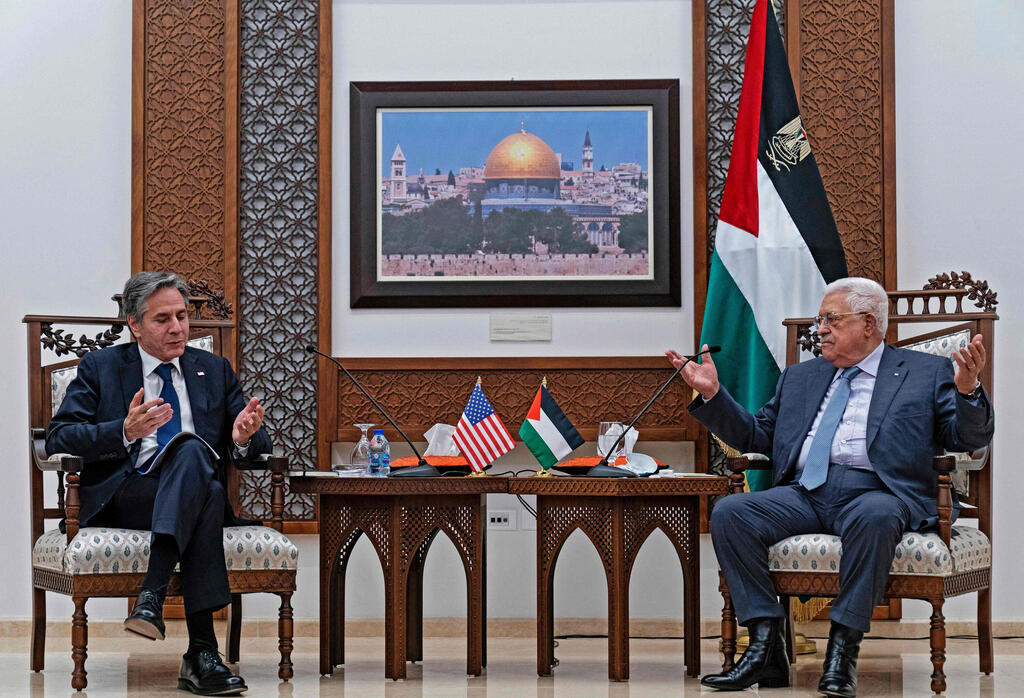
U.S. Secretary of State Antony Bliken meets with Palestinian President Mahmoud Abbas
(Photo: AFP)
Many analysts agree that Abbas and those around him in the PA, including al-Sheikh, are convinced that Shtayyeh must pay the price for the failures of the Fatah-led PA.
There has not been any real outside opposition to a forced resignation of Shtayyeh, including from Israel.
“There is no Israeli opposition to the dismissal of Shtayyeh,” said Ben-Menachem. “On the contrary, Israel does not like Shtayyeh because he constantly incites against it.”
Two names floated to replace Shtayyeh are former PA Prime Minister Salam Fayyad, and the former head of the Palestine Investment Fund, Mohammad Mustafa, who is close to Abbas.