

Former Iranian President Hassan Rouhani and his foreign minister, Mohammad Javad Zarif, tried to sideline Supreme Leader Ayatollah Ali Khamenei at the height of nationwide unrest but failed, according to a report in the French newspaper “Le Figaro.” The official who thwarted the effort, Ali Larijani, has since assumed sweeping authority and is described as effectively managing the country.
The report said the initiative took shape on the night of January 7-8, a day before protests peaked in a wave of unrest that saw thousands executed, according to opposition claims. Sources cited by “Le Figaro” said Rouhani led the effort alongside figures from his former administration, including Zarif, several clerics from the city of Qom and individuals linked to the Islamic Revolutionary Guard Corps.
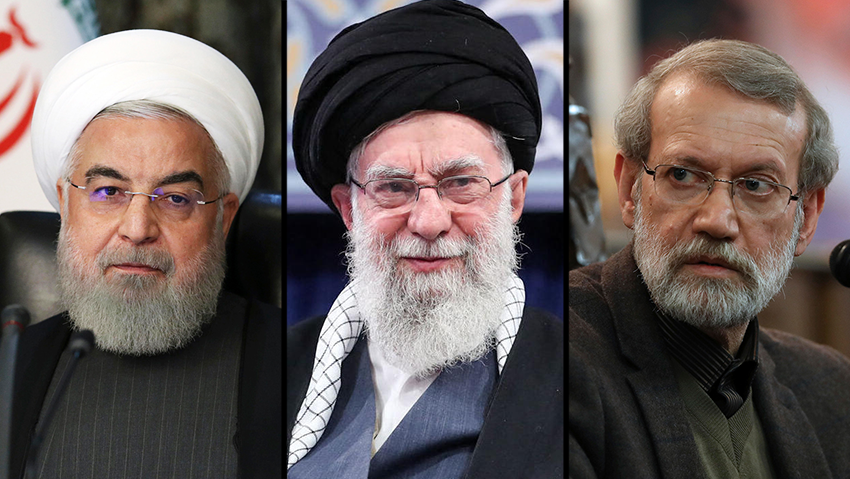
A source familiar with the matter told the newspaper the goal was to remove Khamenei from the decision-making process during the crisis.
The move reportedly collapsed because it lacked the support of Larijani, who was appointed in August as secretary of Iran’s Supreme National Security Council. President Masoud Pezeshkian was kept out of the discussions to prevent the plan from being exposed, the report said. After it was uncovered, Rouhani and Zarif were allegedly placed under several days of house arrest, and reformist figures close to them were temporarily detained.
The New York Times reported Sunday that Larijani, who blocked what was described as an internal coup attempt, was given responsibility for managing the state by Khamenei more than a month ago. Since then, the 67-year-old has effectively been running the country, sidelining Pezeshkian.
Larijani’s authority has expanded in recent months. He oversaw the crackdown on last month’s protests and is now working to contain remaining pockets of resistance. He also coordinates with Iran’s allies, including Russia, and regional states such as Qatar and Oman. In addition, he supervises nuclear negotiations with Washington and is said to be preparing contingency plans in the event of a war with the United States.
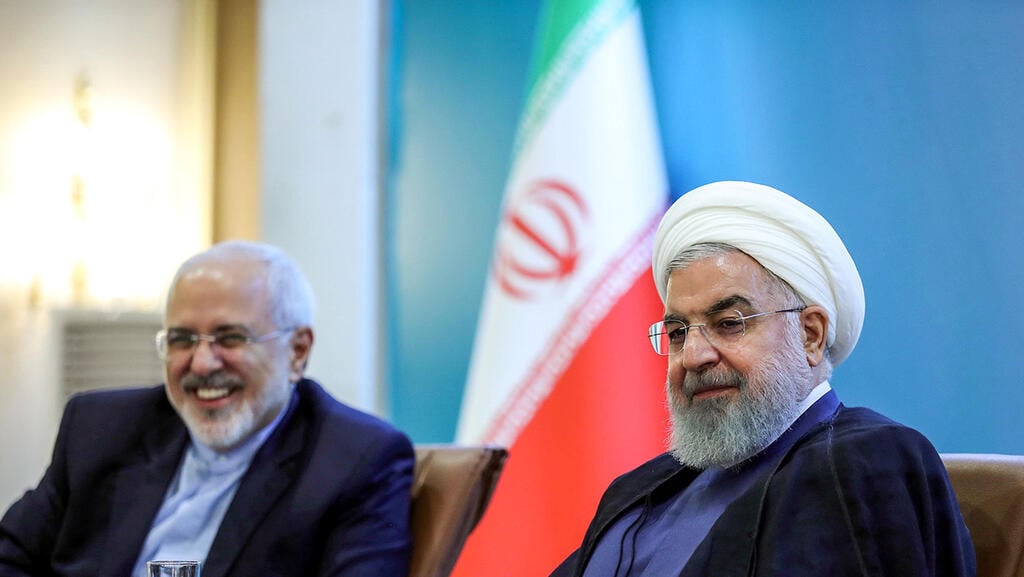
Rouhani and Zarif, architects of the failed plan
(Photo: AFP)
“Larijani is not the only one the supreme leader trusts. Ali Shamkhani, for example, is also there. So even if Larijani is dominant, he is not a ‘supreme ruler,’” said Danny Citrinowicz, a research fellow in the Iran Program at Israel’s Institute for National Security Studies and a former head of the Iran branch in Israeli military intelligence.
He cautioned that reports emerging from Iran and published abroad should be treated with skepticism. If accurate, he said, they indicate that Iran’s system seeks to ensure functional continuity if the supreme leader is killed or incapacitated.
“Even if that happens, there will not be another supreme leader in the same sense,” he said. “The principle of rule by Islamic jurist remains central to the regime.”
Citrinowicz added that the developments highlight Pezeshkian’s relatively weak standing, even though as president, he formally derives authority from the public.
“In principle, the president’s status is more significant than that of the secretary of the Supreme National Security Council,” he said. “But Pezeshkian’s lack of experience, alongside the trust Larijani enjoys from the leader and his extensive experience, likely gives him the upper hand in the leader’s eyes.”
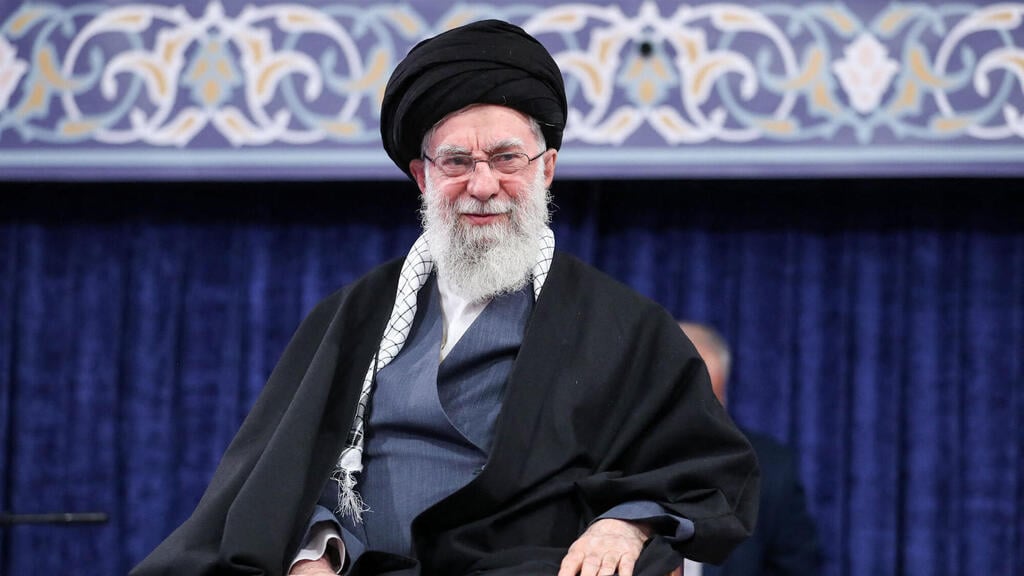
Ali Khamenei
(Photo: AFP/ HO / KHAMENEI.IR)
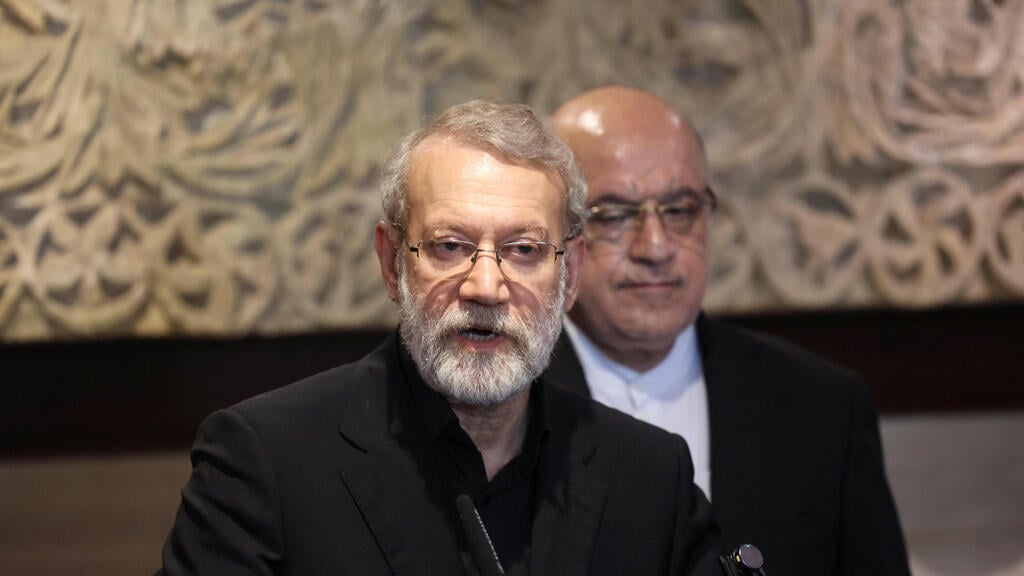
Led crackdown on Iran protests and oversees US talks, Ali Larijani
(Photo: Aziz Taher/ Reuters)
Before returning to his current role, Larijani served as Khamenei’s adviser. In November 2024, a month before the upheaval in Syria, he met with then-Syrian President Bashar Assad and later traveled to Lebanon amid fighting with Israel. During a subsequent visit in July, Lebanese President Joseph Aoun made clear he would not accept Iranian interference in Lebanon’s internal affairs.
On August 5, Larijani was formally appointed secretary of the Supreme National Security Council, effectively returning to a post he held from 2005 to 2007. The position is widely regarded as second only to the supreme leader and above the president in influence, serving as the leader’s chief executor of policy.
Larijani previously led nuclear negotiations with Western powers before being dismissed by then-President Mahmoud Ahmadinejad over policy disagreements. He ran unsuccessfully for president three times and was disqualified from the ballot in 2021 and again in 2024 after the sudden death of President Ebrahim Raisi.
He comes from a prominent clerical family. His father, Ayatollah Mirza Hashem Amoli, was a senior cleric, and his brothers have held senior positions in Iran. One brother, Sadeq, served as head of the judiciary. Another, Javad, has held senior academic and religious posts.
Several members of the Larijani family studied in the United States, including Larijani himself. One of his daughters completed her studies there and lives in the U.S. The fact that he and his siblings were born in the Iraqi city of Najaf, a detail listed on their identity cards, has also drawn criticism among some Iranians.