

Armenia and Azerbaijan signed a historic framework agreement at the White House on Friday that could finally end their decades-long bloody conflict.
Under the sponsorship of U.S. President Donald Trump, Azerbaijani President Ilham Aliyev and Armenian Prime Minister Nikol Pashinyan shook hands in what Washington hailed as a major diplomatic achievement — one that will give the U.S. exclusive development rights to a strategic transport corridor between the two countries.
Armenia and Azerbaijan sign framework mediated by U.S. President Donald Trump


The plan, known as the Trump Route for International Peace and Prosperity (TRIPP), would run across southern Armenia, linking Azerbaijan to its Nakhchivan exclave and, in turn, to Turkey.
According to the agreement, the U.S. will lease the corridor to a consortium to manage and develop infrastructure such as a railway line and oil and gas pipelines. The 32-kilometer (20-mile) strip would remain under Armenian law, but Washington would have control over development.
Iran, which borders the area, has emerged as one of the main losers from the deal, according to analysts — and it is threatening to block it. Ali Akbar Velayati, top adviser to Iran’s Supreme Leader Ali Khamenei, warned that “this corridor will not become a passage owned by Trump, but rather a graveyard for Trump’s mercenaries.”
Speaking to Iranian media, he said military drills in northwest Iran demonstrated the Islamic Republic’s “readiness and determination to prevent any geopolitical changes in the region.” While Iran’s foreign ministry initially welcomed the agreement as “an important step toward lasting regional peace,” it cautioned against any foreign presence near its borders that could “undermine the region’s security and stability.”
But according to Reuters, analysts and Iranian insiders say Tehran lacks the military power to make good on its threats, given the pressure from the U.S. over its disputed nuclear program and the damage sustained during its 12-day war with Israel in June.
Gallery
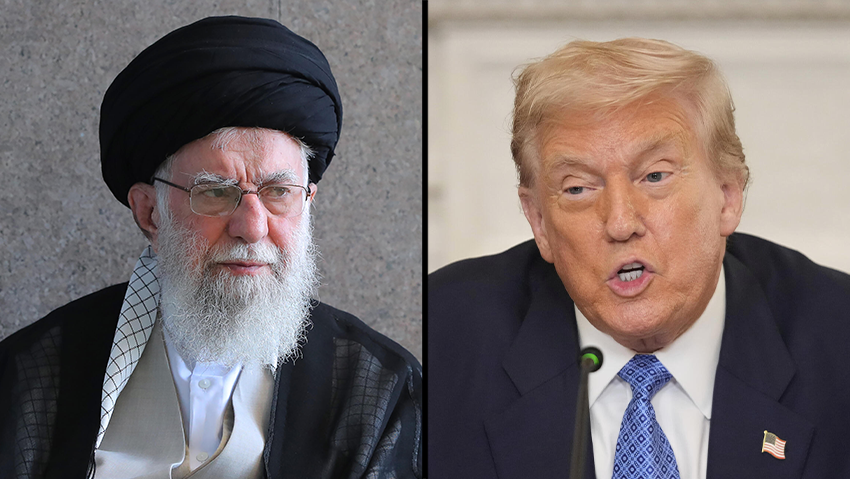
Iran's Supreme Leader Ali Khamenei, U.S. President Donald Trump
(Photo: Iranian Leader's Press Office - Handout/Getty Images , AP Photo/Mark Schiefelbein)
The White House says TRIPP will “facilitate greater exports of energy and other resources” and open the South Caucasus to trade and transport links that have been limited for decades. A senior official told Reuters the development would be carried out “through commercial methods” without U.S. taxpayer funding.
Trump, who personally hosted Aliyev and Pashinyan for the signing ceremony, declared on Truth Social that “Many Leaders have tried to end the War, with no success, until now, thanks to ‘TRUMP.’” He called the two leaders “courageous Leaders for doing the right thing” and said it would be a historic day for Armenia, Azerbaijan, the United States and the world.
Get the Ynetnews app on your smartphone: Google Play: https://bit.ly/4eJ37pE | Apple App Store: https://bit.ly/3ZL7iNv
The deal also marks a win for Turkey, Azerbaijan’s closest ally, which hopes it will pave the way for opening its border with landlocked Armenia after decades of hostility. Pashinyan has already announced plans to normalize relations with Ankara, making renewed trade ties a top priority.
Russia, another traditional power in the South Caucasus and long considered Armenia’s main ally, was notably absent from the U.S.-brokered summit — despite having border guards stationed on the Armenia-Iran frontier.
Russia said it supported the meeting but called for solutions “developed by the countries of the region themselves” with the support of neighbors such as Russia, Iran and Turkey. Analysts say the Kremlin’s influence has waned due to its focus on the war in Ukraine and its failure to intervene when Azerbaijan retook Nagorno-Karabakh in 2023.
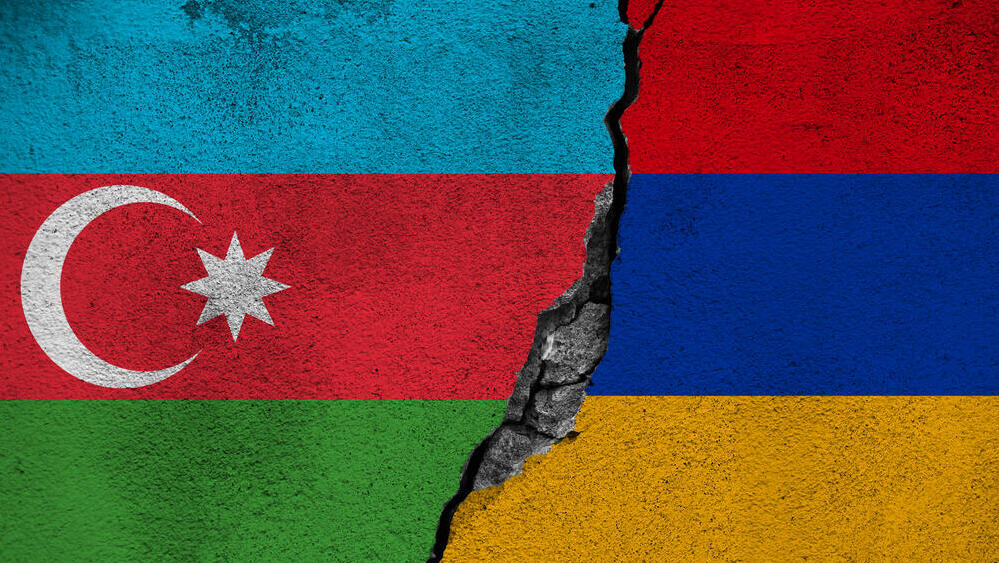
Azerbaijani, Armenian flags
(Photo: Shutterstock)
The dispute over Nagorno-Karabakh — a mountainous region inside Azerbaijan but long populated by ethnic Armenians — has been at the heart of the conflict since the late 1980s.
Armenia-backed separatists declared independence as the Republic of Artsakh, sparking wars in the 1990s, 2020 and again in September 2023, when Azerbaijan seized full control and nearly all of the region’s 100,000 ethnic Armenians fled to Armenia.
A key sticking point in the peace talks has been Azerbaijan’s demand that Armenia amend its constitution to remove a territorial claim to Nagorno-Karabakh. Pashinyan has called for a referendum on constitutional changes but has not set a date, with new parliamentary elections scheduled for June 2026.
Azerbaijani officials say they are ready to sign a final peace treaty as soon as the amendment is made. For now, Trump and his envoys are framing the agreement as a “clear path to peace.” But as International Crisis Group analyst Joshua Kucera told Reuters, “Key details are missing, including about how customs checks and security will work and the nature of Armenia’s reciprocal access to Azerbaijani territory. These could be serious stumbling blocks.”
Still, Azerbaijani Ambassador to the UK Elin Suleymanov hailed the deal as “a paradigm shift,” telling Reuters: “The chapter of enmity is closed and now we’re moving towards lasting peace.”