

Bomb threats targeting aircraft continued Friday, with a new wave of threats disrupting air traffic across Europe and affecting at least 18 flights to nine countries. The threats also spread to media organizations, prompting the evacuation of Ireland's public broadcaster and a security alert at Britain's Sky News. The identity of those responsible remains unknown. Here is what is known about the threats unsettling passengers and raising alarm across Europe, and the questions that remain unanswered.How many flights have been threatened so far?
Seven threats were reported Tuesday, along with a false alarm involving a threat to an Israeli cruise ship. Bomb threats were reported against at least 14 flights Thursday, including one bound for Israel, with another 18 added Friday.
Gallery
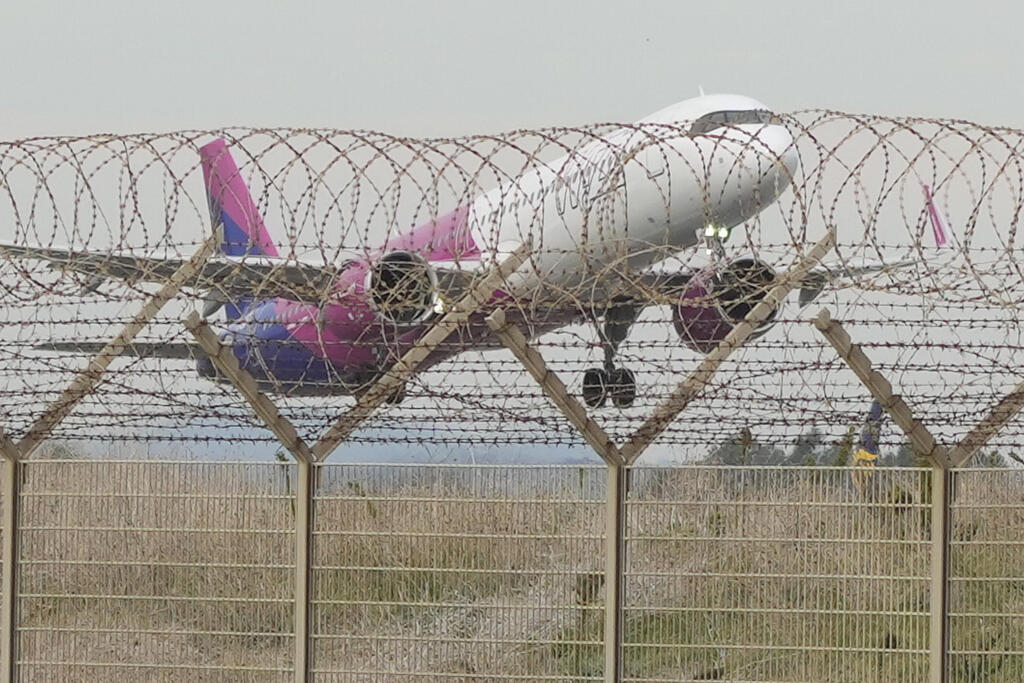
An aircraft takes off from Rome. A Wizz Air flight bound for the city was diverted to Venice
(Photo: AP Photo/Gregorio Borgia)
In Hungary, the defense minister said fighter jets escorted three passenger aircraft through the country's airspace within the space of an hour Friday after each received a bomb threat. He said the fighter jets escorted flights from Brussels to Sofia, Prague to Cyprus and Prague to Romania.
France announced that four bomb threats had been received Friday against aircraft flying through its airspace. Additional threats targeted a flight operated by Romanian airline TAROM from Prague to Bucharest and a Ryanair flight from Portugal to Rome. A Wizz Air flight from Prague to Rome was diverted to Venice following a bomb alert, and passengers were evacuated after landing.
A spokesperson for Prague's Václav Havel Airport said nine of the flights affected by the threats had either departed from the airport or were scheduled to land there. They included flights arriving from Denmark, Spain and Britain, as well as flights departing for the Netherlands, Britain, Cyprus, Italy and Romania. All aircraft affected by the threats landed safely, and inspections found no explosives.
Broadcasters now in the crosshairs
The threats also spread to broadcasters Friday. In Ireland, the Dublin headquarters of national public broadcaster RTÉ was evacuated following a bomb threat, and live broadcasts were replaced with prerecorded programming. Employees were allowed to return to the building several hours later after police searched the area with sniffer dogs.
Irish Prime Minister Micheál Martin said the threats against RTÉ and other organizations "just illustrates how relatively simple it can be to cause disruption and to undermine the normal operation of society through unconventional activities of this kind, which are designed to cause fear and anxiety."
He said an "very significant security operation" would be put in place next week when Dublin hosts meetings of European Union leaders.
British broadcaster Sky also announced that it had received a "security threat." In a statement published by Sky News, the network said: "We are working closely with authorities to ensure our people and operations remain secure. It would not be appropriate to comment further at this time." The channel continued broadcasting as usual.
Bulgaria's private television network NOVA TV also announced Friday that it had received an email threatening to plant a bomb at its facilities.
European supermarkets and New York libraries
A widespread cyberattack on Friday crippled computer systems at all 66 public libraries in the New York City borough of Queens, prompting an investigation by the FBI and the New York Police Department. The attack disabled computers, Wi-Fi networks and book-lending systems, forcing the libraries to continue operating manually.
The incident was a ransomware attack, in which hackers lock computer systems, usually to demand payment in exchange for restoring access.
Last week, the Pentagon announced that it was investigating mysterious disruptions to refrigeration systems at at least six military bases after hackers remotely took control of refrigeration systems at supermarkets across Europe, causing extensive damage. The FBI and other U.S. government agencies issued a warning about an ongoing cyberthreat across the country.
Who is responsible?
That is the million-dollar question.
The threats come amid rising geopolitical tensions and warnings from authorities that Russia may intensify what are known as "hybrid threats" in Europe. Investigators said there was no evidence that the hoax threats against airlines and other targets were being coordinated by a hostile terrorist organization or a state actor such as Russia or Iran. However, investigations are continuing.
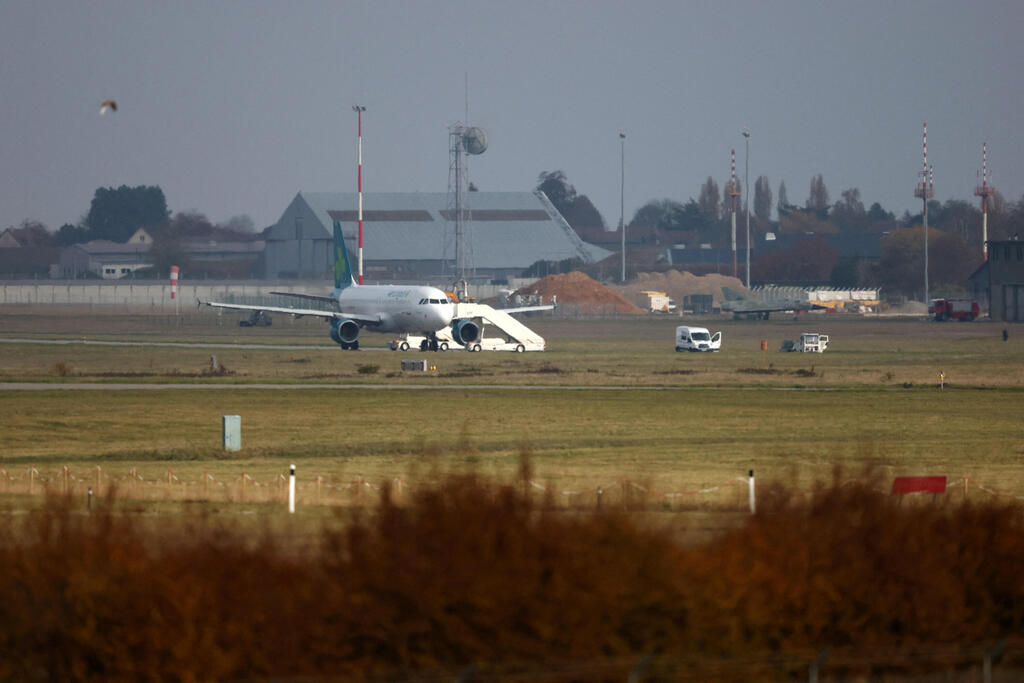
An Aer Lingus aircraft that landed at a military airfield in France
(Photo: REUTERS/Gonzalo Fuentes)
Some of the threats received Thursday were signed in the name of "Male State fighters," referring to Male State, a Russian far-right movement founded in 2016. In a Telegram post Friday, the group's founder, Vladislav Pozdnyakov, denied the organization's involvement and claimed that the group had ceased to exist in 2021.
An email received by aviation authorities in Rome on Thursday claimed to have been sent by a group describing itself as anti-feminist and said it was targeting a "feminist regime." Another European airport received a similarly worded threat, although it was unclear whether it came from the same sender.
Nevertheless, officials suspect that the waves of disruption may be linked to European support for Ukraine in its war against the Russian invasion.
Spanish Foreign Minister José Manuel Albares said authorities needed more time to identify those responsible.
"It cannot be mere coincidence that so many incidents with exactly the same modus operandi are happening across Europe," he said. "The most reasonable assumption is that we are facing an attempt at hybrid aggression and a form of psychological warfare."
What are the possible objectives behind the threats?
Eliran Almog, CEO of aviation cybersecurity company CyViation, said repeated bomb threats could serve two purposes: disrupting the operations of airlines and airports and testing how authorities respond to security incidents.
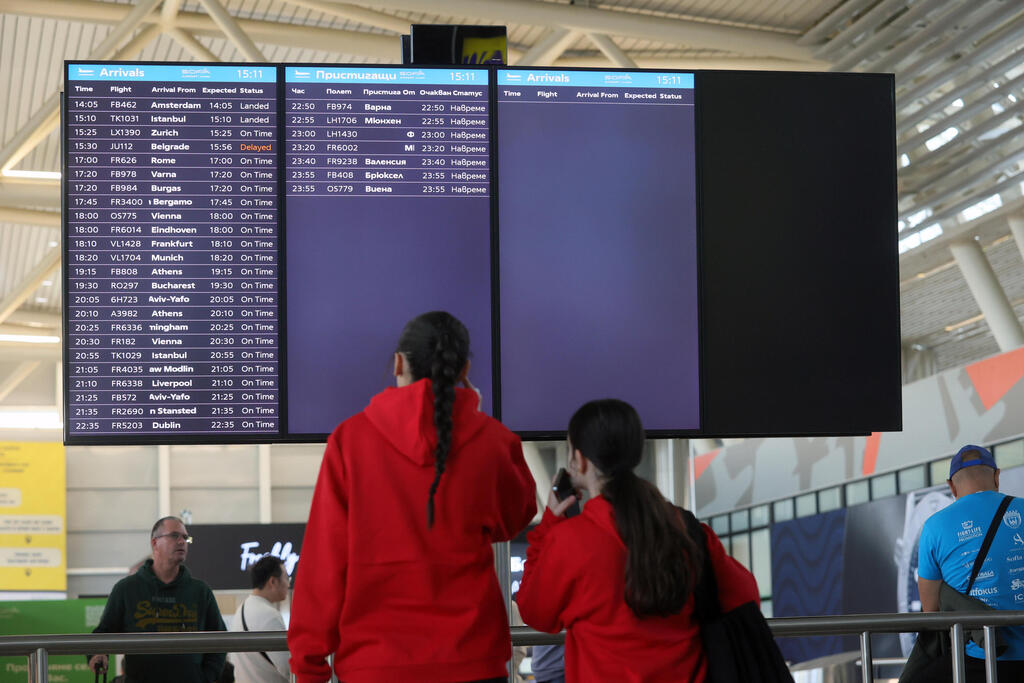
The departures board at Sofia Airport in Bulgaria. The threats are aimed at undermining public confidence
(Photo: AP Photo/Valentina Petrova)
Almog also noted that the aviation threats come against the backdrop of cyberattacks targeting supermarket refrigeration systems across Europe and blood banks in France. He said disruptions to essential services could cause economic damage and undermine public confidence.
Robert Jordan, research director at the British think tank Royal United Services Institute (RUSI), told the BBC that there are now more ways than ever to threaten flights, while encrypted messaging apps provide greater anonymity.
"The risk appetite for airlines is always going to be incredibly low," he said. "It is baked into their safety procedures, and it’s baked into their security procedures."
How are authorities dealing with the new threat?
Paul Reuter, vice president of the European Cockpit Association, said pilots are responding to the threats by identifying alternative airports in advance where they could divert their aircraft if necessary. In some cases, they are also carrying more fuel than usual.
Mark Rowley, commissioner of London's Metropolitan Police, called for a balanced and measured response to the incidents, saying that lessons learned from dealing with the Irish Republican Army (IRA), the Irish paramilitary organization, remain valuable.
He recalled the expression "10p terrorism," which referred to a time when a single anonymous call from a coin-operated public telephone, falsely claiming that a bomb had been planted, could disrupt an entire city.
"We are going to have to adapt to that same methodology to make sure that we don’t overreact to every message we get online," he said.
Daniel Edelson contributed to this report.