

Iran and the United States are set to hold high-stakes negotiations in Oman on Friday over Tehran’s nuclear program, but sharp disagreements over the scope of the talks suggest progress will be difficult as fears of a wider Middle East war mount.
While both sides have signaled readiness to revive diplomacy over Iran’s long-running nuclear dispute with the West, Washington wants discussions to extend beyond nuclear issues. U.S. Secretary of State Marco Rubio said this week the talks should also address Iran’s ballistic missile program, its support for armed groups across the region and its treatment of its own population.
Iran, however, has said the meeting in Muscat between Foreign Minister Abbas Araqchi and U.S. Middle East envoy Steve Witkoff must focus exclusively on nuclear matters.
“Iran enters diplomacy with open eyes and a clear memory of the past year,” Araqchi said Friday in a post on X ahead of the talks. “We engage in good faith and stand firm on our rights. Commitments must be honored. Equal standing, mutual respect and mutual interest are not rhetoric. They are essential for a durable agreement.”
Tensions remain high following U.S. strikes on Iranian nuclear targets in June, which came during the final stages of a 12-day Israeli bombing campaign. Tehran later said its uranium enrichment activity had been halted.
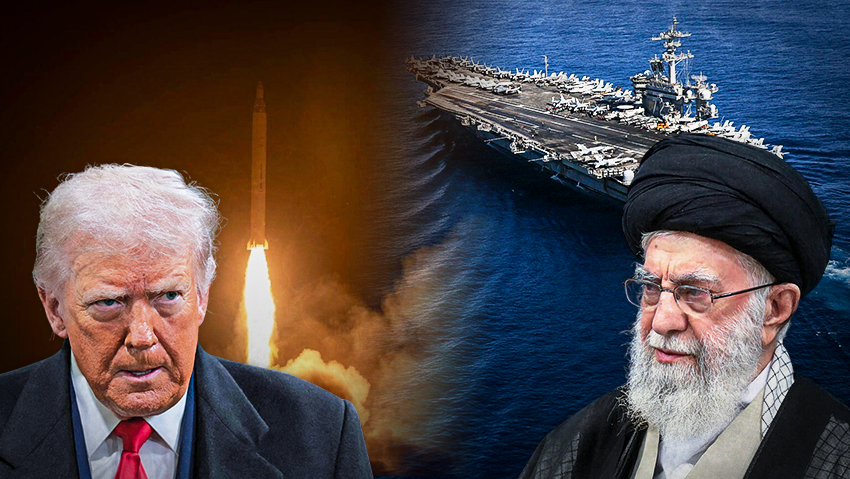
Iran’s leadership remains concerned that President Donald Trump could still authorize military action, particularly amid a significant U.S. naval buildup in the region. Trump has described the deployment as a massive armada.
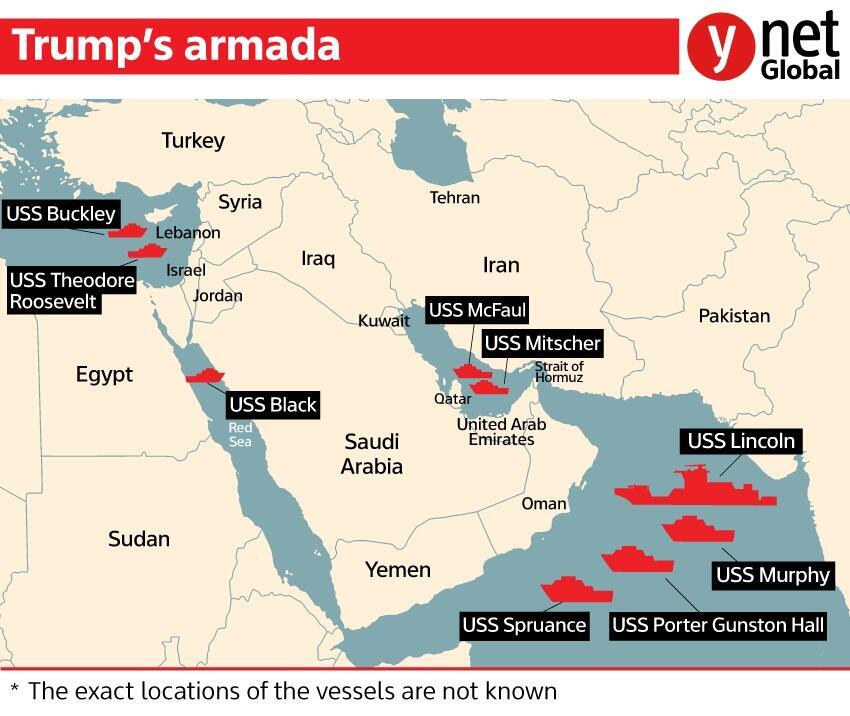
Trump's armada
The buildup followed a violent government crackdown on nationwide protests in Iran last month, further straining relations between Washington and Tehran.
White House Press Secretary Karoline Leavitt said Thursday that Trump wants to see whether a deal is possible but warned that diplomacy is not his only option.
“While these negotiations are taking place, I would remind the Iranian regime that the president has many options at his disposal,” she said.
Trump has warned that “bad things” could happen if no agreement is reached, while Iran has said it would respond forcefully to any attack and cautioned neighboring countries hosting U.S. bases that they could be drawn into a conflict.
Negotiators will also have to navigate Iran’s refusal to discuss its missile program. Tehran has ruled out talks on what it calls its defense capabilities, including missile range. Hours before the talks, Iranian state television reported the deployment of one of the country’s most advanced long-range ballistic missiles, the Khorramshahr 4, at an underground Revolutionary Guards base.
Iranian officials have told Reuters they may show flexibility on uranium enrichment, including handing over roughly 400 kilograms of highly enriched uranium and accepting zero enrichment under a consortium arrangement. Iran insists, however, that its right to enrich uranium is not negotiable.
Iran maintains its nuclear program is peaceful. The United States and Israel have accused Tehran of pursuing nuclear weapons in the past.
Iran’s regional influence has been weakened by Israeli strikes on its allies, including Hamas in Gaza, Hezbollah in Lebanon, the Houthis in Yemen and militias in Iraq, as well as by the fall of its close ally, former Syrian leader Bashar al-Assad.