

A victory for Putin in Bulgaria: Iliana Yotova, an ally of Prime Minister Rumen Radev, won Sunday's presidential runoff, becoming the first woman elected to the post. According to official results released Monday, Yotova secured 57.6% of the vote, compared with 39.5% for her rival, former caretaker Prime Minister Andrey Gyurov, who was backed by pro-Western opposition parties.
Yotova's victory, which comes as she advocates renewed dialogue with Russia and opposes further military assistance to Ukraine, is seen as another achievement for Radev's political camp, which also holds a parliamentary majority.
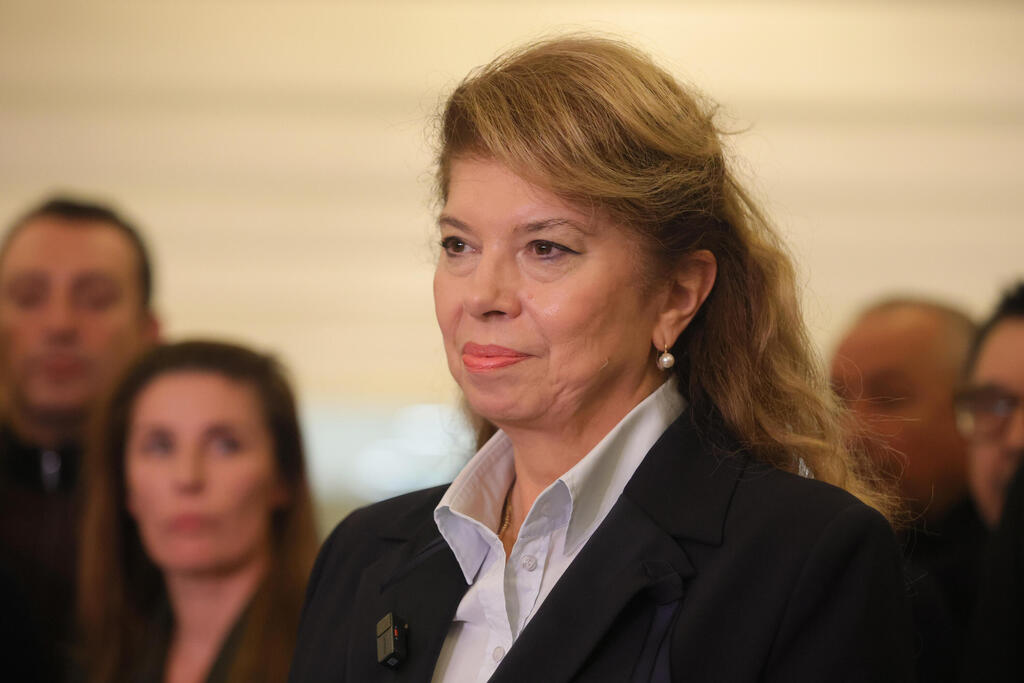
Yotova, 62, has served as acting president since January, when Radev resigned from the presidency to run in parliamentary elections. In April, Radev led his newly established Progressive Bulgaria (PB) party to victory, winning 131 of the 240 seats in parliament. Now, with the election of a candidate closely aligned with him, the ruling camp has strengthened its hold on the presidency as well. Although the office has relatively limited powers, Bulgaria's president serves as commander in chief of the armed forces, has the authority to veto legislation and plays additional roles in foreign policy.
Following her victory, Yotova pledged to heal divisions in Bulgarian society. "I voted for national consensus through dialogue, for institutions that work for citizens and for a strong country with an independent foreign policy within a strong Europe," she said.
Her rival, Gyurov, 50, conceded defeat and said he accepted the voters' decision. European Commission President Ursula von der Leyen also congratulated Yotova and expressed hope for continued cooperation on security, energy and competitiveness.
The presidential election took place against the backdrop of deep divisions in Bulgarian society over relations with Russia and the war in Ukraine. Bulgaria, which joined NATO in 2004 and the European Union in 2007, has longstanding historical and cultural ties with Moscow. Since Russia's invasion of Ukraine, relations with the Kremlin have become one of the central dividing lines in Bulgarian politics.
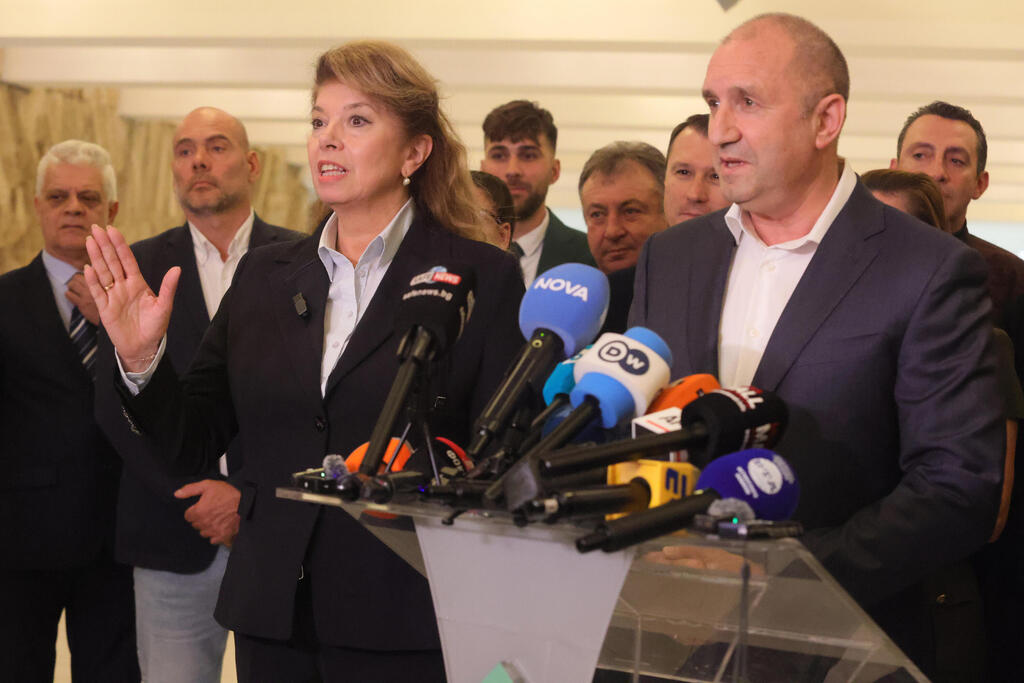
Yotova alongside Prime Minister Radev following the release of preliminary results Sunday. Both oppose military aid to Ukraine
(Photo: AP Photo/Valentina Petrova)
Like Prime Minister Radev, Yotova advocates a diplomatic solution to the war and opposes sending additional military aid to Ukraine. During the campaign, she presented herself as the "president of peace" and called for the establishment of an international coalition to end the fighting through negotiations. She supports Bulgaria's continued membership in the European Union and NATO but seeks to improve relations with Russia and secure the lifting of sanctions imposed on Moscow.
Yotova's positions align with policies Radev has already begun implementing. His government has stopped transferring military equipment from Bulgarian army stockpiles to Ukraine and has withdrawn from the "coalition of the willing," led by France and Britain in support of Kyiv. Yotova's victory could reinforce this approach and deepen disagreements between Bulgaria and European countries that favor continued military support for Ukraine.
Gyurov, by contrast, previously served as caretaker prime minister and deputy governor of Bulgaria's central bank and campaigned on a distinctly pro-European platform. During his tenure as prime minister, he signed a security cooperation agreement with Kyiv, and in the current election campaign he called for stronger support for Ukraine.
He also sought to position himself as a counterweight to Radev's ruling camp. In the days leading up to the runoff, pro-Western forces attempted to unite behind Gyurov, who received the personal endorsement of former Prime Minister Boyko Borissov, leader of the GERB party, which dominated Bulgarian politics for years.
Yotova, however, used that endorsement to portray her rival as a representative of the old establishment, against which public protests had erupted, ultimately paving the way for Radev's rise to power.
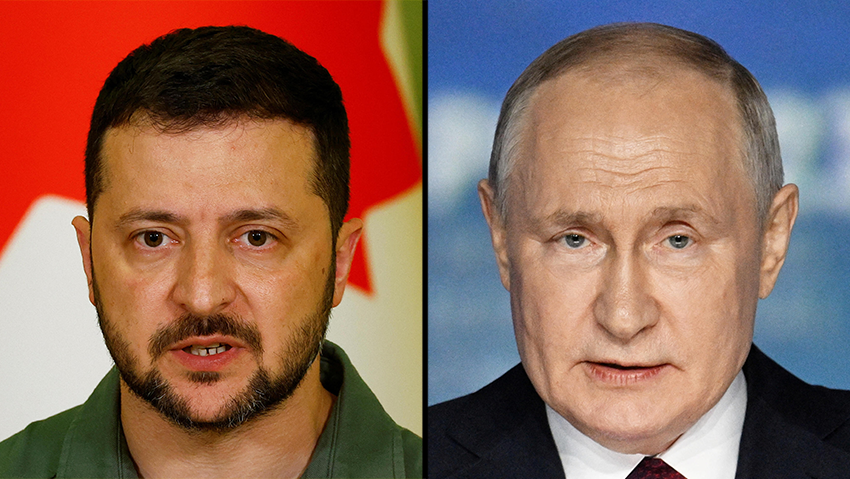
Zelensky and Putin. Relations with Russia and the war in Ukraine were central issues in Bulgaria's election
(Photo: Reuters)
The confrontation between the two camps intensified following a series of drone attacks on commercial vessels in the Black Sea, off Bulgaria's coast. According to Reuters, at least 24 crew members were killed in the attacks over the past month, raising concerns that the effects of the war in Ukraine could spread to other NATO member states.
Both candidates condemned the attacks but stopped short of directly blaming Moscow. Radev said the consequences of the strikes "serve Russia's interests."
Only about a quarter of eligible voters cast ballots
Despite Yotova's decisive victory, the election was marked by exceptionally low voter turnout. In the first round, held October 25, only about 23% of eligible voters cast ballots, a record low for a presidential election in Bulgaria.
Yotova received approximately 34.7% of the vote in that round, compared with about 32% for Gyurov, with neither candidate securing the majority needed to win. Turnout rose to about 27% in the runoff but remained extremely low.
Further evidence of public disillusionment with the political system emerged at the ballot box: Some 56,000 voters, nearly 3% of those who participated, selected the option "I support none of the candidates."
Overall, approximately 1.09 million people voted for Yotova, compared with about 750,000 for her rival.
The low turnout reflects political fatigue in Bulgaria, which has held eight parliamentary elections in five years. The high cost of living, energy prices and disappointment with unfulfilled government promises have also contributed to public distrust of the political system.
The victory gives Radev and his allies another political achievement but also raises questions about the balance of power in the country. Analysts warn that when both the government and presidency are controlled by the same political camp, state institutions' ability to oversee one another and check government decisions could be weakened.
Yotova, who began her career as a television journalist in the 1990s, previously served in both the Bulgarian Parliament and the European Parliament. She was elected twice as Radev's vice president, in 2016 and 2021.
She is expected to begin her new five-year term Janurary 22. Kiril Valchev, a journalist and lawyer who headed the Bulgarian News Agency, will serve as vice president.