

Padma Joshi appears in a photo posted on Instagram by her 24-year-old son, Bipin. Above her sorrowful eyes, the message in English reads: “Save my son.” The Nepalese mother’s plea speaks volumes. Her son came to Israel to study agriculture.
He was abducted by Hamas on October 7 from Kibbutz Alumim and has been held in Gaza ever since. From nearly 5,000 kilometers away, it’s difficult to fight for his release—but the family is doing what it can, even if that means posing with signs. Support has poured in from around the world. “Sorry he got caught in this terrible war,” reads one comment.
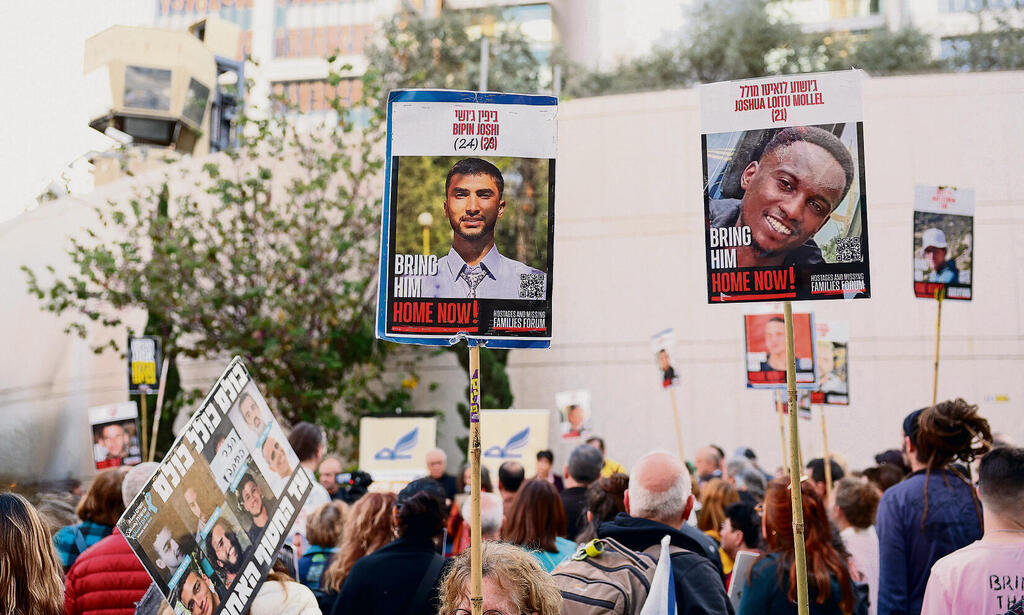
Bipin Joshi found himself in one of the most horrific scenarios imaginable. Just three weeks after arriving in Israel under an agricultural study program that brings hundreds of Nepalese and Tanzanian students annually, he was sheltering in a bombproof room at Alumim. Before that, his friend—who had raised his hands and identified himself as Nepalese—was shot dead by terrorists. The attackers then began throwing grenades into the shelter. Bipin managed to throw one back, saving lives. For over a year and a half now, he’s been held in Hamas tunnels—a Hindu man praying to gods who have nothing to do with the Israeli-Palestinian conflict.
Bipin is one of five foreign nationals still held by Hamas. Each has a name, a story, and a family. Three are believed to have been murdered: Joshua Luaito Mollel from Tanzania, who was also in Israel for agricultural studies and was kidnapped from the dairy farm at Kibbutz Nahal Oz. A video showing his abduction and murder circulated online about two months after October 7, reportedly without informing his family first. Two Thai nationals—Sutsak Rintarak from northeast Thailand and Sontaya Ukkharsri, a married father of a nine-year-old girl—were also kidnapped while working in the fields near Kibbutz Be’eri. The fifth is Nattapong Pinta, a Thai father of a seven-year-old, who was abducted from Nir Oz and is feared dead.
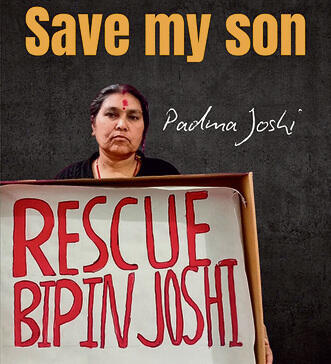
Mother of Bipin, Padma Joshi
“Nattapong left a mark on everyone who met him,” wrote Kibbutz members on Facebook.
On October 7, 35 foreign nationals were abducted: 31 Thais, one Nepalese, one Tanzanian, one Filipino, and Orion Hernandez, whose body has since been recovered. Of the 35, 25 were released in hostage deals. Five remain in captivity. For foreign hostages, the tragedy is twofold—they are far from home and family, and now, often forgotten. Israel, to them, was a promise of education, work, and a better future for their families. Now those families are left to cope with a war that isn’t theirs, in a distant country surrounded by enemies.
With no relatives in Israel—aside from a distant aunt of Bipin who once stood at a Tel Aviv protest with his photo—Israelis have stepped in. Kibbutzim from which foreigners were kidnapped assigned coordinators to maintain contact with the families abroad, ensuring they didn’t become invisible within a country still struggling to bring back its own.
The state has also taken responsibility. Lt. Col. A., head of the foreign hostage team at Israel’s Hostages and Missing Persons Task Force, coordinates efforts involving the Foreign Ministry, police, Interpol, and the Population and Immigration Authority. “They’ve been looked after from day one,” he said. “We’re in constant contact with Gal Hirsch, ambassadors, the IDF, and the task force. I represent the state on this.”
The process is culturally complex. With Thai families, all communication must go through an official Thai liaison. “That means if, for example, a video of Israeli hostage Rom Breslavsky is released, they’re updated in the same way as Israeli families. They’re very involved,” said A.
He personally informed Nattapong’s wife that her husband was not among five Thai citizens released in a January 2025 deal. “It was a very difficult, very sad conversation.”
A. also keeps in touch with Joshua Mollel’s father, Lulito. “They’re farmers from a remote region of Tanzania. The son went to study agriculture and planned to open a dairy farm. I speak with the father every two or three weeks. I feel a personal, moral, and national obligation to update him—‘We’re back to fighting. We’ve recovered bodies.’”
How did he react?
“The first conversation was very hard. He visited Israel in December 2023. I took him to Nahal Oz to see Joshua’s room and the spot where he was kidnapped. He’s frustrated and doesn’t understand why this hasn’t been resolved. He sees Israel as fully responsible.”
 Nattapong
Joshi’s family, too, is hard to reach. “To speak with them, a cousin must travel two hours to an area with phone reception, open the phone, and translate.”
 Sudthisak Rinthalak, Thai hostage murdred by Hamas
What are those calls like?
“Short. We don’t always have updates. But it’s important to show that they’re still on our minds.”
 Sonthaya Oakkharasri, Thai hostage murdred by Hamas
 Did you inform the families of the deaths?
“Yes.”
Were they angry?
“No. Not at all. I think they appreciated that a state representative spoke to them honestly—even when there were no signs of life.”
Some families have visited Israel. Joshua’s father did. Thai families of those released in February 2025 also came. “Most are rural people, without passports. Some had never flown. We offered and funded the trips, but cultural sensitivities matter. Every country has its own policy.”
Why are they still in captivity?
“The million-dollar question. I try to believe it’s due to logistical complexity. I had no explanation for why they were taken. They told the terrorists they weren’t Israeli. They even tried to offer money. People don’t realize this, but the largest group of civilians killed on October 7, after Israelis, were Thais.”
Publicly, it feels like they’re being forgotten.
“We’re not in the spotlight, but that doesn’t mean nothing is happening. It’s important they’re not lost in the shuffle. Even during the releases, we considered cultural details—bringing Thai mental health professionals and doctors to help translate and accompany them home. That initiative came from the Israeli side.”
“The language barrier is real. You can’t speak to them in Hebrew or English. It’s a big challenge. Some were brutally beaten in captivity simply because they didn’t understand what Hamas wanted. It’s unimaginable.”
There’s another layer—one Israeli officials are reluctant to discuss. Not all countries want their hostages’ photos turned into public symbols. Of the foreign hostage signs at protests, only Joshua and Bipin’s images appear. Thai authorities have refused. “It’s a gap,” A. admits. “But that’s more of a civilian issue than military. There’s sensitivity. Every request requires approval, and when they say no, it’s no.”
Why? Diplomacy. Some nations pursue separate negotiations—sometimes through other countries or directly with terror groups. Thailand, for example, reportedly held direct talks with Iran. Going public might embarrass those efforts or hinder their success.
“Their interest is to keep their involvement quiet because their release efforts run parallel to ours,” said Likud MK Eliyahu Revivo, who formerly chaired the Knesset committee on foreign workers. “None of the foreigners were released through Israeli negotiations with Hamas or Islamic Jihad. They were released as gestures to their countries, always alongside our deals. If we’d gone public, it could have embarrassed them and reduced the chances of release.”
Get the Ynetnews app on your smartphone: Google Play: https://bit.ly/4eJ37pE | Apple App Store: https://bit.ly/3ZL7iNv
Revivo, who remains in contact with Thailand’s ambassador, said, “I ensured the National Insurance Institute treated the foreign hostages like Israeli citizens from day one.”
What does that mean?
“They and their families receive full compensation and support. I held discussions to ensure their rights are protected. They receive medical, psychological, and financial aid—often beyond anything they could’ve imagined in their home countries. Tragically, their financial situation has improved for generations because of Israeli compensation.”
What about those still in captivity?
“National Insurance stays in contact with their families and provides monthly stipends. A single Israeli shekel is worth many times more in their home currencies. Each receives a monthly allowance and a grant. If they’re declared dead, their families are treated accordingly.”
The Foreign Ministry added, “Our embassies help families claim their legal rights and cope with the aftermath of October 7. For example, we ensured a Thai citizen killed by an IDF shell was recognized as a terror victim, granting his family full compensation.”
A Matter of empathy
Five men who came seeking a better future for their families are still trapped in hell. Three are confirmed dead—Joshua, Sutsak, and Sontaya. It’s hard for the public to relate to them. That’s not necessarily the public’s fault. Foreign workers are out of sight, even in everyday life. Their culture is unfamiliar. Their families are too far to shout in the streets. If they were here, they might not even feel comfortable doing so. A photo alone doesn’t generate empathy—it doesn’t tell you that this was someone’s son, someone’s father, a man with dreams.
“We continue to work for their release,” the Red Cross told us. “Our team in Gaza is ready to assist with any future release agreement. We’re in ongoing contact with Hamas, Israeli authorities, and international actors to obtain information about the hostages and gain access to them.”
Meanwhile, on Bipin Joshi’s Instagram page, the call to free him tags U.S. President Donald Trump. “These people are not just posters—Bipin is still waiting for us to save him,” the caption reads.
At the same time, Trump posted a cheerful video of himself dancing with a person in a bunny costume on the White House lawn for Easter. In today’s climate, one can only hope those Easter eggs include a miracle for Bipin too.