


Iran has fired repeated missile salvos toward Jordan in recent days, yet Amman has largely refrained from publicly confronting Tehran, even as Iran’s Revolutionary Guard Corps appealed directly to “the Jordanian people” to demand the removal of U.S. military bases from their country.
The attacks are part of the retaliatory equation established by Tehran following U.S. strikes on Iran. Iranian officials say they are targeting locations used to launch or support American operations, placing Jordan at risk because U.S. forces operate from several bases in the kingdom.
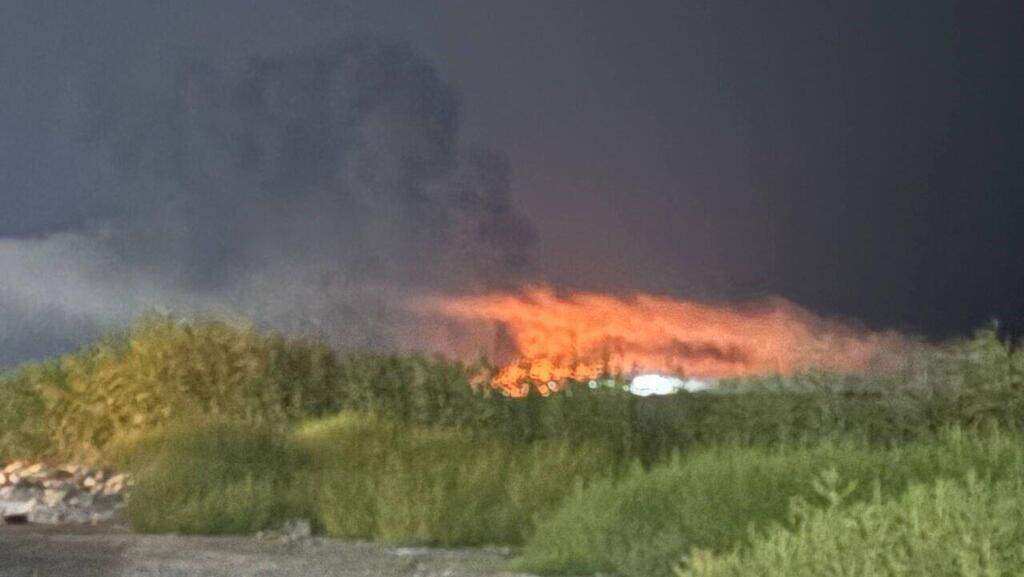
US strikes in Iran overnight


Jordan’s military has issued detailed statements on its interceptions and defensive activity, but the country’s political leadership has adopted a markedly restrained public tone.
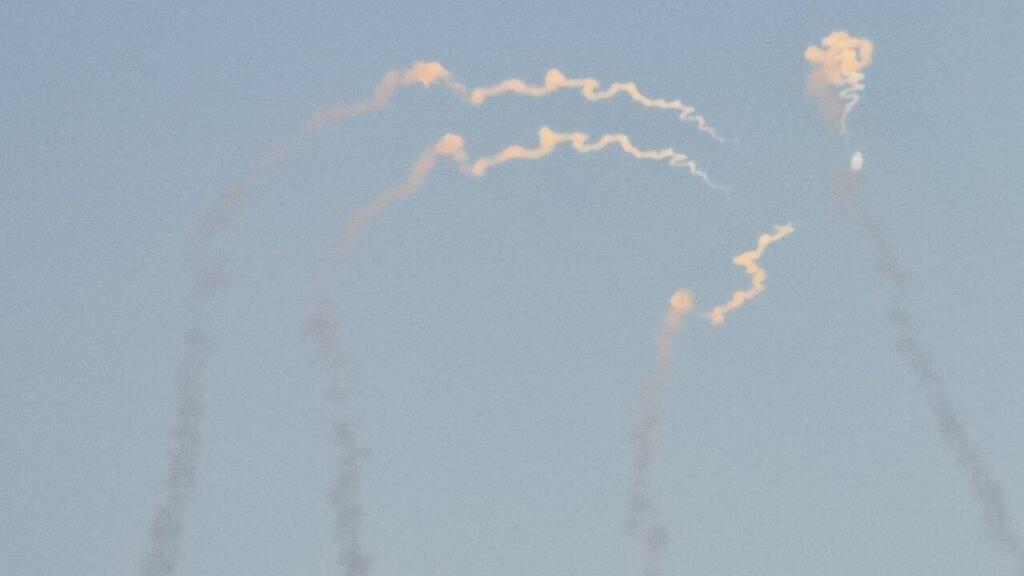
On Tuesday morning, the Jordanian military said four missiles entering the kingdom’s airspace from Iran had been intercepted and brought down.
A day earlier, the military reported intercepting another four Iranian missiles. A senior military source said the operation was carried out as part of measures designed to protect Jordan’s sovereignty, security and civilian population.
No casualties or material damage were reported, while Royal Jordanian Engineering Corps teams handled debris that fell in several locations.
The military said Jordanian forces remained at the highest level of readiness and were monitoring regional developments to confront any threat to the kingdom’s security or airspace.
“Any attempt to harm the sovereignty of the kingdom or violate its airspace will be met with the utmost determination, in accordance with the established rules of engagement and the national interest,” the source said.
Jordanian forces “will not hesitate to take all necessary measures to protect Jordan, its security and stability,” the source added, while urging citizens to rely on official sources and avoid spreading rumors or unverified information.
Missiles explode inside Jordan
Two days earlier, Jordan’s military said three missiles launched from Iran had exploded at several locations inside the kingdom.
No injuries were reported in that attack, while the damage was described as minor.
Authorities said Jordan would not allow its airspace or territory to become an arena for regional conflict and would respond firmly to any threat to the country’s sovereignty, territorial integrity or public safety.
All military units were placed on the highest level of readiness.
Despite the direct attacks, Jordan’s Foreign Ministry did not mention the missile fire on its own territory in a statement condemning Iranian attacks elsewhere in the region.
The statement denounced what it called Iran’s “brutal attacks” against the United Arab Emirates, Bahrain, Oman, Qatar and Kuwait, describing them as a blatant violation of sovereignty, a threat to regional security and stability, and a breach of international law and the United Nations Charter.
Jordan itself was omitted, despite repeated alerts across the kingdom caused by missile launches from Iran.
Jordan avoids direct criticism
Foreign Minister Ayman Safadi has held several calls with regional and international counterparts in recent days, but official Jordanian readouts have similarly avoided direct references to the missile attacks on Jordan.
Following a call with Saudi Foreign Minister Faisal bin Farhan, Jordan’s Foreign Ministry said the two officials condemned repeated Iranian attacks against Arab countries and any action threatening their security, sovereignty, stability and populations.
US strikes in Iran
The statement said the ministers also discussed efforts to restore security, reduce tensions and protect freedom of navigation in the Strait of Hormuz.
In a separate readout following Safadi’s call with German Foreign Minister Johann Wadephul, the German minister was quoted condemning attacks against Jordan, but the Jordanian position on those attacks was again not included.
Jordanian Middle East analyst Dahham Metqal al-Fawaz said the absence of harsher rhetoric should not be interpreted as weakness or indecision.
“I do not believe Jordan’s position should be measured by the intensity of its statements,” al-Fawaz told ynet. “Jordan, by nature, is a country that acts quietly and calculates its steps carefully, particularly on sensitive issues such as Iran.”
Jordan is surrounded by regional crises, he said, and any rhetorical escalation could have direct security, economic and political consequences.
“It therefore generally focuses on defending its interests and sovereignty and prefers diplomatic solutions over raising the rhetorical threshold,” he said.
“If Jordan’s statements are less severe than those of other countries, that does not mean its position is less firm. It reflects a consistent approach based on balance and the avoidance of escalation, while always emphasizing the defense of national security and the rejection of any threat to Jordanian sovereignty.”
Iran appeals to ‘the Jordanian people’
As Jordan sought to preserve that balance, Iran’s Revolutionary Guard Corps issued an appeal directly to the Jordanian public, insisting that Tehran was not hostile toward the kingdom.
“We are not against your country. We appreciate the Jordanian people,” the IRGC said.
“You are among the nations most aware of the suffering and oppression of the Palestinian people. Your demand for the removal of U.S. military bases from the region would make a significant contribution to saving the Palestinian people and restoring security to the region.”
The message effectively called on Jordanians to pressure their government over the American military presence, even as Iranian missiles continued to enter Jordanian airspace.
Jordan’s geography has repeatedly exposed it to regional missile fire.
During Israel’s previous campaign against Iran, Jordan faced not only direct threats but also the consequences of serving as a transit corridor between Iran and Israel, leaving the kingdom vulnerable to stray missiles, interception debris and regional spillover.
In the current confrontation between the United States and Iran, Israel has so far remained outside the fighting. Jordan, however, has again found itself caught between rival powers, intercepting missiles while trying to prevent its territory from becoming another front in the widening regional conflict.