


Israeli officials expressed surprise Friday following remarks by Turkish Foreign Minister Hakan Fidan suggesting that Ankara is open to restoring trade ties with Israel, but only after the war in Gaza ends and humanitarian aid is allowed into the enclave.
Fidan’s comments were met with caution and uncertainty in Jerusalem, where officials struggled to interpret whether they signal a genuine shift in Turkish policy or a diplomatic maneuver.
Gallery
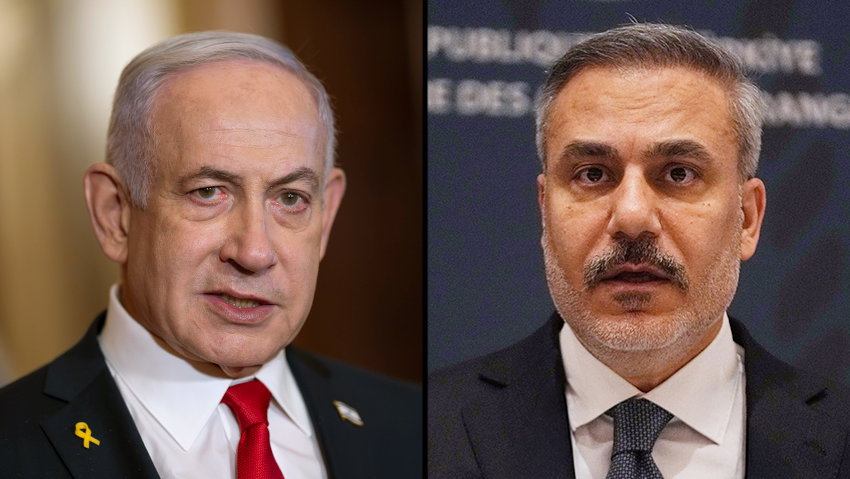
Prime Minister Benjamin Netanyahu, Turkish Foreign Minister Hakan Fidan
(Photo: AP Photo/Khalil Hamra, AP Photo/J. Scott Applewhite)
Israel considers Turkey a regional rival rather than an outright enemy and maintains some lines of communication, especially on security matters. However, relations remain tense, with President Recep Tayyip Erdogan regularly lashing out at Israel and Turkish media continuing a sustained campaign of delegitimization, echoing his rhetoric.
Officials in Jerusalem are also uneasy over Turkey’s military involvement in Syria, particularly its operations against Kurdish groups and its reported military support for Syrian President Ahmad al-Sharaa, including efforts to establish air bases in the country.
Israel was particularly displeased to see both Turkish and Qatari representatives appointed to the Executive Board of the Gaza Board of Peace, a U.S.-backed initiative spearheaded by President Donald Trump. Despite Israeli objections, Trump was reportedly impressed by Turkey’s role in hostage negotiations and is eager to see Ankara take part in Gaza’s postwar reconstruction.
While Israel has reportedly blocked the inclusion of Turkish troops in a proposed international stabilization force, it is unlikely to prevent Turkish companies from participating in rebuilding efforts.
When asked whether normalization with Israel was realistic, Fidan replied that “the rupture in relations is not structural, but conditional.” He added that Turkey’s decision to suspend trade with Israel was tied directly to the war and restrictions on humanitarian access, not to Israel’s existence. “This shows our problem is not with Israel itself, but with Israel’s policies—particularly toward the Palestinians and its current genocidal approach in Gaza,” Fidan said. “The boycott is not structural, but conditional.”
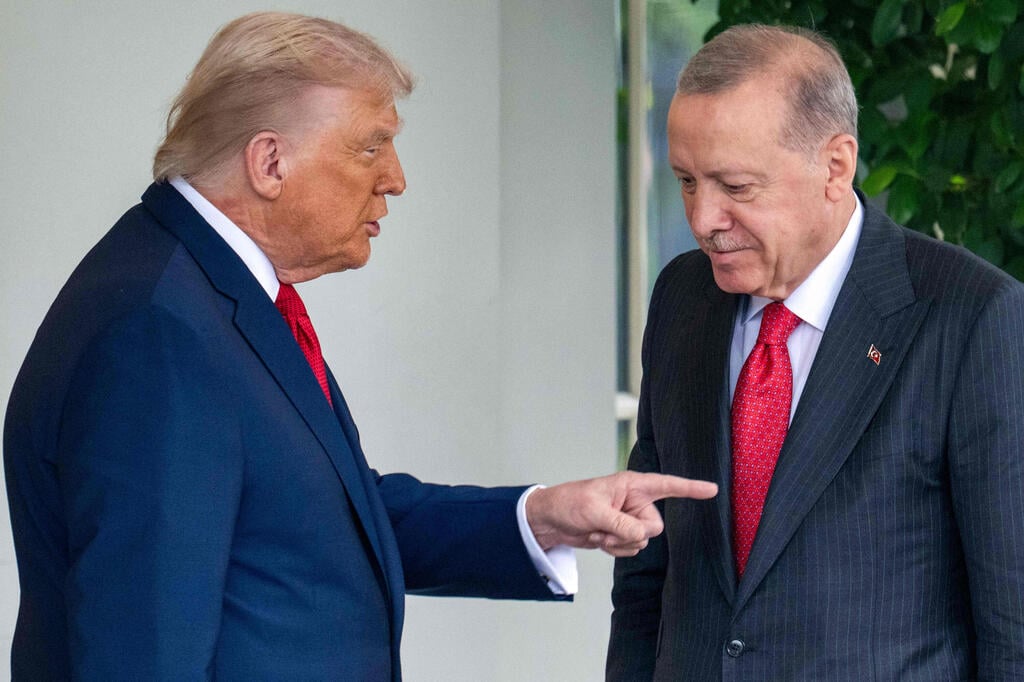
US President Donald Trump and Turkish President Recep Tayyip Erdogan
(Photo: Jim WATSON / AFP)
Some Israeli analysts see Fidan’s statement as an attempt to reduce diplomatic friction with Jerusalem—possibly at Washington’s request—to smooth Turkey’s involvement in Gaza. But with mutual trust between the two capitals deeply eroded, officials say any thaw is unlikely in the short term.
Still, there is some agreement in Jerusalem with Fidan’s claim that the crisis is “conditional rather than structural,” meaning ties could potentially be repaired. While full friendship may be out of reach, officials believe a return to normalized relations is possible.
Currently, the situation is far from normal: Israel has no ambassador in Ankara, and Israeli diplomats assigned to Turkey are often stationed in neighboring countries due to security concerns.
Turkish public discourse remains harsh, with Israel regularly accused of genocide and Prime Minister Benjamin Netanyahu compared to Adolf Hitler in state-aligned media.
Should Ankara pursue normalization, a first step might be the resumption of trade and the return of Turkish Airlines flights to Tel Aviv. However, Israeli officials note that the void left by the airline has been largely filled by carriers from the United Arab Emirates.
Meanwhile, Turkey has also taken an active role mediating between the United States and Iran in an effort to prevent a possible U.S. strike. Fidan has claimed that Israel is pressuring Trump to take military action, a charge Israeli officials view as highly problematic and a further obstacle to improving ties. It’s a sensitive issue, especially given Turkey’s strong influence in Washington and President Trump’s repeated declarations of personal friendship with Erdogan.