


Approximately 7.3 million Israelis are registered to vote in next Tuesday's election for the 26th Knesset, but about 810,000 of them, roughly one in nine, live outside the country, according to figures released Tuesday by Israel's Central Bureau of Statistics (CBS).
The data highlight a significant gap between the number of citizens on the electoral register and those actually residing in Israel. The bureau noted that some Israelis registered abroad may have died without their deaths being reported to the Population and Immigration Authority. Under Israel's election rules, most citizens living overseas cannot vote from abroad and must return to Israel to cast a ballot, with limited exceptions for eligible state representatives and their families.
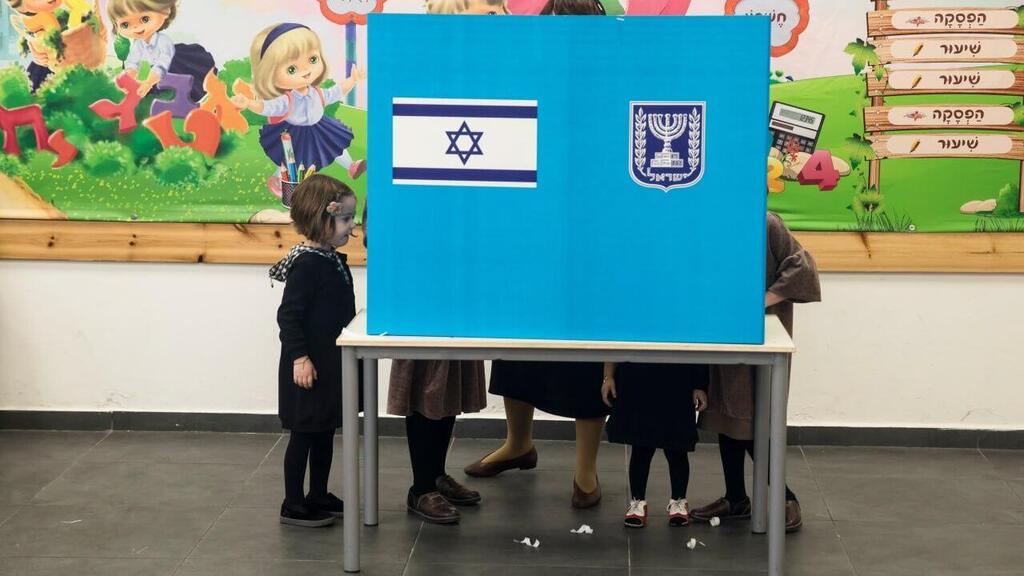
Since the previous Knesset election in November 2022, the number of eligible voters living in Israel has risen by approximately 333,000, an increase of 5.4%. Among registered voters residing in the country, 15.1% are between the ages of 18 and 24, while 27.6% are aged 25 to 39. The largest group, accounting for 31%, comprises voters aged 40 to 59, and another 26.3% are 60 or older.
The figures also reveal significant differences between Israel's population groups. Just over 5 million eligible voters living in Israel, or 77%, are Jewish, including approximately 684,000 ultra-Orthodox Jews. Arab citizens, including Muslims, Arab Christians and Druze, account for about 1.16 million eligible voters, or 18%. Another 346,000, representing 5%, are classified as members of other population groups, primarily non-Arab Christians and people without a registered religious affiliation, many of them immigrants and their families who are not registered as Jewish.
The CBS stressed that differences in age distribution help explain why some communities account for a smaller share of eligible voters than of the general population. Arab Israelis make up approximately 22% of the population but only 18% of the electorate, reflecting the community's relatively young population and the presence of residents without Israeli citizenship, particularly in East Jerusalem and the Golan Heights. Similarly, ultra-Orthodox Jews account for 13.9% of Israel's population but only 10.5% of registered voters, largely because of the community's high proportion of children.
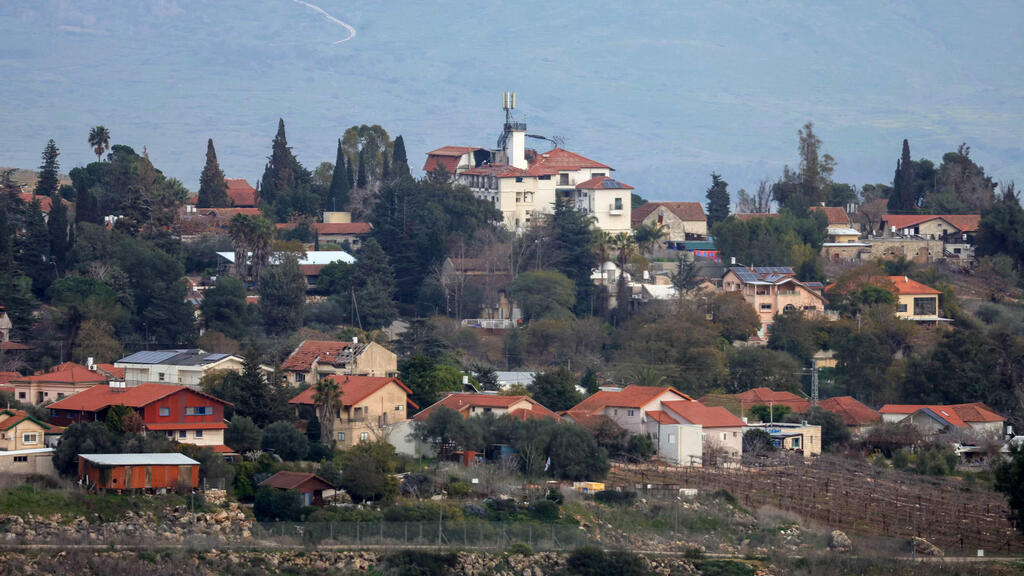
The northern border town of Metula has the highest share of residents eligible to vote
(Photo: Rabih DAHER / AFP)
The geographical differences are equally pronounced. The northern border town of Metula has the highest share of residents eligible to vote, at 83.8%, while Mas'ade, a Druze community in the northern Golan Heights, has the lowest, at just 30.1%. In most Israeli cities with more than 100,000 residents, the proportion of eligible voters ranges between 70% and 80%. Three cities fall significantly below that range: Jerusalem, where just 39.2% of residents are eligible to vote, Beit Shemesh at 47.1%, and Bnei Brak at 50.4%. Their relatively young populations contribute to the figures, while Jerusalem's rate is also affected by the substantial number of noncitizen residents.
By comparison, 79.5% of Bat Yam residents are eligible to vote, followed by Tel Aviv-Jaffa at 77.4%, Ramat Gan at 77.2%, Rishon LeZion at 76.7%, Haifa at 76.3%, Holon at 75.6% and Beersheba at 73.9%.
Israel's electorate has expanded dramatically since the country's first parliamentary election in 1949, when 506,567 citizens were registered to vote, all of them living in Israel. That figure nearly doubled by the second Knesset election. By the election held after the 1973 Yom Kippur War, the number of eligible voters had exceeded 2 million, rising to approximately 3.4 million in 1992 and surpassing 5 million by 2006.