

Satellite images released Tuesday appear to show damage to Iran’s Natanz nuclear facility, with at least two small buildings inside the complex sustaining significant damage between images taken one day apart.
In imagery dated March 2, two structures that appeared intact in photos taken a day earlier showed visible signs of damage.
Gallery
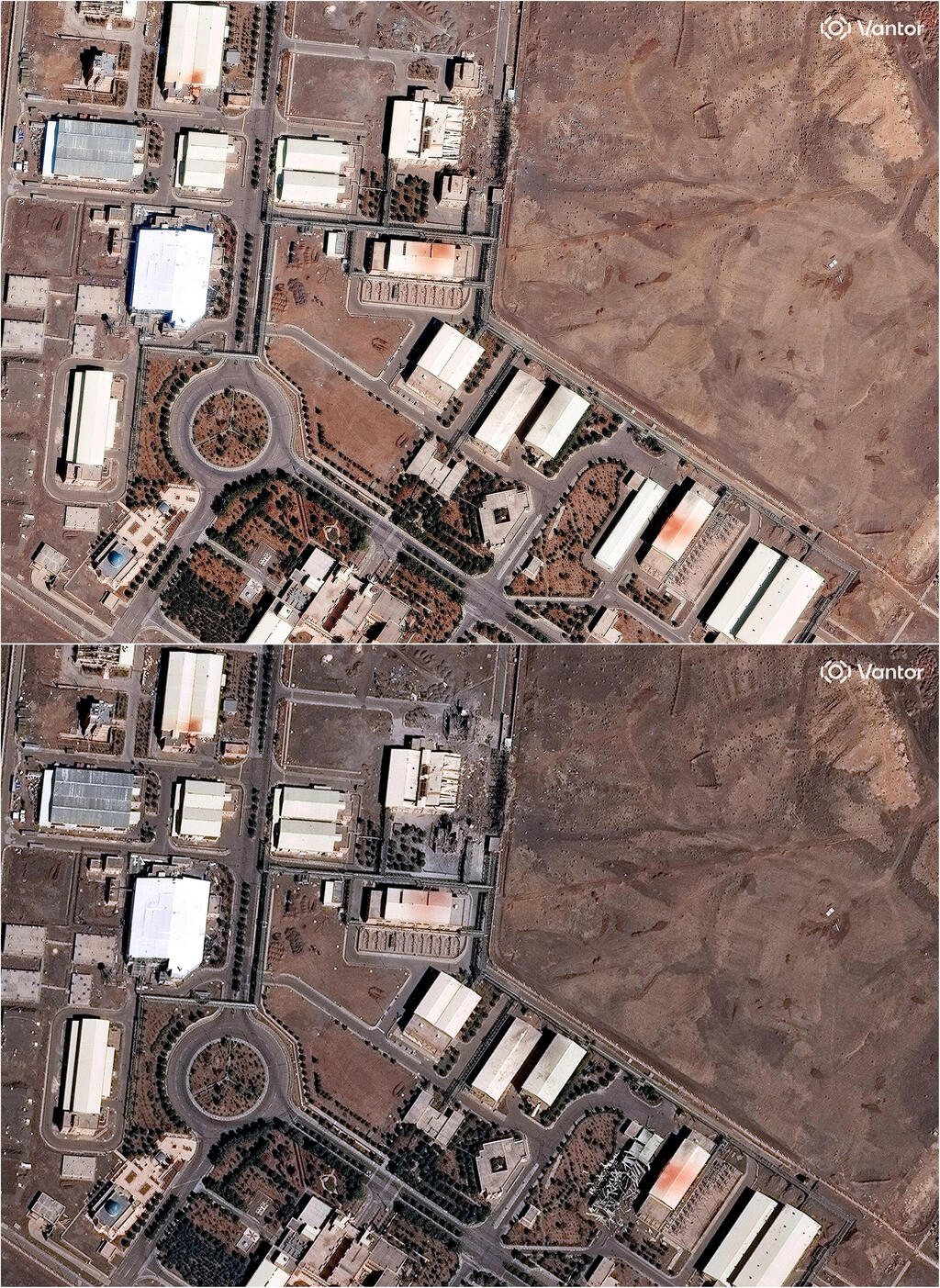
Natanz nuclear facility: Top — satellite image from March 1; bottom — satellite image from March 2
(Photo: Vantor/Handout via REUTERS)
Reza Najafi, Iran’s ambassador to the International Atomic Energy Agency, told reporters that airstrikes targeted the Natanz uranium enrichment site on Sunday. “Their justification that Iran wants to develop nuclear weapons is simply a big lie,” Najafi said.
UN nuclear watchdog IAEA confirmed some recent damage to entrance buildings at the site, adding that it expected no radiological consequence or additional impact detected at the facility itself.
Israel and the United States have not publicly acknowledged striking the site. During last June's 12-day war between Israel and Iran, the United States bombed Natanz. Israeli officials have said the current campaign is aimed at Iran’s “leadership and nuclear infrastructure.”
Meanwhile, an IDF spokesperson speaking to foreign media said it was not “very likely” that Israel would send ground forces into Iran, calling such a move “not a practical idea.”
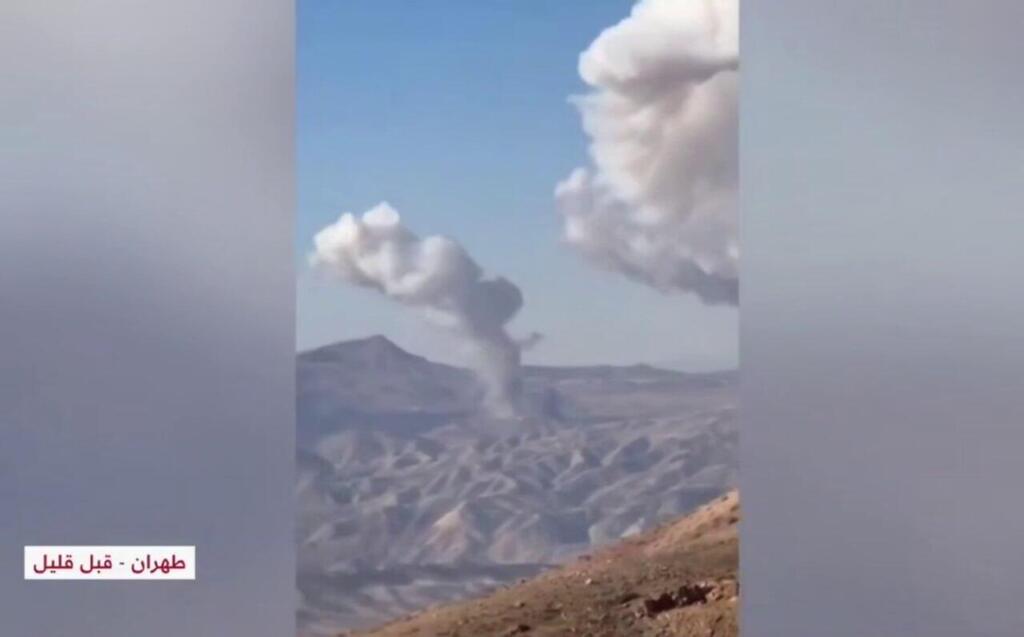
Airstrikes in Tehran
"I don't think that's something very likely at the moment for Israeli forces. There's not a practical idea at the moment that I know of," Lieutenant Colonel Nadav Shoshani said in an online briefing.
He added that the military had prepared for a campaign against Iran that could last several weeks, but the duration could change, depending on developments. He described progress so far as positive.
Prime Minister Benjamin Netanyahu said on Monday that the U.S.-Israel war with Iran could take "some time" but would not take years.
Meanwhile, Iranian media reported that air defense systems were activated in Tehran and Karaj. Sabereen News, a news outlet affiliated with pro-Iranian militias in Iraq, reported explosions in the central Iranian city of Isfahan.
Iranian outlets also reported that five members of the Islamic Revolutionary Guard Corps’ air and naval forces were killed in what was described as a joint U.S.-Israeli strike on the cities of Dayyer and Jam in Bushehr province.
Earlier, the IDF released footage it said showed an airstrike targeting a unit of Iranian air defense forces. The military said the Air Force continued to strike air defense systems intended to target aircraft, including launchers, missiles and radar systems.
Israeli airstrike eliminates Iranian air defense unit
(Video: IDF)


U.S. Central Command said it had destroyed Iranian command and control facilities, air defense systems, missile and drone launch sites and military airfields.
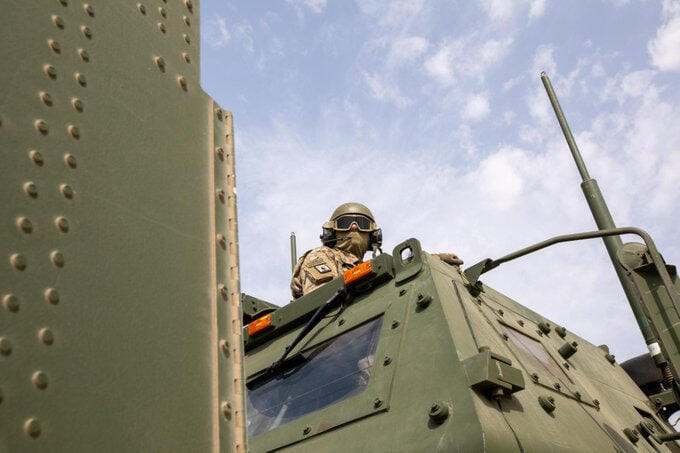
US military operations during the war with Iran
(Photo: CENTCOM)
(Photo: CENTCOM)
The command released footage showing the destruction of what it described as Iranian missile convoys and U.S. military operations.
Separately, Ayatollah Ali Moallemi, a member of the Assembly of Experts — the clerical body tasked with selecting Iran’s next supreme leader — told the state news agency IRNA that the selection process “will not be prolonged,” following the killing of Supreme Leader Ayatollah Ali Khamenei in an Israeli strike at the opening blow of the war.
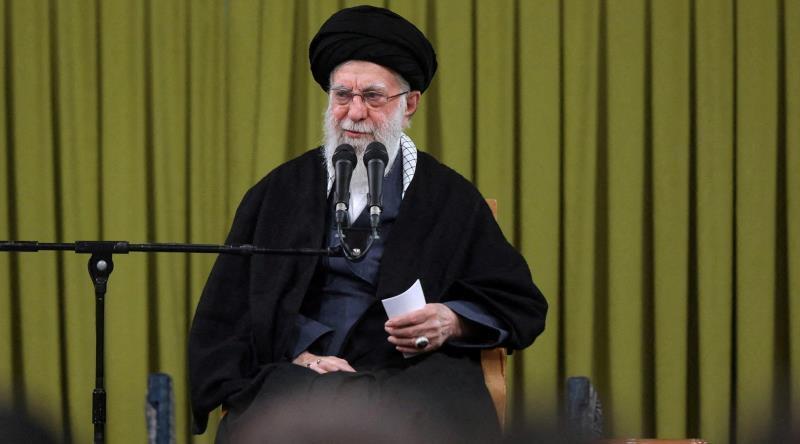
Iranian Supreme Leader Ayatollah Ali Khamenei
(Photo: Reuters)
IRNA reported that the Assembly had pledged that personal or political factional preferences would not influence the decision, and that members would vote based on their judgment and religious criteria.