

U.S. President Donald Trump’s decision to join Israel in striking Iran was shaped by a high-stakes presentation from Prime Minister Benjamin Netanyahu, followed by days of internal debate in the White House in which senior U.S. officials sharply questioned key parts of the Israeli plan.
According to a detailed New York Times report, the turning point came on February 11, when Netanyahu arrived at the White House for a closed-door meeting that would help set the United States on a path toward war.
Inside the Situation Room, Netanyahu presented what he described as a comprehensive strategy against Iran. Behind him, on large screens, appeared Mossad chief David Barnea and senior Israeli military officials, reinforcing the image of a coordinated wartime leadership.
Netanyahu argued that Iran was vulnerable not only to military strikes but also to internal collapse. He outlined a scenario in which a joint U.S.-Israeli operation could cripple Iran’s missile program, weaken the regime to the point it could not close the Strait of Hormuz, and spark a popular uprising that could ultimately lead to regime change.
At one point, the Israelis showed Trump a video featuring potential post-regime leaders, including Reza Pahlavi, the exiled son of Iran’s last shah.
The pitch appeared to resonate with Trump.
“Sounds good to me,” the president told Netanyahu, a response that Israeli officials interpreted as a likely green light for coordinated action.
But inside the U.S. administration, skepticism emerged almost immediately.
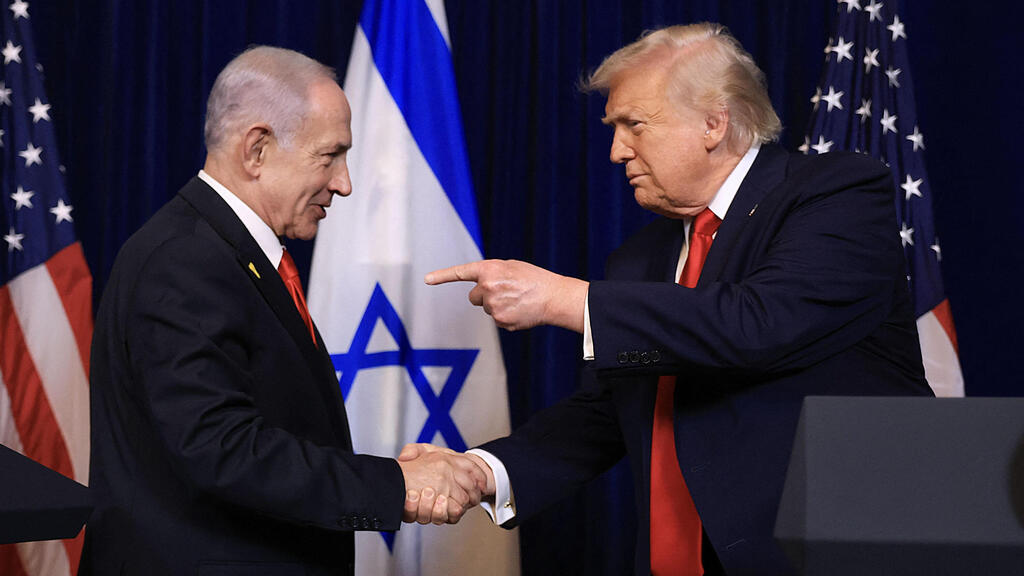
Benjamin Netanyahu and Donald Trump
(Photo: Joe Raedle/ Getty Images/ AFP)
Within hours, American intelligence officials were tasked with evaluating the Israeli proposal. Their conclusions, presented the following day in a meeting limited to U.S. officials, drew a sharp distinction between what was achievable and what was not.
According to the assessment, two of Netanyahu’s goals were considered realistic: targeting Iran’s leadership and degrading its military capabilities.
The other elements — a popular uprising and regime change — were dismissed as detached from reality.
CIA Director John Ratcliffe was blunt. He described the regime change scenarios as “farcical.”
Secretary of State Marco Rubio was even more direct: “In other words, it’s bullshit.”
Ratcliffe added that while regime change could theoretically occur, it should not be treated as a concrete objective.
Vice President JD Vance, who had just returned from a trip abroad, also expressed deep skepticism, warning of the risks of escalation and the unpredictability of Iran’s response.
Trump, however, was not persuaded that the flaws in the broader plan should derail military action.
At one point, he said regime change would be “their problem,” an ambiguous remark that could refer either to the Israelis or to the Iranian people.
What mattered more to the president were the parts of the plan he believed could be executed: striking Iran’s leadership and dismantling its military infrastructure.
As discussions continued over the following days, the internal divisions within Trump’s team became clearer.
Defense Secretary Pete Hegseth emerged as one of the strongest advocates for military action, arguing that confrontation with Iran was inevitable and should happen sooner rather than later.
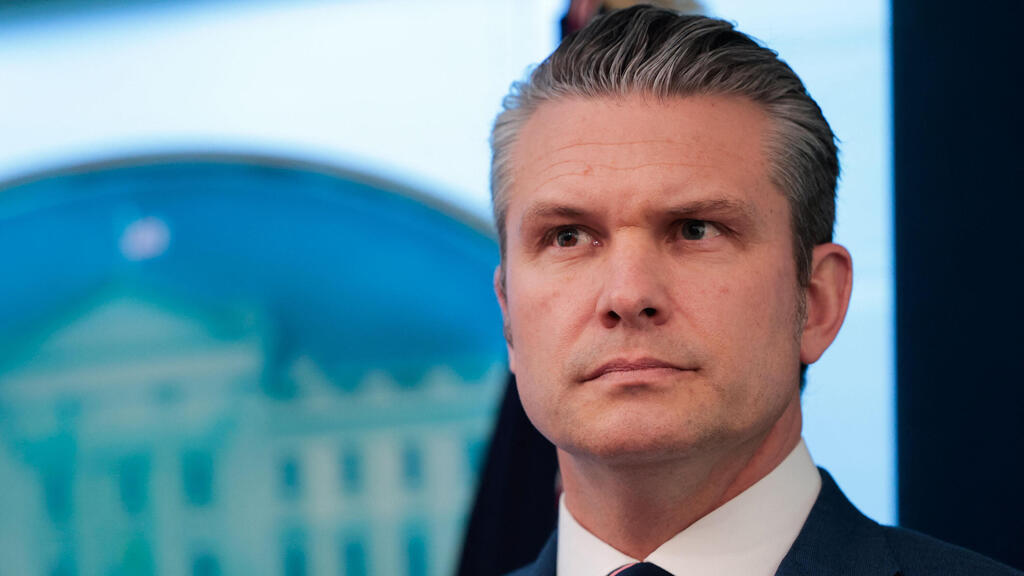
Defense Secretary Pete Hegseth
(Photo: Kent Nishimura/ AFP)
Rubio was more cautious. While skeptical that diplomacy would succeed, he preferred sustained pressure over a full-scale war. Still, he did not actively oppose the operation once it gained momentum.
White House Chief of Staff Susie Wiles expressed concerns privately about the political and economic consequences of another conflict in the Middle East, including rising oil prices and potential fallout ahead of midterm elections. But she did not push back forcefully in meetings.
The most consistent opposition came from Vance.
He warned that war with Iran could trigger regional chaos, cause significant casualties and strain U.S. military resources. He also raised concerns about the impact on Trump’s political base, which had largely supported his promise to avoid new wars.
Vance emphasized the risks surrounding the Strait of Hormuz, a critical global energy route, arguing that Iran could exploit its position to disrupt oil and gas supplies, with severe consequences for the global economy.
Despite these warnings, Trump’s own instincts — shaped over years of viewing Iran as a central threat — aligned more closely with Netanyahu’s argument for decisive action.
The president was particularly influenced by the prospect of dealing a significant blow to Iran’s leadership and military capabilities, even if broader ambitions like regime change were unrealistic.
In late February, new intelligence accelerated the timeline.
U.S. and Israeli officials learned that Iran’s supreme leader, Ayatollah Ali Khamenei, would be meeting with top officials in a location that could be targeted. The opportunity to strike at the core of Iran’s leadership added urgency to the decision-making process.
At the same time, diplomatic efforts continued. Trump gave Iran another chance to agree to terms that would halt its nuclear program, while U.S. negotiators explored possible compromises.
According to the report, the Iranians rejected a proposal that included long-term access to free nuclear fuel, viewing it as an affront to their sovereignty.
By February 26, the administration convened a final Situation Room meeting.
By then, positions were largely set. Trump asked each participant for their view.
Vance reiterated his opposition but said he would support the president if he chose to proceed.
Others stopped short of direct endorsement but made clear they would defer to Trump’s judgment.
Rubio framed the decision in narrower terms: If the objective was regime change, the operation should not proceed. But if the goal was to degrade Iran’s missile capabilities, it was achievable.
General Dan Caine, chairman of the Joint Chiefs of Staff, laid out the risks, including the strain on U.S. weapons stockpiles and the challenges of sustaining a prolonged campaign. He avoided offering a direct recommendation.
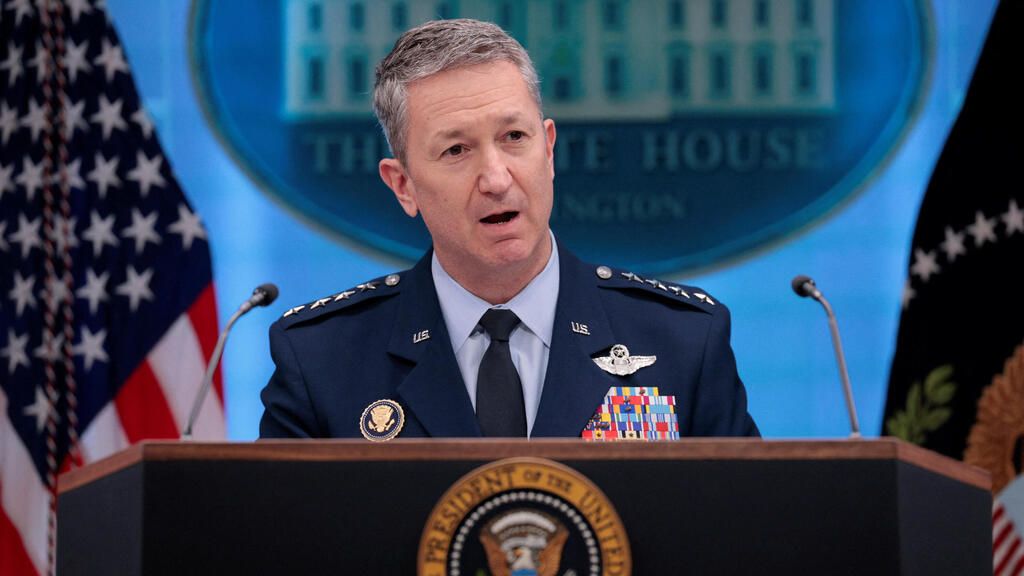
General Dan Caine
(Photo: Evan Vucci/ Reuters)
Trump listened, then made his decision.
“I think we need to do it,” he told the room.
The following day, aboard Air Force One, he gave the final authorization.
“Operation Epic Fury is approved. No aborts. Good luck.”
The decision reflected a balance between competing assessments inside the administration
Trump rejected the more ambitious vision of regime change but embraced the core military objectives outlined by Israel. He moved forward despite warnings about escalation, resource constraints and geopolitical risks.
In doing so, he set the United States on a path toward a conflict that, even at the moment of decision, carried significant uncertainty.
The debates inside the White House revealed a familiar pattern: a president guided heavily by instinct, advisers divided over risks and outcomes, and a final call shaped less by consensus than by Trump’s own confidence in decisive action.
As the war unfolded, that decision would define not only the trajectory of the conflict with Iran, but also the broader strategic posture of the United States in the region.