

Israeli police are intensifying efforts to combat domestic disinformation campaigns ahead of Tuesday's national election, targeting fake social media accounts, artificial intelligence-generated videos and coordinated influence operations aimed at manipulating voters.
The operation, led by a specialized police intelligence unit known as Matzpen, will reach its peak on Election Day and continue until polling stations close at 10 p.m.
While the Shin Bet domestic security agency has spent recent months tracking foreign influence operations intended to affect the election's outcome, police investigators are focusing on individuals and groups operating inside Israel.
Matzpen, which operates within the Israel Police Intelligence Division and the national cybercrime unit of the Investigations and Intelligence Department, has been monitoring online activity for six months in an effort to identify and disrupt attempts to undermine the integrity of the vote.
Police announced Sunday that the unit had secured the removal of two networks engaged in what authorities described as improper activity on X and Facebook.
Separately, the Yashar! party, led by former IDF chief Gadi Eisenkot, filed a complaint after unidentified individuals allegedly forged a public message purporting to come from the party.
Fake profiles, AI videos and coordinated manipulation
According to police, domestic actors are employing an increasingly sophisticated range of tactics to influence voters, including creating fictitious social media profiles, impersonating real individuals and circulating posts that either promote or attack political candidates.
Other methods include spreading fabricated news about political parties, impersonating candidates and publishing statements in their names, and distributing AI-generated videos designed to mislead viewers.
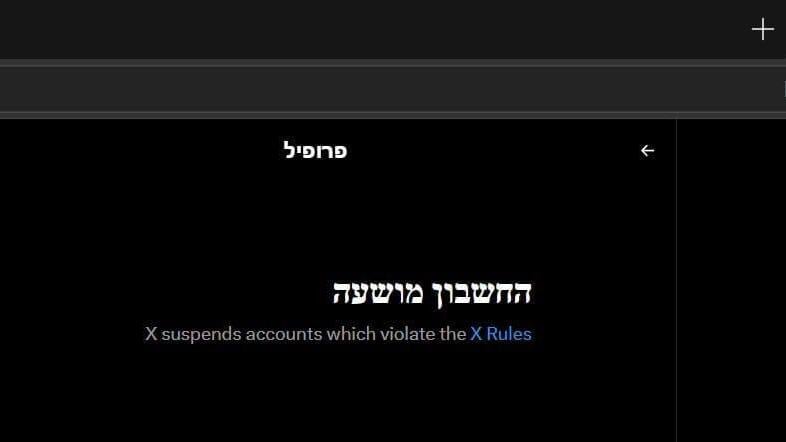
An X account removed by the police for promoting election disinformation
(Photo: Israel Police)
Authorities have also identified coordinated efforts to flood social media posts with favorable or defamatory comments, creating the appearance of public support or opposition.
The techniques can make it difficult for voters to distinguish genuine political debate from organized manipulation.
Police warn that social media users should approach election-related content with caution, particularly when its source or authenticity cannot be verified.
Despite the extensive monitoring operation, investigators acknowledge that they can identify and disrupt only a small proportion of the individuals and networks engaged in such activity.
Police officials say the practice is unlikely to diminish significantly unless those responsible recognize that they could face substantial fines or prison sentences.
Police prioritize disruption over identifying operators
Police say impersonation, fraudulent accounts and automated networks designed to manipulate public opinion can constitute criminal offenses involving impersonation or forgery, depending on the circumstances.
However, investigators acknowledge that their immediate priority is stopping harmful online activity rather than identifying and prosecuting every person behind it.
"We are currently focused on monitoring the internet to identify and thwart activity across the various online platforms," police said.
That approach means authorities are concentrating on detecting coordinated campaigns and securing the removal of offending content before it reaches more voters.
Under normal circumstances, Matzpen primarily monitors social media for incitement against the State of Israel and incitement to terrorism.
With the election approaching, however, the unit has shifted significant resources toward protecting the integrity of the democratic process.
Six months of monitoring ahead of Election Day
A senior official in Matzpen, which operates within the police Intelligence Division, told ynet that investigators have been preparing for the election for approximately six months.
"We have been involved in safeguarding the integrity of Israel's elections for six months now," the official said.
"We are confronting domestic actors who are trying to undermine the integrity of the elections, and we are working around the clock to monitor the internet and identify influence operations aimed at promoting or discrediting a candidate or political party."
The official said the intensity of the operation has increased as Election Day approaches.
"Our work is becoming increasingly intensive as we get closer to Election Day," the official said. "Tomorrow will be our busiest day, and until the polls close, we will work to thwart online activity by bots seeking to smear a rival party or promote a candidate or political party."
Investigators are also targeting accounts that impersonate real people or fabricate political identities.
"We are also disrupting the activity of online impersonators and fictitious personas that publish posts, tweets or TikTok videos containing fake news or impersonating candidates running in the election," the official said.
Working with social media companies to remove content
When investigators identify suspected coordinated manipulation, they work through the cyber department of the State Attorney's Office to request the removal of offending content.
The requests are directed to operators of major social media platforms, including X, Instagram, TikTok and Facebook.
"When we identify such activity, we contact the operators of Twitter, Instagram, TikTok and Facebook through the cyber department of the State Attorney's Office and ask them to remove activity that we have been able to establish is improper," the senior official said.
The process requires investigators to establish that the targeted activity violates applicable rules or laws before seeking its removal.
Police have not disclosed how many individuals are suspected of operating the networks or whether the two networks removed from X and Facebook were connected to particular political parties or candidates.
The operation comes amid broader concerns about efforts to manipulate Israel's election through both domestic and foreign influence campaigns.
For police, the immediate challenge is the speed at which misleading content can spread across social media, particularly in the final hours before voting ends.
Authorities say they will continue monitoring the platforms until the last polling stations close Tuesday night, seeking to prevent coordinated disinformation campaigns from influencing voters before ballots are cast.