

Colombia’s pro-Israel presidential candidate, Abelardo de la Espriella, advanced Monday to the second and decisive round of the country’s election after a surprise first-place finish, defeating leftist frontrunner Iván Cepeda in the first round.
De la Espriella, a hard-right criminal lawyer and millionaire businessman, has pledged to rebuild Colombia’s military and strategic ties with the United States and Israel after years of anti-Israel policy under outgoing President Gustavo Petro.
Gallery
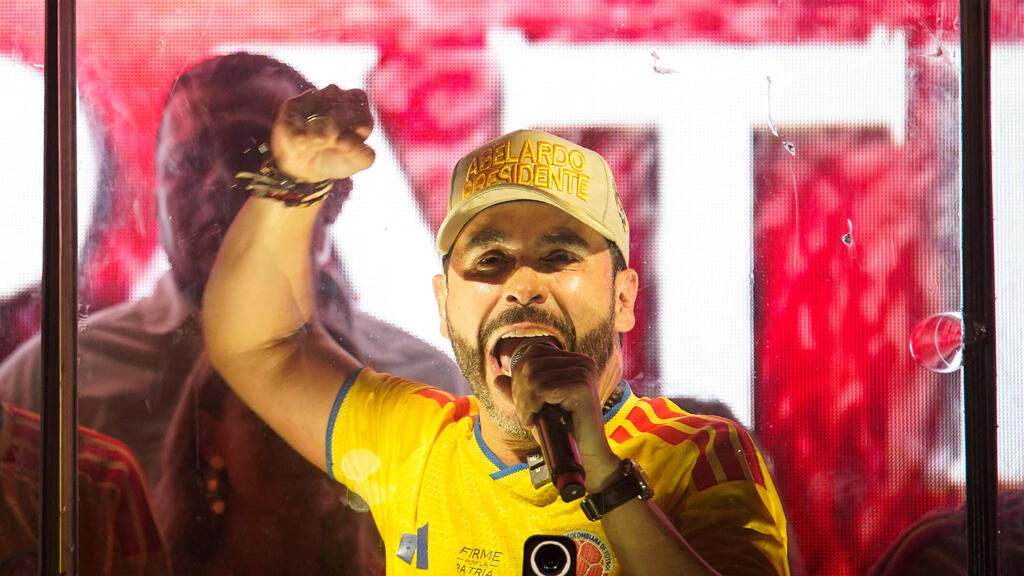
De la Espriella addresses supporters after results, wants US and ‘democratic forces’ to monitor runoff
(Photo: REUTERS/Sergio Acero)
With 43.7% of the vote, de la Espriella finished ahead of Cepeda, a leftist senator and ally of Petro, who won 40.9%. Since no candidate crossed the 50% threshold needed to win outright, the two will face each other in a runoff on June 21. The winner will serve a four-year term as president.
The result marks a major warning sign for Cepeda. In the runoff, de la Espriella is expected to benefit from many of the right-wing voters who backed another conservative candidate, Paloma Valencia, in the first round. Valencia won less than 7% of the vote and has already said she will support de la Espriella in the second round.
Still, turnout in the first round was only 58%, leaving room for Cepeda to narrow the gap if he can bring more voters to the polls.

Hard-right candidate’s supporters cheer him after first-round win; runoff turnout could shift the race
(Photo: REUTERS/Sergio Acero)
After the results were published, Cepeda and Petro cast doubt on their reliability, claiming without evidence that “foreign actors” had manipulated the vote and somehow interfered with hundreds of thousands of ballots. Cepeda stopped short of explicitly alleging fraud, but said he would wait for the electoral commission to complete a detailed review before recognizing the results.
In a combative victory speech in Barranquilla, where his supporters celebrated the result, de la Espriella declared: “We are going to change Colombia’s history.” Looking ahead to the runoff, he said he wanted the United States and “democratic forces” to monitor the vote.
Cepeda, speaking from Bogotá, vowed to defeat what he called “the fascist far right.”
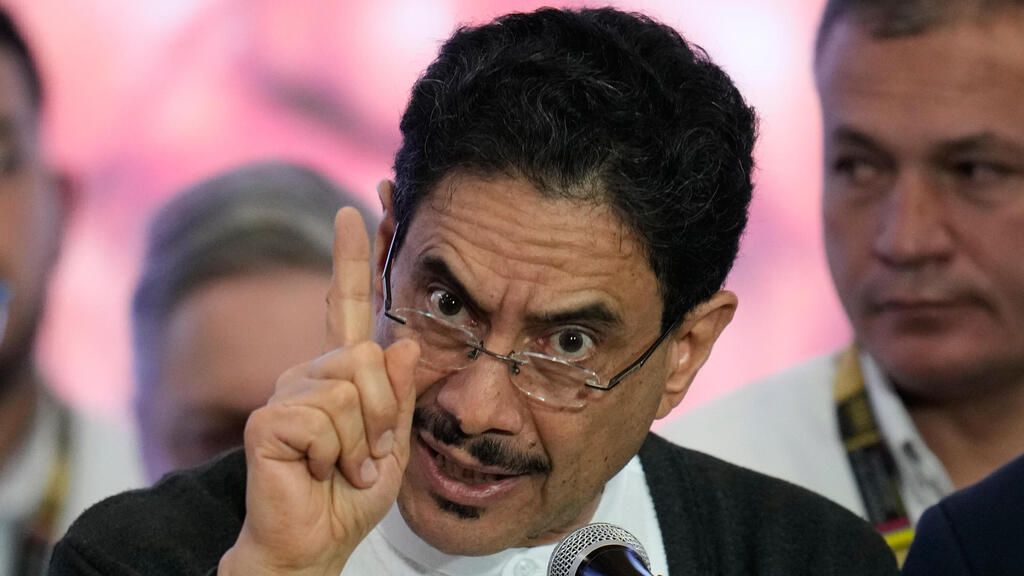
Leftist candidate Cepeda after results; he has not formally conceded
(Photo: AP Photo/Matias Delacroix)
Colombia was for decades a key U.S. ally and a stable source of support for Israel in Latin America. Petro, the first leftist ever elected president of Colombia, transformed that policy. Since the October 7 massacre and the war in Gaza, he has severed diplomatic ties with Israel, accused it of “genocide” against Palestinians, imposed sanctions including a coal export ban, joined South Africa’s case against Israel at the International Court of Justice and called for the creation of a “great army to liberate Palestine.”
Petro will complete his four-year term in August and is barred by the constitution from seeking a second term.
The election is seen not only as a test of Colombia’s future relationship with Israel, but also as part of a broader conservative wave across Latin America after right-wing victories in Bolivia, Honduras, Chile and Costa Rica. It also comes as U.S. President Donald Trump has become increasingly active in the region, including support for Argentine President Javier Milei and the January operation to capture Venezuelan President Nicolás Maduro.
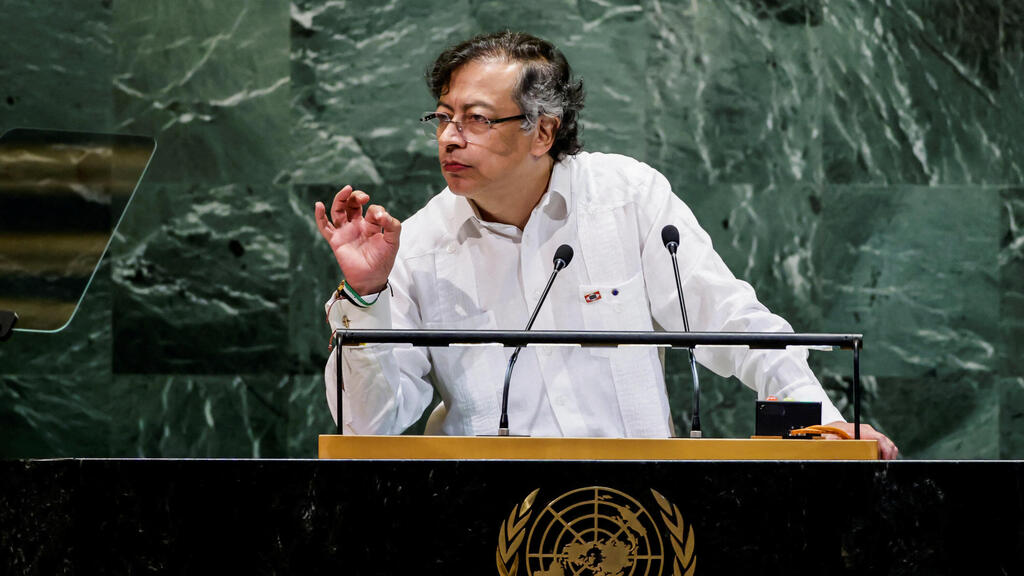
Outgoing President Petro, who called for a ‘great army to liberate Palestine’
(Photo: REUTERS/Eduardo Munoz)
De la Espriella, 47, calls himself a political outsider and “the tiger that woke up,” a central theme of his campaign. Until recently, he lived in Florence, Italy, enjoying a luxury lifestyle that included private jets and rum and wine businesses. He also holds U.S. citizenship and owns an estate in Miami.
He has made a hard line against Colombia’s left a centerpiece of his campaign, accusing it of “destroying” the country. He promises an uncompromising fight against crime and rebel groups, including a bombing campaign he says would be carried out with support from the United States and Israel.
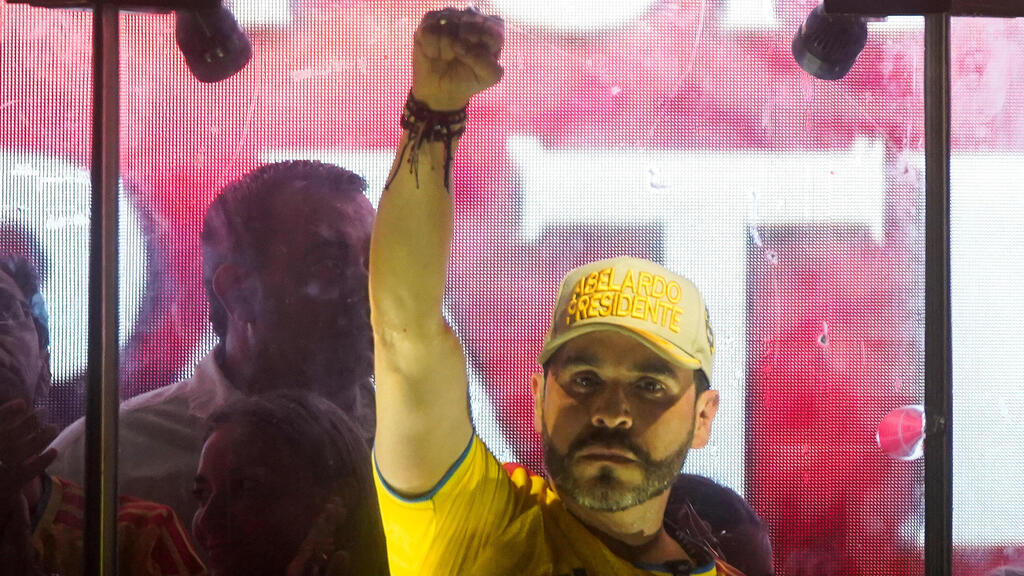
De la Espriella
(Photo: REUTERS/Sergio Acero)
“We will immediately begin bombing the camps of the narco-terrorists and spraying drug crops,” he said in February. “This cannot be done without a strategic alliance with the United States and the State of Israel.”
De la Espriella has promised that, if elected, he will restore ties with Israel and open a Colombian embassy in Jerusalem. In November, he met Foreign Minister Gideon Sa’ar in Buenos Aires and said Colombia had an “urgent need” to renew relations with Israel.
“A strategic alliance with the State of Israel and the U.S. government will not only make us stronger, but will place us on the right side of history,” he said at the time. “Only by strengthening relations and learning from nations that successfully confronted terrorism, and overcame historic challenges such as exile, the Holocaust, barren land and attacks by enemies, will we be able to find the key to defeating our own evils.”
De la Espriella has also drawn criticism for his record as a criminal lawyer who represented controversial figures, including militia members, drug traffickers and Alex Saab, a close associate of former Venezuelan leader Maduro. He has not apologized, saying they were professional relationships only.

The tiger motif dominated de la Espriella’s campaign, with an Israeli flag also appearing onstage at his rally
(Photo: Vanessa ROMERO / AFP)
He describes himself as an admirer of El Salvador’s President Nayib Bukele, whose hard-line campaign against crime has sharply reduced the murder rate but has been criticized by opponents as authoritarian. De la Espriella has promised to follow a similar path, declaring a state of emergency and building 10 “mega-prisons” in the jungle.
“Any criminal who does not surrender will be eliminated as the law permits,” he has said.
His campaign has leaned heavily into machismo, military-style salutes, profanity and culture-war themes such as defending traditional family values. He has also made crude references to his masculinity and was recently criticized after showing a television image of himself in tight pants and boasting about a visible bulge.
On economic policy, he says he will draw inspiration from Milei and cut the size of Colombia’s government by about 40%. His campaign has also relied heavily on social media.
Cepeda, 63, is the son of Manuel Cepeda, a communist senator assassinated by right-wing militia gunmen in 1994. He first became known to Colombians when he appeared before cameras beside his father’s bullet-riddled car and called for justice.
“Do not allow this crime to go unpunished,” he said at the time, during a period in which leftists were persecuted and thousands were killed.
Cepeda later lived in exile in several countries, including Cuba and France. After returning to Colombia, he was elected to the House of Representatives in 2010 and to the Senate four years later. “I survived genocide, stigmatization and relentless persecution,” he said during the campaign. “And here I am, still standing.”
He played a central role in talks leading to the peace agreement with the FARC guerrilla group last decade. His opponents accuse him of ties to the group and describe him as a Marxist and communist, charges he denies.
Cepeda is quieter and more restrained in style than Petro, but has called for policies even more radical than those of the outgoing president. He supports a new “social and economic model” that includes redistributing agricultural land to the poor and increasing public spending. The reforms, he has said, must be “not only deeper, but in some cases radical.”
The central issue troubling voters in Colombia, Latin America’s third-most populous country with 53 million people, is rising violence by guerrilla groups and drug cartels. Colombia has faced 60 years of conflict with communist insurgent groups. Despite the historic 2016 peace deal with FARC, dissident factions and other groups such as the ELN continue to wage armed campaigns, largely financed by drug trafficking.
Petro’s “total peace” policy, which promised to end the decadeslong conflict through talks with all armed groups, has largely failed. Armed groups have strengthened, while cocaine production has reached record highs. Colombia is now responsible for about two-thirds of the world’s cocaine supply.
Cepeda faces heavy criticism because he is seen as one of the architects of that policy and continues to support negotiations with rebel groups.
If elected, Cepeda is expected to continue Petro’s confrontational approach toward Israel. He supported Petro’s 2024 decision to sever ties and said last August that he was “proud” Petro had led the fight against Israel over what he called the “genocide” in Gaza.
“He took a very clear position, broke relations with Israel, demanded justice, sought justice in the international arena and called for an immediate halt to the violence,” Cepeda said.
On ties with the United States, Cepeda says he supports “constructive” relations but added: “They cannot treat us as servants, as slaves, as a colony.”
For Colombia, the runoff will decide not only whether Petro’s left-wing project continues, but whether the country sharply reverses course toward Washington and Jerusalem.