

German Chancellor Friedrich Merz will arrive in Israel on Saturday for his first visit of the term, a trip made possible by the cease-fire in Gaza after months of harsh criticism he leveled over the fighting there. The halt in hostilities has opened the door to repairing strained ties between the countries. The visit comes shortly after Israel transferred the first operational Arrow 3 missile defense system to Germany, a move widely covered in the German press, which highlighted capabilities the European power had previously lacked.
Merz has sharply criticized Israel — at one point imposing an embargo on offensive weapons — but has also repeatedly stressed the alliance between the two countries, saying Germany knows “it stands with Israel.” His government also played a key role in keeping Israel in the Eurovision Song Contest. His visit to Jerusalem, which will continue Sunday and includes meetings with Prime Minister Benjamin Netanyahu and President Isaac Herzog, is seen as extraordinary given the prime minister’s international isolation. Merz is also expected to make a brief stop in Jordan beforehand.
Gallery
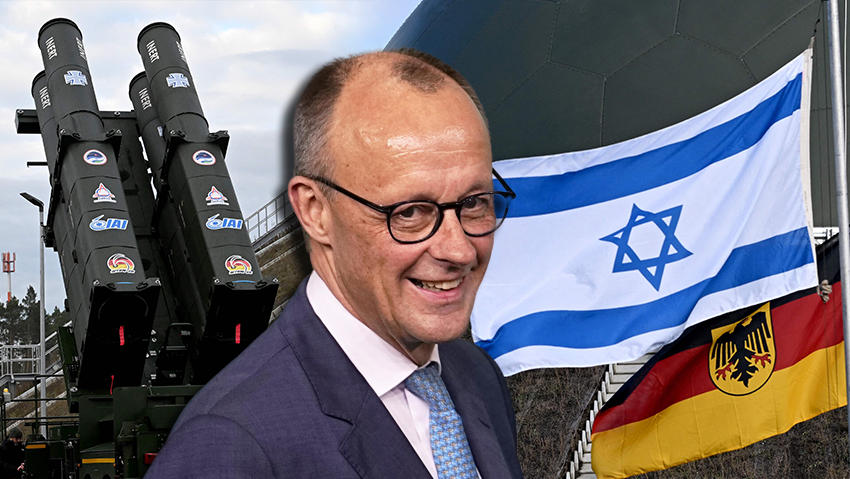
Friedrich Merz, against the backdrop of the 'Arrow 3' system in Germany
(Photo: RALF HIRSCHBERGER / AFP, AP Photo/Martin Meissner)
Merz will visit the Yad Vashem Holocaust memorial and lay a wreath, and is expected to meet representatives of civil society. It is unclear whether he will invite Netanyahu for a return visit to Berlin. Merz previously said he would not enforce the international arrest warrant against the prime minister, but he has rarely addressed the issue since taking office. Israel’s ambassador to Berlin, Ron Prosor, said the chancellor “will be received with open arms, even when disagreements arise. His arrival in the 60th year of Germany-Israel relations is a milestone and a signal to Israelis that the two countries will continue to stand together.”
Against the backdrop of Berlin’s criticism of the humanitarian situation in Gaza and violence in the West Bank, Merz’s spokesperson said Friday that relations between the countries “are normal, close and based on trust. Their special importance does not preclude raising concerns about certain aspects of Netanyahu’s policy.”
Since the cease-fire, German criticism of Israel has softened, and Germany lifted its partial arms embargo in late November. Netanyahu and Merz are expected Sunday morning to discuss efforts to move to phase two of the cease-fire, which would include Gaza’s reconstruction, though both sides acknowledge that U.S. policy will ultimately drive the process.
One of the most sensitive topics in their talks will be the West Bank. Merz’s spokesperson on Friday condemned “the massive rise in settler violence” and repeated a call for Israel “to stop settlement construction.” Several German outlets also highlighted a recent controversy involving ARD correspondent Sophie von der Tann, who was accused in Israel of antisemitism and one-sided reporting. The allegations drew a response from Reporters Without Borders, which said the criticism amounted to “attempts at intimidation.”
Michael Rimmel, head of the Konrad Adenauer Foundation in Jerusalem, which is closely aligned with Merz’s Christian Democratic Union, told AFP that Netanyahu has “high expectations” for the visit and hopes for a signal of continued support from Berlin. But Rimmel acknowledged that in recent months Berlin’s statements have had little impact compared with the “far greater influence” of former President Donald Trump, whom he described as the only figure capable of pushing Israel to maintain the cease-fire.
Germany’s radical left parties criticized Merz’s decision to visit Israel and meet Netanyahu, arguing it normalizes the prime minister despite an arrest warrant for alleged war crimes and crimes against humanity. German aid organizations urged the chancellor to pressure Israel to increase humanitarian assistance to Gaza.
Still, analysts in Germany stress that Berlin’s core interests in Israel run deep, especially after receiving the Arrow system. Germany relies on Israel for security cooperation, particularly amid rising Russian threats. Berlin has also recently highlighted Israeli assistance in improving its defenses against drones.
The 'Arrow 3' and Germany’s strategic interest
German news outlets have been covering the Arrow 3 deal extensively, focusing on its strategic significance and the fact that no European country has anything comparable. The agreement — the largest security cooperation project ever between Israel and Germany — is valued at roughly 3.6 billion euros and positions Israel as a critical security partner not only for Berlin, but for NATO and Europe as a whole. The advanced Israeli system is the only immediately available defense capable of intercepting long-range ballistic missiles.
Der Spiegel, one of Germany’s most influential publications, devoted a detailed report to the system under the headline: “This is what Germany’s new missile defense system can do.” The subhead emphasized that the system “may intercept Russia’s new medium-range missiles and also bolster Germany’s defenses in space.”
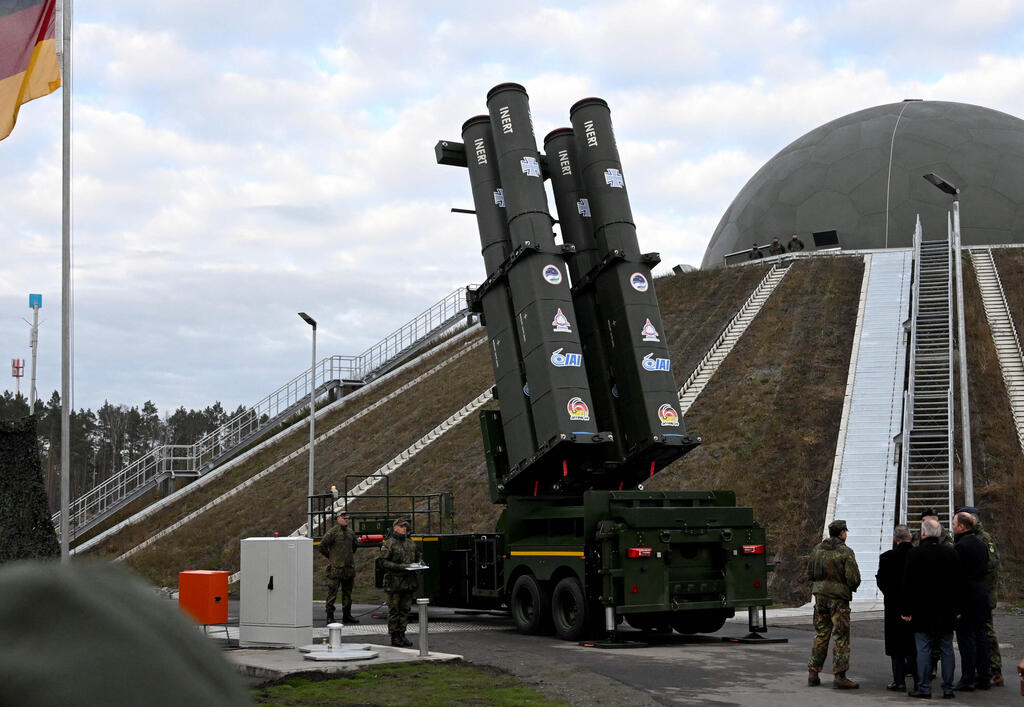
Arrow 3 system in Germany
(Photo: RALF HIRSCHBERGER / AFP)
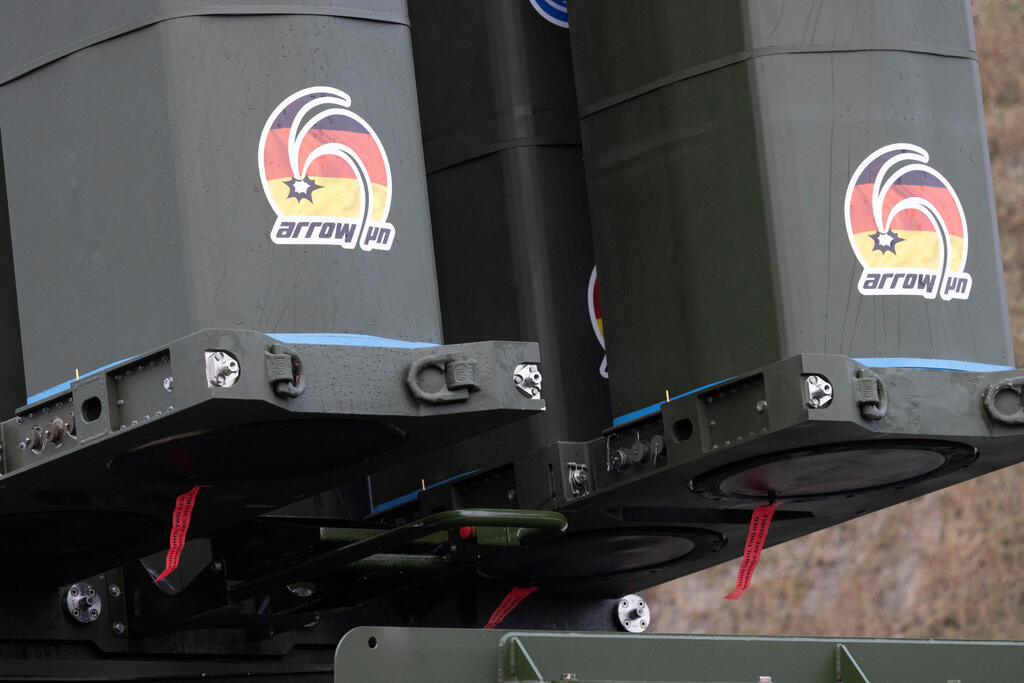
(Photo: REUTERS/Axel Schmidt)
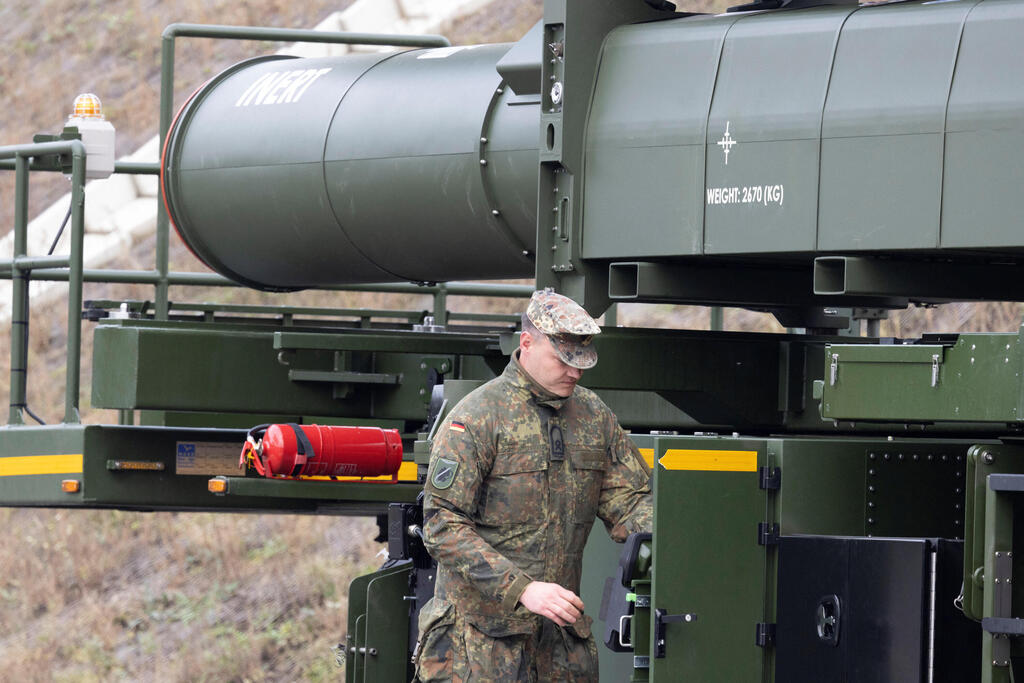
(Photo: REUTERS/Axel Schmidt)
The magazine noted that Germany still has major gaps to close in its air-defense capabilities. “For decades, air threats were not seen as central,” said Lt. Gen. Holger Neumann, Germany’s air force inspector. “If we fail to maintain German and allied air superiority, we cannot defend our country.”
Deputy Defense Minister Nils Hilmer added that Arrow 3 is more than just another interceptor. It gives Berlin the ability to defend not only itself, he said, but also its allies. He stressed that cooperation with Israel and the United States made the deal possible and that it sends a message to those threatening Germany. “This is a direct response to Russia’s war of aggression against Ukraine and to Moscow’s new missiles,” he said. “The turning point has become visible today.”
According to Der Spiegel, deployment of Arrow 3 near Berlin — with additional deployment planned in southern and northern Germany — is part of the military’s strategy to close gaps in air defense. Full deployment is expected by 2030. The system is designed to destroy medium-range missiles that travel outside the atmosphere during part of their ballistic trajectory.
“With this strategic capability, unique among our European partners, we secure our central role in the heart of Europe,” German Defense Minister Boris Pistorius was quoted as saying. “We are protecting not only ourselves, but our partners as well.”
Arrow 3 will form the top layer of a planned multi-tiered German air-defense shield. The air force intends to intercept hostile drones, cruise missiles and ballistic missiles across all altitude ranges, up to outer space. The systems being incorporated include the Skyranger anti-aircraft turret, Iris-T SLM missiles, the U.S. Patriot system and the Arrow family.
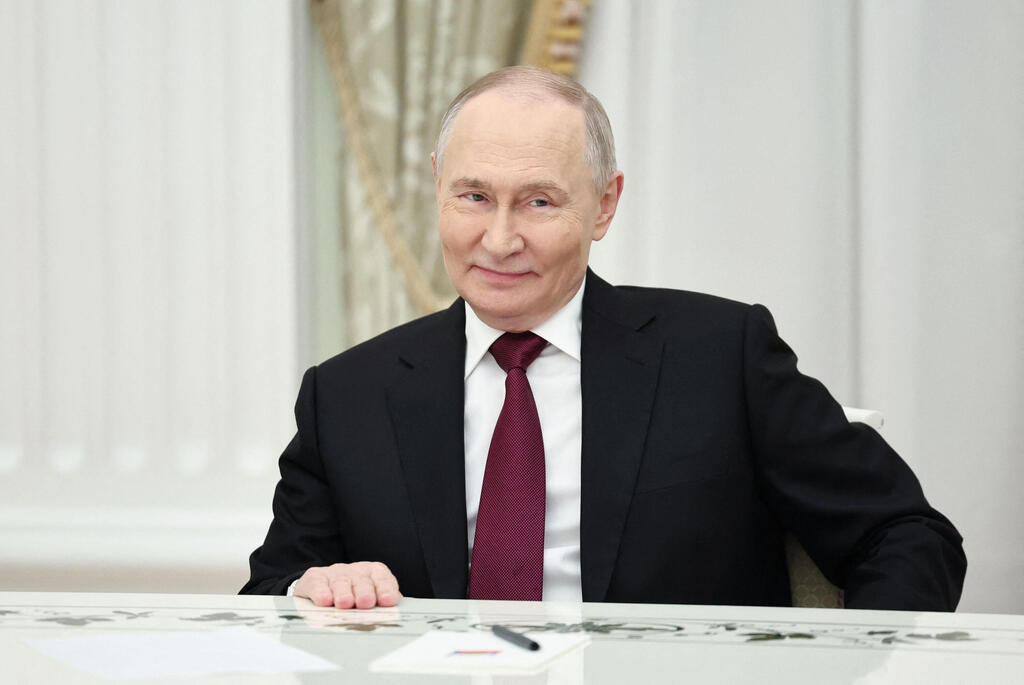
Vladimir Putin
(Photo: Alexander KAZAKOV / POOL / AFP)
Der Spiegel broke down how the system works: a radar detects enemy missiles and tracks their trajectory; a command station calculates their projected path and issues the launch order; the first stage of the Arrow missile propels it upward, and the second stage is designed to strike the incoming missile. German military officials explained that intercepting threats in space is essential to minimizing risk from radioactive or chemical warheads, as well as debris falling into populated areas — something that has occurred repeatedly in the Iran-Israel conflict.
Facing the 'Oreshnik' threat
The report highlighted the threat posed by Russia’s “Oreshnik” medium-range missile, which President Vladimir Putin has described as a “new experimental missile.” The weapon, used against Ukraine in November 2024, carries multiple warheads and is believed to have a range of 2,000 to 3,000 kilometers — far enough to reach Spain from Russia.
Fabian Hinz, a missile expert at the International Institute for Strategic Studies in Berlin, said Arrow 3 should in principle be able to counter the Oreshnik. Another expert, Markus Schiller, described Arrow 3 as “an impressive system with which Israel has successfully intercepted Iranian missiles on several occasions.”
Those Iranian missiles likely had a single warhead, while the Oreshnik can carry up to six, each packed with sub-munitions. A strike of that kind would require at least six Arrow 3 interceptors to neutralize the warheads early, and the system’s effectiveness would depend heavily on early detection. For that reason, Schiller said, the Arrow battery deployed in Germany will need to be linked to sensors in other European countries — and potentially to space-based sensors as well.
Still, Arrow 3 is not designed to intercept lower-altitude missiles or cruise missiles — threats Europe still lacks adequate defenses against. German media identified this as the main criticism of the deal. As a result, Der Spiegel noted, Germany may also move to purchase the newer Arrow 4, now in development, which is intended to fill the gap between Arrow 3 and the Patriot system. An air force spokesperson told the magazine last May that acquiring Arrow 4 would be a “logical and effective addition” that would offer optimal coverage against airborne threats.
Hinz added that Arrow 3 could also serve functions beyond medium-range missile defense: its radar could help the German military build a clearer picture of activity in space, and the system might even be used as an antisatellite weapon.