

The battle over the future of Israel’s judiciary, which fueled some of the country’s fiercest political divisions in recent years, is again emerging as a major issue in the 2026 election campaign.
Ynet and Yedioth Ahronoth asked the parties competing in the election to spell out what they would do about the judicial overhaul, the system for appointing judges and the limits of the Supreme Court’s power to review government decisions and legislation. The answers reveal sharply different visions, ranging from a written constitution and stronger protections for judicial independence to an override clause, restrictions on judicial review and even direct public elections for Supreme Court justices.
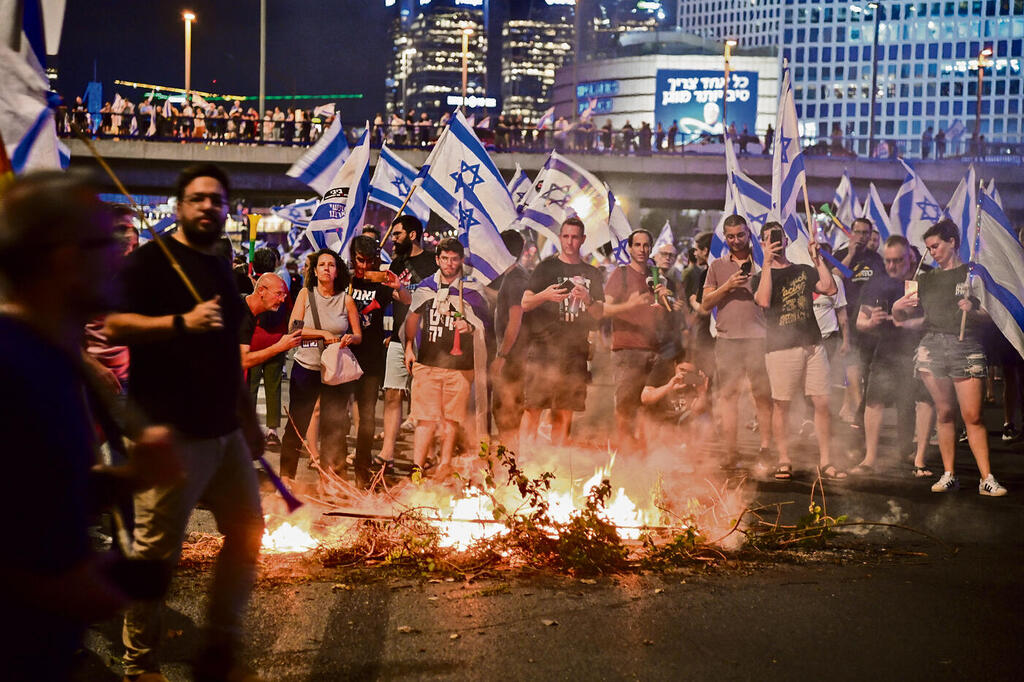
(Photo: Yair Sagi)
Likud
Likud declined to respond to the questions, saying the party “does not participate in questionnaires.”
Yashar
Yashar, led by former IDF chief of staff Gadi Eisenkot, said it would seek to strengthen Israel’s democratic institutions and establish clearer constitutional rules governing relations between the legislature, executive and judiciary.
The party said it would repeal the law changing the composition of the Judicial Selection Committee, which it described as politicizing the appointment process, and replace it with a system established through a Basic Law and designed to balance professional and public considerations while protecting judicial independence.
Yashar opposes an override mechanism that would allow the Knesset to reenact legislation struck down by the Supreme Court. Instead, it said it would establish clearer rules for judicial review through a Basic Law governing the judiciary alongside a Basic Law on legislation.
Beyachad
Beyachad said Israel needs to end years of institutional conflict by formally defining the powers of the Knesset, government and Supreme Court.
The party proposes a Basic Law on legislation that would determine how Basic Laws are enacted, what majority is required and under what circumstances the Supreme Court may intervene.
It also wants Israel’s Declaration of Independence enacted as a Basic Law and made the opening chapter of a future constitution.
Beyachad said it would repeal the new law governing judicial appointments, arguing that the measure would politicize the court system.
Yisrael Beytenu
Yisrael Beytenu is proposing a more comprehensive solution: a written constitution that would be put to the public in a national referendum.
The party says the constitution would establish fundamental rights and define the powers of the legislative, executive and judicial branches rather than continuing what it calls a piecemeal approach to constitutional change.
Its framework was developed with former justice minister Daniel Friedmann, constitutional law scholar Uriel Reichman and former minister Moshe Nissim. Once approved, Yisrael Beytenu says the constitution could be amended only with the support of at least 80 of the Knesset’s 120 members.
Otzma Yehudit
Otzma Yehudit said it was still preparing a detailed judicial platform with legal experts and senior figures in the legal field.
The party said the issue would be one of its central campaign themes and that the full plan would be released in the coming days.
The Democrats
The Democrats argue that the most urgent problems facing the justice system are not excessive judicial power but delays, overloaded courts and a shortage of judges.
The party proposes establishing an intermediate appeals court between the district courts and the Supreme Court, expanding mediation and arbitration, appointing additional judges and shortening legal proceedings.
On the wider constitutional dispute, the Democrats say Israel needs a comprehensive definition of the separation of powers and the independence and authority of each branch of government.
Amcha Israel
Amcha Israel takes the opposite view, arguing that the balance between the branches has shifted too far toward the courts and that elected representatives need greater power.
The party proposes creating an additional judicial tier with what it describes as a more balanced appointment system reflecting public preferences.
It would remove representatives of the Israel Bar Association from the Judicial Selection Committee and narrow the use of the “reasonableness” standard, under which courts may review government decisions deemed extremely unreasonable.
The party argues that the standard gives judges too much discretion and that reducing its scope would help restore public confidence in the judiciary.
The Reservists-Economic Party
The Reservists-Economic Party also supports substantial changes but says they should be part of a broader constitutional framework.
It proposes first enacting a Basic Law on legislation, with lawmakers determining a new balanced composition for the Judicial Selection Committee.
The party supports allowing the Knesset to override a Supreme Court decision striking down legislation, but only with a special majority of more than 72 lawmakers. It would narrow, but not abolish, the reasonableness standard and require at least 61 lawmakers to enact Basic Laws.
Religious Zionism
Religious Zionism leader Bezalel Smotrich and lawmaker Simcha Rothman have presented one of the most extensive plans for further changes to the judicial system, making implementation of their proposals a condition for joining a future coalition.
“The election is about the judicial system,” Smotrich said when presenting the plan.
The party wants the president and deputy president of the Supreme Court chosen in a secret ballot of judges from across Israel’s court system rather than through the Judicial Selection Committee.
It also proposes splitting the attorney general’s current responsibilities between separate legal adviser and chief prosecutor positions. The attorney general and legal advisers in government ministries would become political appointments serving at the confidence of the government or relevant minister, while the chief prosecutor would be appointed through a different process involving the justice minister and a public committee.
Supreme Court nominees would face public hearings, while laws could be struck down only by an expanded bench and a special majority of justices.
The plan also includes an override clause allowing the Knesset to reenact legislation invalidated by the Supreme Court with 61 votes, subject to additional procedures and renewed approval after a subsequent election.
Rothman also wants to restrict interim Supreme Court orders that freeze government decisions or appointments and narrow standing rules governing who may petition the court.
Zehut
Zehut, which is campaigning separately from Religious Zionism, proposes an even more fundamental change to the judicial appointment system.
The party argues that the Supreme Court has accumulated powers that were never explicitly granted by legislation and has intervened excessively in political and ideological disputes.
Its proposal would abolish the Judicial Selection Committee altogether and have Israeli voters elect Supreme Court justices directly at the ballot box.
Joint List
The Joint List said it supports reforms that strengthen democratic protections and safeguard the rights of all citizens, particularly minority communities.
It favors a balanced judicial appointment mechanism that preserves judicial independence and argues that strong checks and balances are necessary to prevent excessive concentration of power in the government.
The party said the judiciary must protect the rights of all citizens without exception.
Ra’am
Ra’am declined to give a current position on the judicial overhaul.
During the 2023 dispute, however, the party opposed several of the coalition’s central proposals, including the legislation abolishing the reasonableness standard, and voted against other measures designed to shift power from the courts toward the government and Knesset.
Ra’am leader Mansour Abbas said at the time that no branch of government should hold absolute power.
The party was not categorically opposed to changing the Judicial Selection Committee. Abbas previously proposed a model that would include representation for the opposition and Arab society and raised the possibility of including an Arab judge on the committee.
Shas
Judicial reform was not initially a flagship issue for the ultra-Orthodox Shas party, but its criticism of the courts has intensified as legal rulings and sanctions have affected ultra-Orthodox men who do not report for military service.
Shas leader Aryeh Deri recently said a court decision involving a state-funded event honoring the party’s late spiritual leader, Rabbi Ovadia Yosef, had strengthened his determination to “fundamentally reform the judicial system and return power to the people and their elected representatives.”
The party has not presented a detailed new judicial platform in response to Ynet’s questions.
United Torah Judaism
United Torah Judaism likewise did not make the judicial overhaul a central ideological priority during the outgoing government’s term, supporting much of the legislation as part of its coalition commitments.
Its position has hardened amid court decisions and sanctions connected to the exemption of ultra-Orthodox yeshiva students from military service.
The party now argues that the Supreme Court has accumulated excessive power and that its authority needs to be reconsidered and more clearly defined.
Blue and White
Blue and White says the judiciary currently holds too much power and that its authority is insufficiently defined, while also warning against politicizing legal decisions.
The party says it would more clearly regulate Israel’s Basic Laws while limiting the Supreme Court’s ability to intervene in government decisions.
It also wants reforms aimed at ordinary users of the justice system, including greater oversight of prosecutors, stronger protections for defendants and shorter trials.
At the constitutional level, Blue and White proposes clearer rules governing relations among the branches of government while strengthening the Knesset’s ability to oversee the executive.
The competing plans suggest that the struggle that began with the judicial overhaul of 2023 is far from settled. Some parties want to entrench judicial independence and constitutional checks on government power; others argue that the courts have assumed powers that should belong to elected officials.
For voters in the 2026 election, the result could determine not only the composition of the next government but the rules governing the relationship between Israel’s parliament, government and Supreme Court for years to come.