

For years, Israeli forces along the Syrian border in the Golan Heights faced a recurring challenge: Syrian shepherds, cattle and other elements entering an Israeli-controlled area beyond the fence, approaching IDF posts and triggering repeated security alerts. Now, according to officials in the sector, an unusual solution has changed the reality on the ground: a 140-cow herd grazing across roughly 10,000 dunams near the Rokad River, creating a continuous civilian-agricultural presence in an area that had long been considered exposed.
The herd belongs to Yoel Zilberman, founder and CEO of Hashomer Hachadash and a resident of Natur in the Golan Heights. About six months ago, under operational secrecy, outgoing Golan Brigade commander Col. Benny Kata led the effort to bring the herd into the area, which lies beyond the border fence built roughly a decade ago. The fence, according to Zilberman, was built west of the actual cease-fire line for topographical and operational reasons, leaving a large Israeli-controlled enclave on the Syrian side of the barrier, opposite the communities of Eliad, Avnei Eitan, Nov and Hispin.
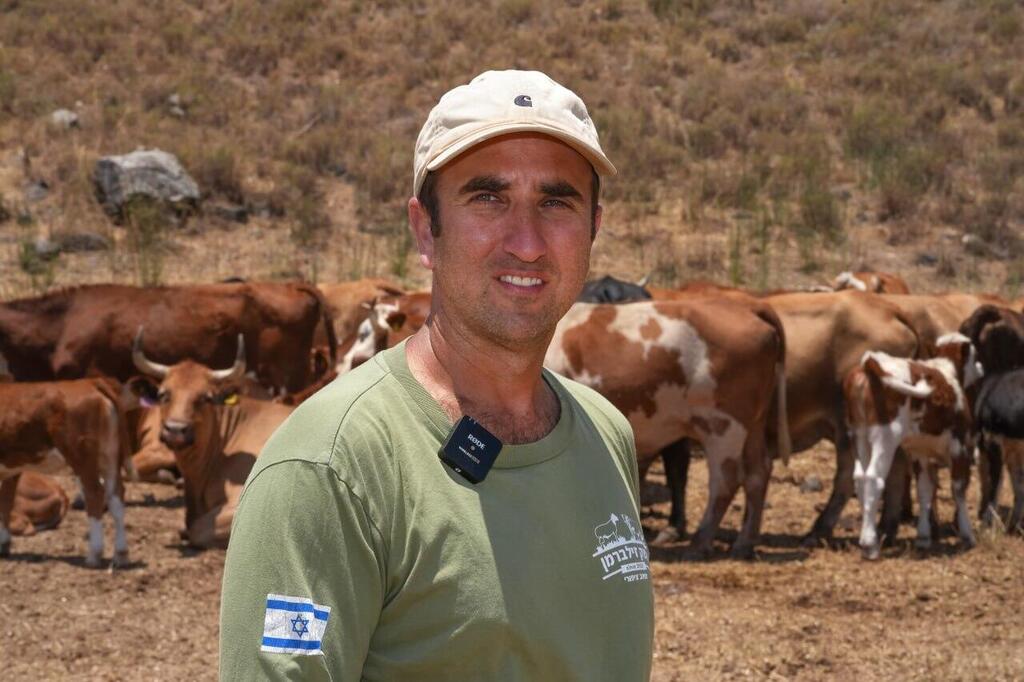
“Until the end of 2025, only a soldier with a vest, a weapon and a helmet could come out here. A civilian certainly could not walk around here like this,” Zilberman said. “This area was completely empty, with no infrastructure. Today we ride here on horses and have turned the area into agricultural land in every sense. This is a fundamental change in the IDF’s defense concept, and it came, of course, after October 7.”
Minutes before reaching the herd, we passed through the fortified border wall. After receiving approval from the operations room, we crossed the fence and entered deeper into the area, where signs of Syrian presence are still visible. “I think the residents of the Israeli communities are not aware that this land, kilometers of territory, has been under Israeli control since the 1974 ceasefire lines,” Zilberman said. “Because of topographical and operational considerations, the border fence was built west of the line itself. Instead of the communities being far from the fence, it was placed right next to them, and in practice we lost a significant defensive space.”
‘The Syrians were here every day’
Zilberman regularly comes to the area to ride beside the herd, between basalt stones and limestone rocks west of the Rokad. Below lies a deep wadi, the Yarmouk River runs through it, and across the way the houses of Syrian villages and the local mosque are clearly visible. Around him graze 140 cows across about 10,000 dunams. Until about six months ago, according to Zilberman and officials in the sector, the enclave was effectively open. Syrian civilians, shepherds and other elements moved through it, gathered information about IDF movements and challenged forces by touching the fence and triggering infiltration alerts.
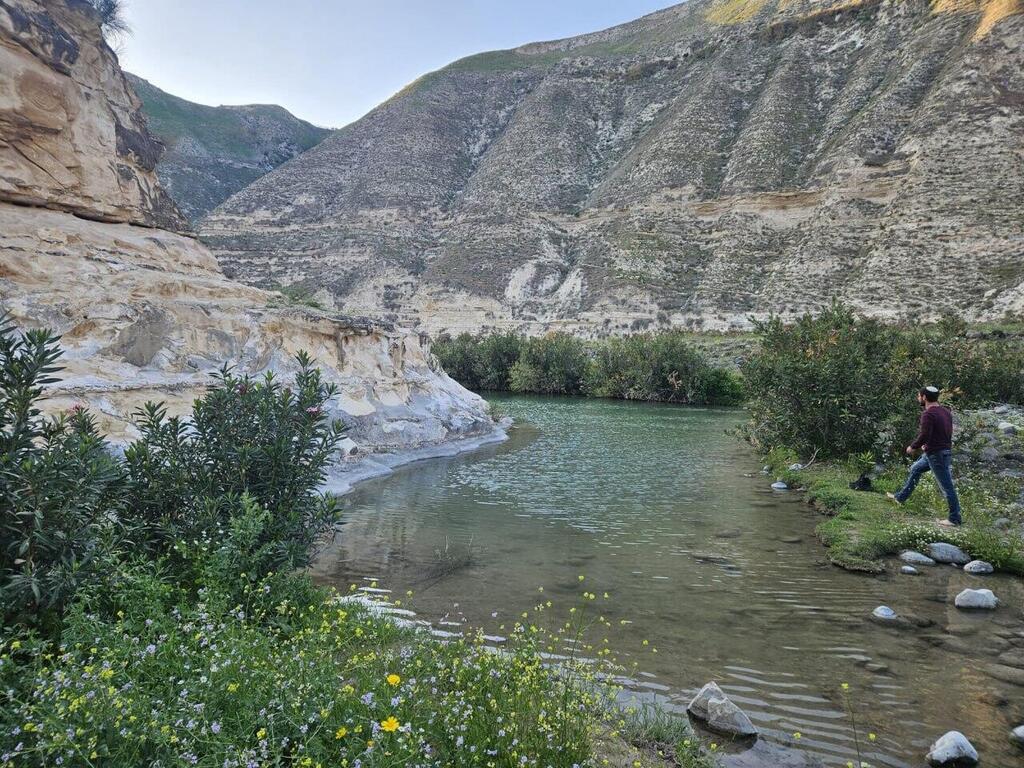
The Rokad River
(Photo: Limor Portal)
“The commanders who went through October 7 understood that this area had to be viewed completely differently,” Zilberman said. Even more than two years after Hamas terrorists breached the Gaza border fence, Syrians continued to challenge the IDF along the Golan border, while forces were required to respond immediately to every alert under heavy operational pressure and with limited regular and reserve troops. In the final quarter of 2025 alone, according to officials in the sector, more than 80 arrivals of Syrian shepherds were documented along different routes into Israeli-controlled territory near military posts.
In the Golan Division, officials say the Syrian herds were not merely a civilian nuisance. They were also seen as a potential infiltration route, cover for surveillance and a possible channel for smuggling weapons. “Before the war in 2023, there was an abandoned post here. After October, the army restored it, but even when it was already in use, the place was full of dozens of Syrian cattle that came all the way to the fence,” Zilberman said. “The Syrians were here on a daily basis and entered our territory. Every touch of the fence sent forces racing and triggered alerts. That was the reality here until the end of 2025.”
From a lookout point, with the area spread out beneath him, Zilberman points to different parts of the landscape and describes what, he says, was happening there until recently. “When we arrived, we saw from here 30 to 40 different herds of cows, goats and sheep, with shepherds next to them, some of them definitely operating under cover,” he said. “You would see Syrians walking around the area. There are three Syrian villages not far from here, and people came from them every day. Because this area was out of sight and out of mind, this huge sector was almost abandoned. The brigade was looking for an answer, and they asked me to enlist for a mission that at first sounded almost imaginary.”
‘My cow company pushed back the Syrian herds’
For Zilberman, the change began on the morning of October 7, when he was called up to the Home Front Command and asked by then-Northern Command chief Maj. Gen. Rafi Milo and his deputy, Yair Barkat, to establish the Har Zion mobility unit. Within a week, the force became an operational body, now made up of four mobility battalions under his command. In January 2026, 210th Division commander Brig. Gen. Yair Palai and outgoing 474th Brigade commander Col. Benny Kata approved a new model: using grazing land and a cattle herd as a means of holding ground, providing security presence and creating early warning.
Zilberman was responsible for the equipment and infrastructure. He said it was clear from the start that the mission involved significant risk, and that no one in the IDF guaranteed his safety or the safety of his herd. “The army came to me with an operational plan and showed me the strategic key areas where it wanted us to be,” he said. “First, we closed off the areas the army wanted us to hold. They even scolded us that we needed to seize the ground faster and restore sovereignty to the area. It was important for it to be clear that Israel is here.”
(Photo: AFP)
According to Zilberman, the effect was almost immediate. “My cow company pushed back the Syrian herds that had been here for 50 years,” he said. “The moment the Syrians saw that there was a cattle herd here, that there were civilian farmers and that there was a real hold on the ground, you saw the change. They moved their herds away because they were afraid we would confiscate them. This is no longer no-man’s land.”
Official IDF representatives did not speak for this article, but a senior officer in the sector said the project is considered a success. “Since we brought in the herds and put up cattle fences, there are no Syrian shepherds here, no cows and no fear of explosive devices on the fence,” the officer said. “In practice, we restored the original border to our hands. Zilberman’s presence here, on the western slopes of the Rokad, is a security and national interest of the State of Israel. It is an effective security response, and an unusually powerful one.”
The Israel Land Authority is now working with the military on the administrative procedures needed to regulate use of the area, which is defined as a closed military zone beyond the border fence and had not previously had an Israeli civilian presence. To anchor the presence there, about 22 kilometers of cattle fences have been erected, including electric fences near mined areas. “The Golan reconnaissance company alone put up close to 14 kilometers of fences here that we brought into the area,” Zilberman said. As they work, he and his team continue to find evidence of Syrian presence in the area, both old and recent. “Until the end of 2025, Syrians lived here intermittently. They ate here, slept in caves, cut down ancient trees and used them for heating,” he said. “We still find Syrian equipment they left behind. Even plastic plates that say ‘Made in Syria.’”
‘The cows don’t rotate out’
One of the farm’s main advantages, from the IDF’s perspective, is continuity. Battalions rotate and forces move in and out of the line, but the herd and the people caring for it remain in place. “The battalions change, the forces change, but we stay here and the cows don’t leave,” Zilberman said. “There is someone here 24/7 who holds the place and knows how to identify every change in the ground and every movement. A rock on the road, a gate closed differently from the way we close it, everything has meaning.”
He said the difficult terrain also makes the civilian-agricultural presence significant. “There is a route here that in winter becomes muddy and very hard for the army to pass through. Now an excavator is working here, but even when the route is inaccessible, the horse knows how to cross and move through the area,” he said. “This gives the battalion a lot of security, knowing there is a force here that holds the ground all the time. It created a revolution here, a total change.”
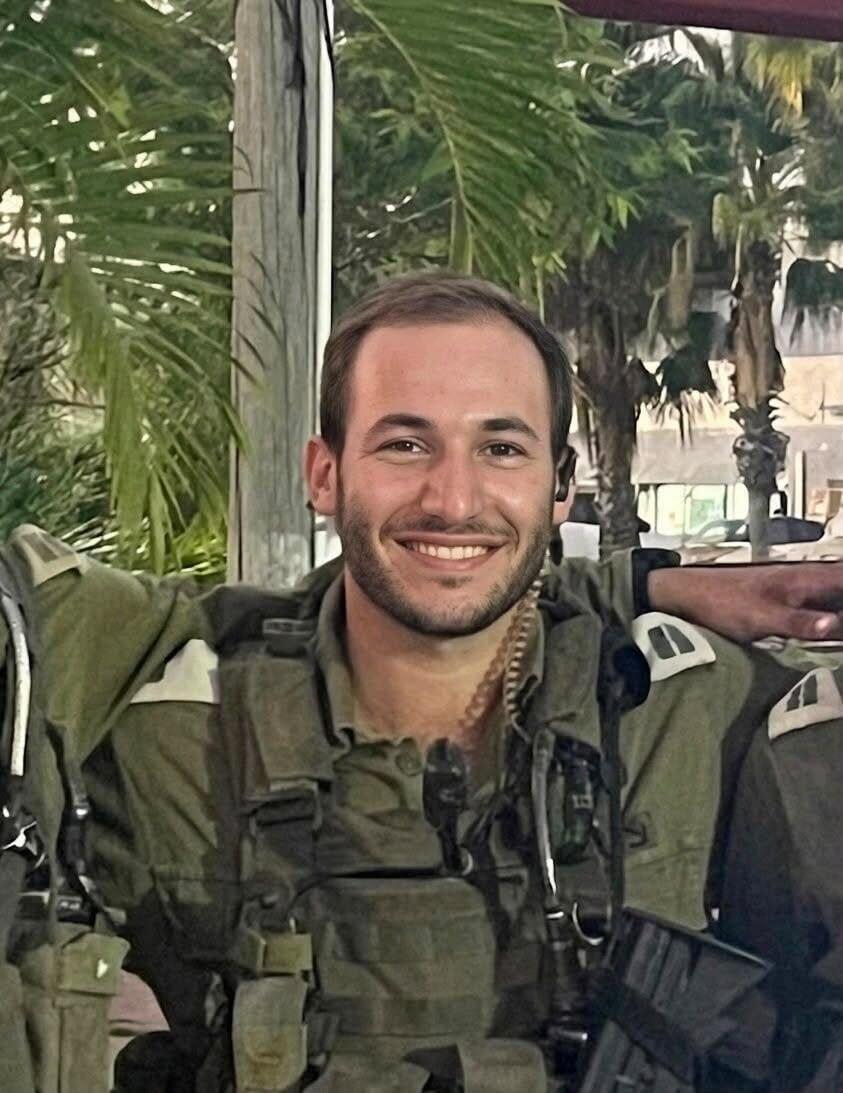
Capt. Shachar Gamla
(Photo: IDF)
Last week, the security herd was also given a new name with personal meaning: Alot Hashachar, or dawn. The farm was named after Capt. Shachar Gamla, 23, from Moshav Natur, a deputy platoon commander in the Egoz commando unit who fell in Lebanon about three weeks ago. “I had the privilege of accompanying him before his pre-military academy. He was a person who entered your heart and soul,” Zilberman said. “Our feeling, among friends, acquaintances and family, was that we needed to find places that would connect Shachar to life. This place suddenly felt so natural as an expression of his story. When you see the sunrise here, the dawn, and in the background the village of Gamla on the Syrian side, you are essentially seeing Shachar Gamla. We decided together with the army that the farm would be called Alot Hashachar.”
‘The fence concept is a misconception’
In the Golan Division, with the backing of Northern Command, the opportunity created by the new reality in the area is described as historic. At the same time, a similar grazing model is now being advanced along the eastern border with Jordan. For Zilberman, the project reflects what he sees as a return to a basic security principle: holding territory through constant presence. “When our moshavim and kibbutzim sit right next to the fence, and every day someone tries to get us used to touches on the fence and false alerts, in the end it ends with a breach and infiltration into our homes,” he said. “Not far from here, there was once an attempted infiltration by ISIS, which positioned itself on this ridge facing us.”
At the end of the tour, on the limestone and basalt ridge, Zilberman returned to what he described as the lesson of October 7. “October 7 collapsed many concepts,” he said. “The most important and painful lesson we learned is that the idea of fencing yourself in is wrong. The concept that you sit behind fences is a misconception. Yigal Allon already determined in 1960 that where there is no hold on the land and no strong communities, the border will be breached.”
According to Zilberman, since the herd entered the area, the definition of the threat has also changed. “Now anyone in the area is definitely an enemy. Before that, Syrians caught here could give excuses, because their herds were right on the fence and that is why they came close,” he said. “This is exactly Hezbollah and Hamas’ method of operation. Working with herds is very convenient. You walk, observe, check military patrols, timings and the forces’ equipment. But now it is over. They can no longer get here.”