

As negotiations between the United States and Iran enter a critical phase, a small but powerful hardline faction inside the Islamic Republic is working to undermine any potential agreement with Washington.
According to a CNN report, the group is known as Jebhe-ye Paydari, or the Endurance Front — an ultra-hawkish faction whose members see themselves as guardians of the values of Iran’s 1979 Islamic Revolution and are often described by observers as “Super Revolutionaries.”
Gallery
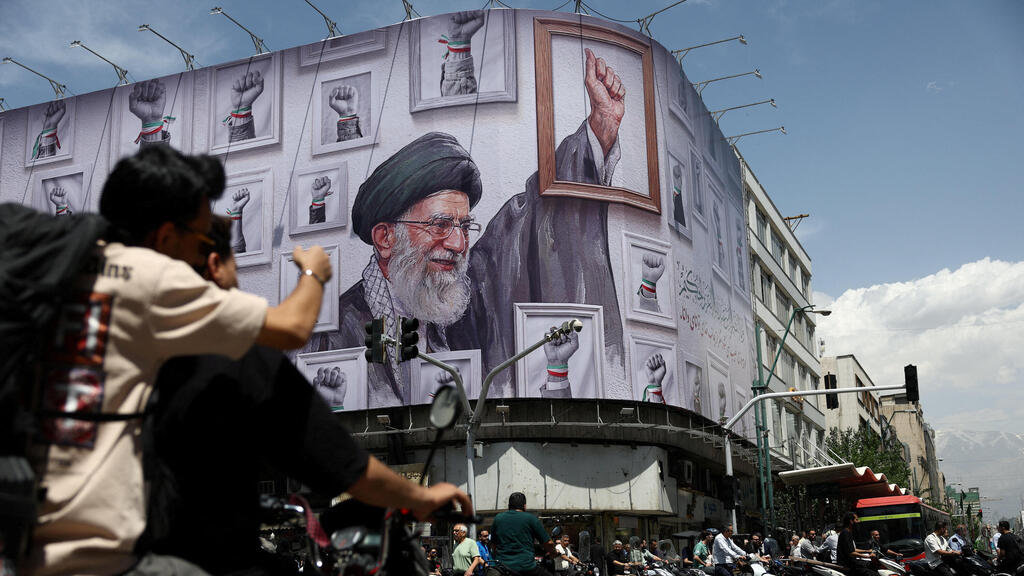
A poster of Ali Khamenei, who was killed, in Tehran
(Photo: Majid Asgaripour/WANA (West Asia News Agency) via Reuters)
The faction shares U.S. President Donald Trump’s view that the 2015 nuclear deal between Iran and world powers was a mistake, though for the opposite reason. While Trump has long argued the agreement was too weak on Tehran, the Paydari camp sees talks with the United States themselves as a betrayal of revolutionary principles.
Its worldview is hostile to the West even by the standards of Iran’s conservative establishment. The group believes Iran should not compromise with Washington, and that only by defeating the United States can Tehran secure an agreement on favorable terms.
“They view resistance against the United States and Israel as an eternal fight,” Hamidreza Azizi, a visiting fellow at the German Institute for International and Security Affairs, told CNN. “They believe in a Shia state that needs to continue until the end of times and are quite fanatic when it comes to that religious ideology.”
The faction’s growing role offers a glimpse into the internal struggle shaping Iran after the death of former Supreme Leader Ali Khamenei, who was killed in late February on the first day of the war. As Tehran’s new leadership tries to project unity while negotiating with Washington, the Paydari group has intensified pressure from inside the system — through parliament, state-linked media and street rallies.
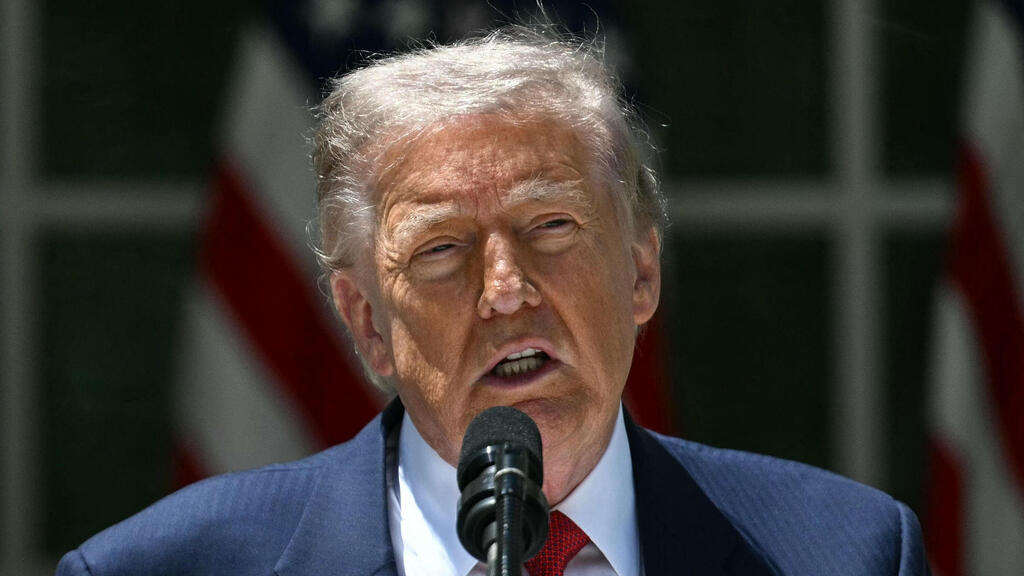
U.S. President Donald Trump
(Photo: Jim Watson/ AFP)
Iranian officials have spent the past month trying to balance talks with Trump’s administration while placating powerful factions at home. The inclusion of Paydari-linked figures in talks with US negotiators in Pakistan last month appeared designed to show that the leadership was united behind the process.
But the effort has not silenced the group. Instead, its members have grown increasingly vocal in accusing Iran’s negotiators of disloyalty and of crossing the red lines set by new Supreme Leader Mojtaba Khamenei — especially on any discussion of Iran’s nuclear program.
Their opposition has fed Trump’s public claims that Iran’s leadership is “fractured” and in “disarray.” Iran’s senior leaders, including Mojtaba Khamenei, have issued statements emphasizing unity, but the Paydari faction has continued to portray the talks as a dangerous concession.
Many of its members view even considering a deal with the United States as capitulation.
“They (the US) realized that killing our leaders, commanders, and loved ones costs them nothing,” an article criticizing the talks in Raja News, which represents the Paydari Front, said. “They understood that even if they martyr our Imam (Ali Khamenei), there are still groups here willing to negotiate, shake hands with (Steve) Witkoff, (JD) Vance, and (Jared) Kushner, and smile at the killers of our martyred Imam.”
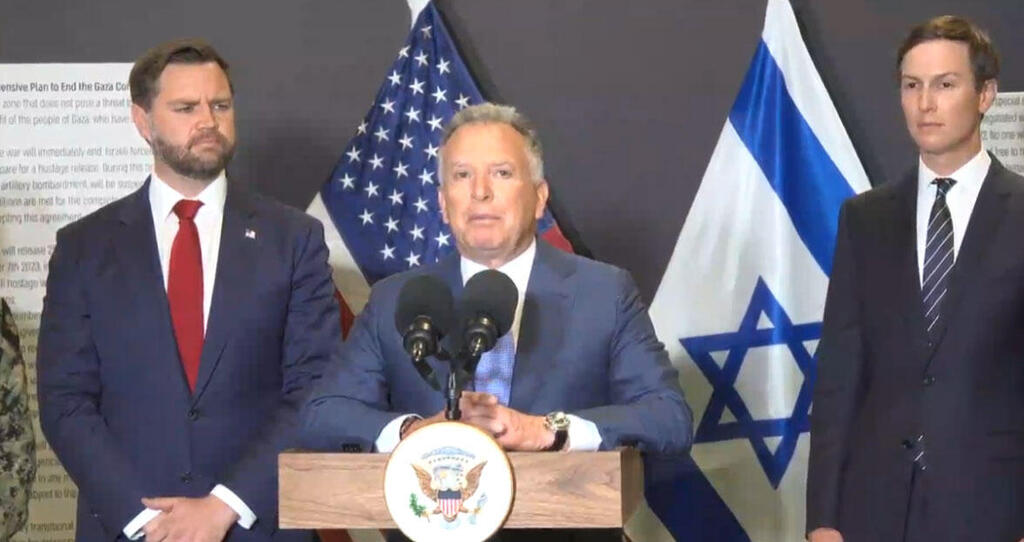
JD Vance, Steve Witkoff and Jared Kushner
(Photo: U.S. Embassy Jerusalem)
The faction is considered radical even by other conservatives in Iran. But it is not marginal. Paydari figures are embedded in major centers of power, including parliament, state media, religious institutions and the political networks that have shaped Iran’s postwar leadership.
Its exact level of public support is unclear, but one of its most prominent figures, former national security chief Saeed Jalili, won 13 million votes in the 2024 presidential election and finished second. His brother, Vahid Jalili, holds a senior position at Iran’s state broadcaster, IRIB.
The group’s members oppose talks with Washington out of religious and ideological conviction. They have accused Iranian officials involved in negotiations of being “cowardly” and warned that the talks will cause “immense damage on the Iranian nation.” Their opponents, meanwhile, accuse them of leaking partial or distorted details of the potential agreement in order to inflame public anger.
The group has also targeted Iran’s chief negotiator, Mohammad Bagher Ghalibaf, accusing him of collusion. Its members have used speeches at nightly street rallies to sharpen criticism of the negotiating team and amplify Trump’s claims about divisions inside Iran.
Seven lawmakers affiliated with the faction refused to sign a statement supporting the negotiating team, according to Iranian media.
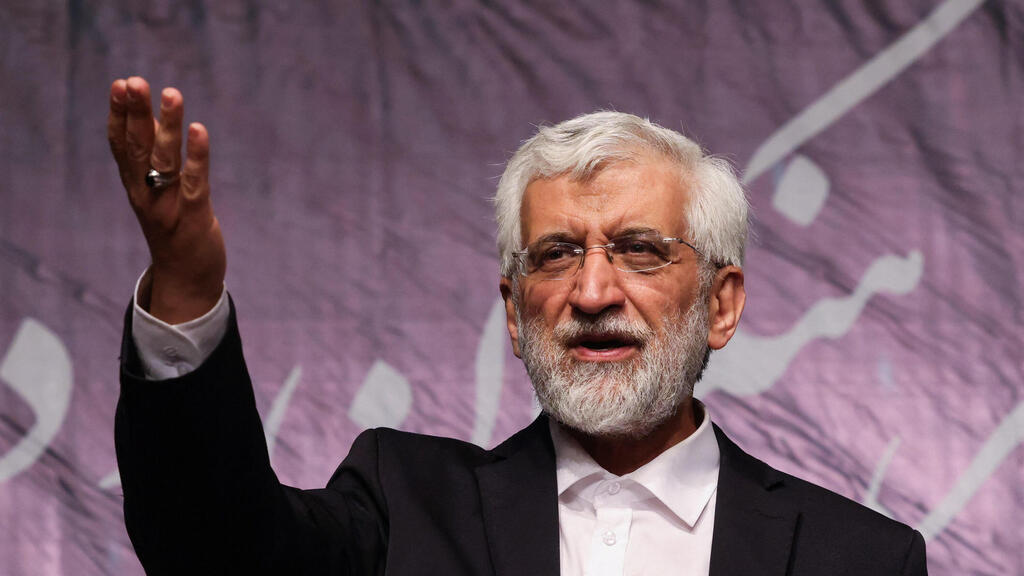
Saeed Jalili, one of the central figures associated with the extremist group
(Photo: Atta Kenare/ AFP )
One Paydari-linked lawmaker, Mahmoud Nabavian, was part of Iran’s negotiating team in Islamabad last month. Afterward, he publicly declared that negotiating over the nuclear program was a “strategic mistake” and called for Foreign Minister Abbas Araghchi to be removed from the team.
“Given America’s history of bad faith and the presence of supporters of the humiliating JCPOA (2015 nuclear agreement) alongside Mr. Ghalibaf in the negotiations, there is no hope for negotiations and a favorable agreement for Iran,” Nabavian wrote on X on Thursday.
The Paydari faction has gained new momentum since the wave of American and Israeli strikes that began in late February and lasted eight weeks. In their aftermath, the group helped build a new center of influence through large street rallies in Tehran, where thousands of the Islamic Republic’s most committed supporters have gathered to pressure the new leadership.
The group’s ideological roots run deep. Its late spiritual leader, Ayatollah Mohammad-Taqi Mesbah-Yazdi, who died in 2021, was one of Iran’s most radical clerics. He served on the Assembly of Experts, the body responsible for selecting the supreme leader, and led one of Iran’s best-funded religious educational institutes. Graduates of that network have gone on to hold influential government positions.
Its current spiritual leader, Ayatollah Mahdi Mirbaqiri, is a senior cleric who was once viewed as a possible candidate for supreme leader. Azizi said Mirbaqiri holds “apocalyptic views” and has advocated ideas centered on accelerating a final confrontation with the West.
In a 2019 interview with state media, Mirbaqiri called for “widespread fighting” and a “comprehensive clash” with the West.
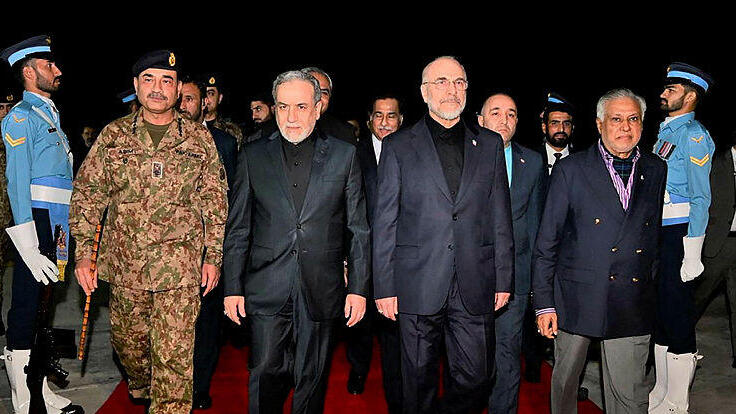
Iranian parliament speaker Qalibaf and Foreign Minister Araghchi are in the crosshairs
(Photo: AFP/ Pakistan's Ministry of Foreign Affairs)
The group has also benefited from a younger generation of hardline Iranians radicalized by repeated attacks from the United States and Israel. As more moderate Iranians become disillusioned, face arrest or leave the country, Paydari activists have moved to present themselves as the authentic heirs of the revolution.
“The Paydaris were quick to capitalize on the younger and ideologically-oriented people now on the streets,” Azizi said. “They try to represent themselves as manifestation of an idea introduced by (former supreme leader) Ali Khamenei to create a generation of young, pious revolutionaries capable of carrying on the Islamic Republic’s legacy.”
But the faction’s growing visibility has also triggered a backlash. Many inside Iran now see Paydari as a destabilizing force at a moment when the country is facing severe military, economic and diplomatic pressure.
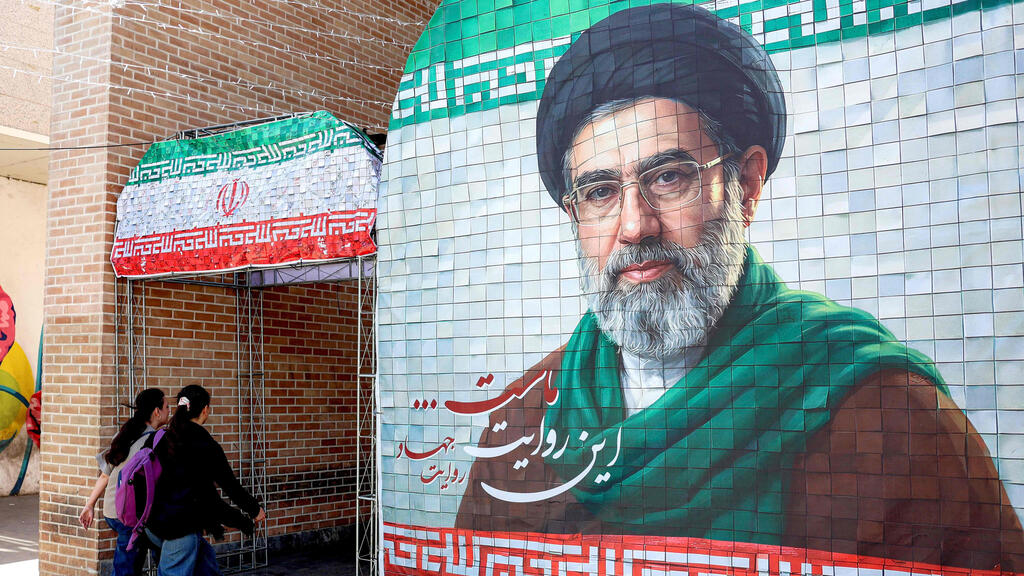
A drawing of Mojtaba Khamenei. Everyone wants a deal — the question is who will reap the political capital from it
(Photo: AFP)
Iran’s political system has long been divided between rival factions with different views on the West. But the Paydari Front’s campaign against negotiations has made it unusually divisive, drawing criticism from across Iranian media, political commentators and rival politicians who otherwise disagree on many issues.
“It seems to have really backfired,” said Mohammad Ali Shabani, editor of Amwaj.media, a news site focused on Iran and the region. “They’re making a lot of noise and are perceived to have helped Israel and the US in portraying Iran as caught in major internal division … but the fringe radicals are getting pushback from every direction and have grown increasingly isolated.”
Shabani said the fight is not necessarily over whether Iran should ultimately reach a deal with the United States, but over how such a deal is achieved — and who gets political credit for it.
“They’re saying if we keep fighting, we can force the US to capitulate and then dictate the terms,” Shabani said. “Nobody in Iran is against a deal. It’s about the tactics of how to reach a deal, and who gets to make it.”
For Iran’s new leadership, that internal struggle may prove as difficult as the negotiations with Washington. The talks with Trump’s administration could determine whether Tehran avoids further escalation. But inside Iran, the outcome may also decide which faction defines the next phase of the Islamic Republic: those willing to bargain with the United States, or the “Super Revolutionaries” who believe compromise itself is defeat.