

New York Mayor Zohran Mamdani compared scrutiny of his criticism of Israel to questions once directed at former South African President Nelson Mandela over his support for the Palestinian cause, arguing that opposition to Israeli policy should not be equated with hostility toward Jewish people.
Speaking at the inaugural Nelson Mandela Global Leadership Forum in New York, Mamdani recalled a 1990 television interview in which ABC News journalist Ted Koppel asked Mandela whether his solidarity with the Palestinians risked alienating the Jewish community.
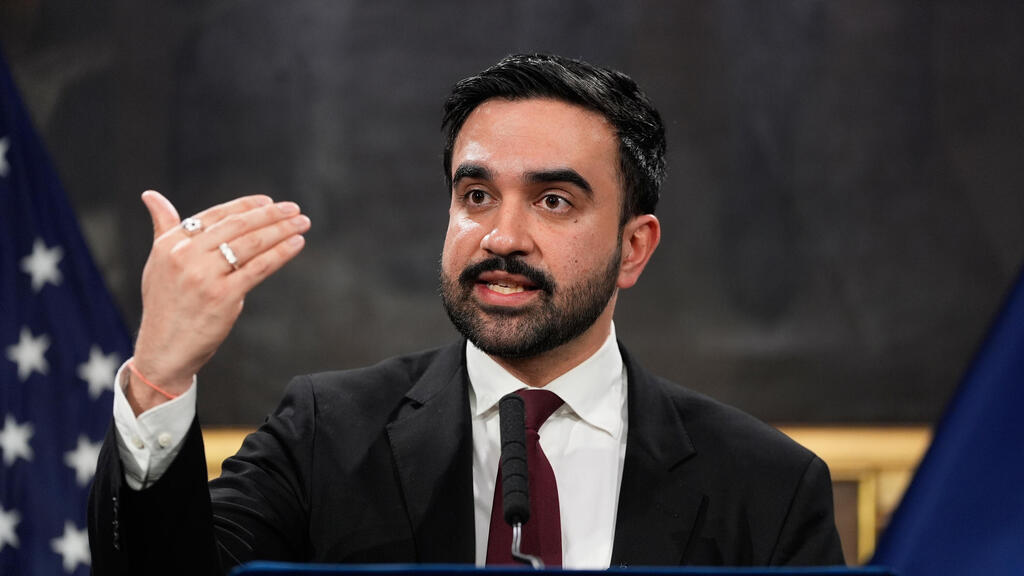
New York Mayor Zohran Mamdani
(Photo: AP Photo/Seth Wenig)
Mamdani drew a parallel between questions about Mandela’s support for the Palestinian cause and scrutiny of his own criticism of Israel.
“Did that solidarity, he asked, mean Madiba was willing to alienate the Jewish community?” Mamdani said, using Mandela’s clan name.
He said the question was familiar to him because he had repeatedly been asked whether “opposing Israeli war crimes and violations of international law somehow makes you hateful toward a people.”
“It is easier to make a concession, to abandon a long-held belief and desert a principle, than it is to stand firm,” Mamdani said. “That was true when many asked him to abandon the Palestinian struggle for freedom, and it remains true today.”
“Why must we wait until thousands more parents bury their children, until thousands more lose their limbs, their homes and their futures, to come together and demand the freedom of Palestinians?” he added.
Mandela, who died in 2013, became an international symbol of reconciliation after leading the struggle against South Africa’s apartheid regime, spending 27 years in prison and later becoming the country’s first Black president. He was awarded the Nobel Peace Prize in 1993.
Mandela recognized Israel’s right to exist but was also an outspoken supporter of Palestinian statehood. During his 1990 visit to the United States, shortly after his release from prison, he defended his relationship with Palestine Liberation Organization leader Yasser Arafat despite criticism from Jewish organizations.
Mamdani has faced sustained criticism from Jewish and pro-Israel groups over his refusal to recognize Israel specifically as a Jewish state, his support for the Boycott, Divestment and Sanctions movement and his pledge to honor an International Criminal Court arrest warrant against Prime Minister Benjamin Netanyahu should the Israeli leader visit New York.
He has also said he does not intend to visit Israel as mayor and declined to participate this year in New York’s annual Israel Day parade.
At the same time, Mamdani has maintained that he is committed to protecting Jewish New Yorkers and combating antisemitism, while arguing that criticism of the Israeli government must be distinguished from hatred of Jews.
The speech came as American Jews remain deeply divided over Israel and U.S. policy toward the country. An AP-NORC survey conducted in June among 1,022 Jewish American adults found Mamdani viewed favorably by 44% of respondents and unfavorably by 39%, while 17% had no opinion. Netanyahu received a favorable rating of 32%, compared with 59% who viewed him unfavorably.
The same survey found widespread concern over antisemitism, with 77% of Jewish respondents saying prejudice against Jews had increased since the Hamas-led October 7, 2023, attack on Israel. The poll also found substantial disagreement over when criticism of Israel crosses into antisemitism.
Asked about his stronger favorability rating than Netanyahu among Jewish Americans, Mamdani called the result “great” and said people should “draw conclusions from it.”
In a separate interview with local television station NY1, Mamdani was asked about a proposed two-state framework providing freedom of movement for Israelis and Palestinians and placing Jerusalem under an international arrangement. He said he was not sufficiently familiar with the proposal but reiterated his belief that any future political system must guarantee equal rights.
“One of the things that makes me so proud to be an American is that equality is enshrined in our Constitution,” he said. “And that helps me understand what the world should look like as well, with that same equality.”