


Official representatives from over 20 countries, including Qatar, Spain, China and Ireland, are convening Tuesday and Wednesday in Bogotá, Colombia, for an emergency summit aimed at formulating concrete legal and diplomatic measures against Israel over alleged ongoing violations of international law during the war in Gaza and in the West Bank. The summit is led by the "Hague Group,” chaired by Colombia and South Africa, and according to organizers it seeks to address what they describe as an “environment of impunity” afforded to Israel by its allies.
Founded in the Netherlands in January, The Hague Group is a coalition of eight countries—Colombia, South Africa, Bolivia, Cuba, Honduras, Malaysia, Namibia and Senegal—working to hold Israel accountable under international law. UN officials and representatives from additional countries including Turkey, Brazil, Portugal, Algeria, Lebanon, Oman, Uruguay, Bangladesh, Chile, Djibouti, Indonesia, Nicaragua, and Saint Vincent and the Grenadines, as well as Palestinian representatives, also will attend the Bogotá summit.
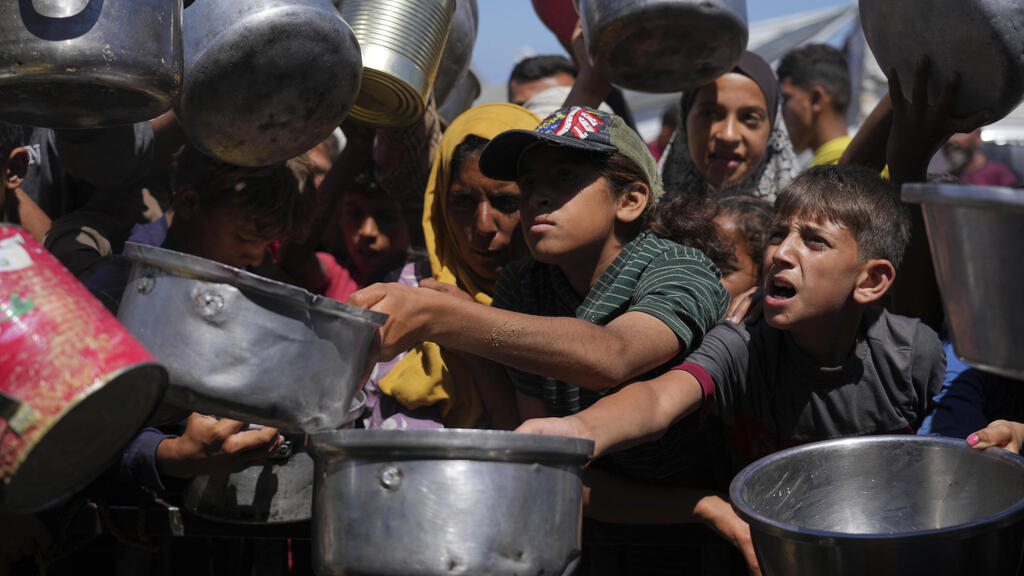
Gazans wait for food aid in Khan Younis
(Photo: Abdel Kareem Hana/AP)
“This summit marks a turning point in the global response to the erosion and violation of international law. No country is above the law, and no crime will go unanswered,” South Africa’s Minister of International Relations and Cooperation Ronald Lamola said ahead of the summit.
Mauricio Jaramillo Jassir, Colombia’s Deputy Foreign Minister, added: “The Palestinian genocide threatens the entire international system. Colombia cannot remain indifferent in the face of apartheid and ethnic cleansing. The participating states will not only reaffirm their commitment to opposing genocide, but also formulate concrete steps to move from words to collective action.”
Among the key figures attending are United Nations Special Rapporteur on the Occupied Palestinian Territories Francesca Albanese—who was recently sanctioned by the U.S., UNRWA Commissioner-General Philippe Lazzarini; UN Special Rapporteur on the right to health, Tlaleng Mofokeng; UN Working Group Chair on Discrimination Against Women, Laura Nyirinkindi; and Andrés Macías Tolosa, a member of the UN Working Group on Mercenaries.
Get the Ynetnews app on your smartphone: Google Play: https://bit.ly/4eJ37pE | Apple App Store: https://bit.ly/3ZL7iNv
Before the formation of The Hague Group, several of its member states had already taken steps against Israel, calling for enforcement of international law. South Africa submitted a case against Israel at the International Court of Justice (ICJ), accusing it of violating the Genocide Convention in Gaza. Other countries, including Bolivia, Colombia and Namibia, later joined that legal effort. Colombia cut diplomatic ties with Israel, and Namibia and Malaysia barred weapons-bearing ships bound for Israel from docking at their ports.
The Hague Group aims to coordinate these previously independent actions to amplify their collective impact. Group coordinator Varsha Gandikota-Nellutla said the group was founded in part as a response to countries failing to uphold binding international legal obligations—particularly Western nations resisting the International Criminal Court’s arrest warrants for Israeli Prime Minister Benjamin Netanyahu and former Defense Minister Yoav Gallant, and Israel’s alleged refusal to comply with ICJ rulings requiring it to prevent genocide in Gaza.