

On one side stands the West Bank security barrier. On the other, high-rise apartment buildings. In between runs a narrow road used daily by schoolchildren returning home. This is a dense and volatile area in Jerusalem, a daily friction point where civilians, security forces and illegal Palestinian entrants intersect.
A glance at the remnants of stun grenades and tear gas canisters scattered along the roadside is enough to understand that this is a miniature combat zone inside Israel’s capital.
Palestinians crossing into Israel without obstruction
(Video: Liran Tamari)


Even today, Tuesday, the day State Comptroller Matanyahu Englman published his report on failures in preventing Palestinians from entering Israel from Palestinian Authority areas, dozens of illegal entrants were documented crossing the security barrier along Route 60.
The site lies just minutes from the Qalandiya checkpoint and the Atarot industrial zone in Jerusalem. Although this is a main traffic artery used by security vehicles and buses, dozens of Palestinians were seen climbing the security barrier and then sprinting toward a nearby mosque and alleyways opposite the breach, in broad daylight and without interference.
No soldiers in ‘the Dahiya’
Near the Qalandiya checkpoint, a five-minute drive from the Neve Yaakov neighborhood in northern Jerusalem, lies a short alleyway. On the Israeli side stand high-rise buildings. Across from them is the security barrier. This section is known within the security establishment as “the Dahiya,” a reference to Hezbollah’s stronghold in Beirut, due to the extreme density on both sides.
The separation barrier in this area stretches about 1.3 kilometers. Not far from the alley stands a concrete military guard tower overlooking the security barrier, the road and nearby crossings. Despite its strategic location at one of Jerusalem’s most vulnerable points, the tower has been unmanned for years.
Gallery
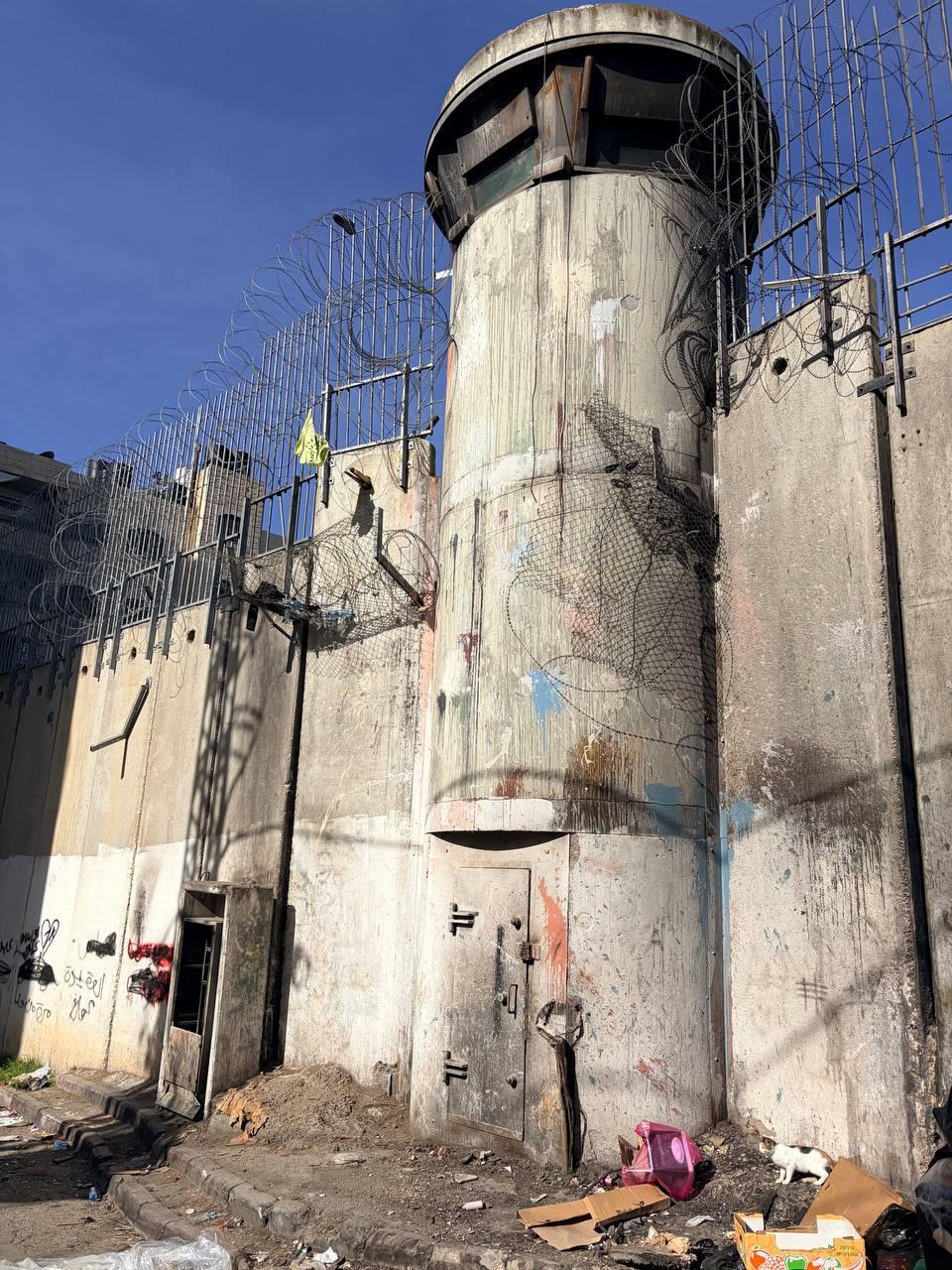
Unmanned for years: the abandoned guard tower (Pill Box) in north Jerusalem
(Photo: Liran Tamari)
This critical section of the security barrier has become a major weak point. The barrier consists of a high concrete wall topped with a metal fence added over the years. Illegal entrants damage the structure and, using ladders and ropes, manage to cross into the city. Equipped with cutting tools, they slice through the metal bars and rappel into Israel.
When the war began, a temporary order was enacted allowing live fire at illegal entrants crossing into Israeli territory. In recent months, Border Police fighters have carried out dozens of ambushes, firing at the lower body of Palestinians climbing the security barrier. Police officials warn that if the order expires, “there will be a flood of illegal entrants and dozens of terror attacks in central Israel. The effect of the gunfire is significant. It deters many from even approaching the security barrier.”
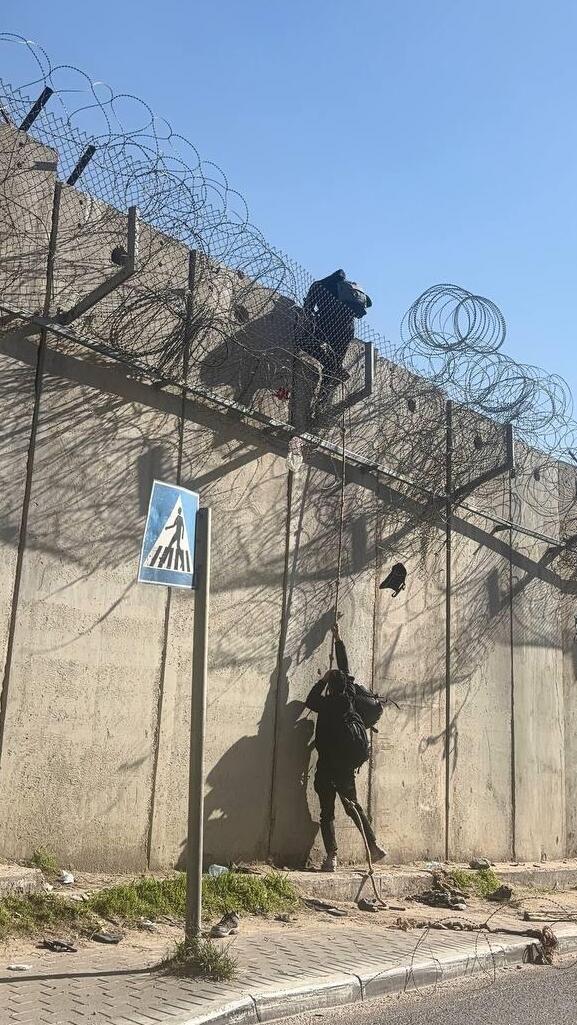
Smugglers search entrants.’ Two Palestinians cross into Israel
(Photo: Liran Tamari)
Late yesterday morning, one day before the comptroller’s report was published, a Ynet team documented in real time two illegal entrants climbing the security barrier with a rope and entering Jerusalem without interference.
Since Israel restricted Palestinian entry, a smuggling industry has flourished. “Brokers” operate constantly to bring Palestinians into Israel. On the Palestinian side, graffiti advertising “price lists” for entry into Israel has appeared on walls. A broker who assists with crossing and transportation typically charges between 300 and 600 shekels.
“Before the war, there were about 3,000 crossings a week into Jerusalem,” a security source told Ynet. “Today the number stands at 6,000.”
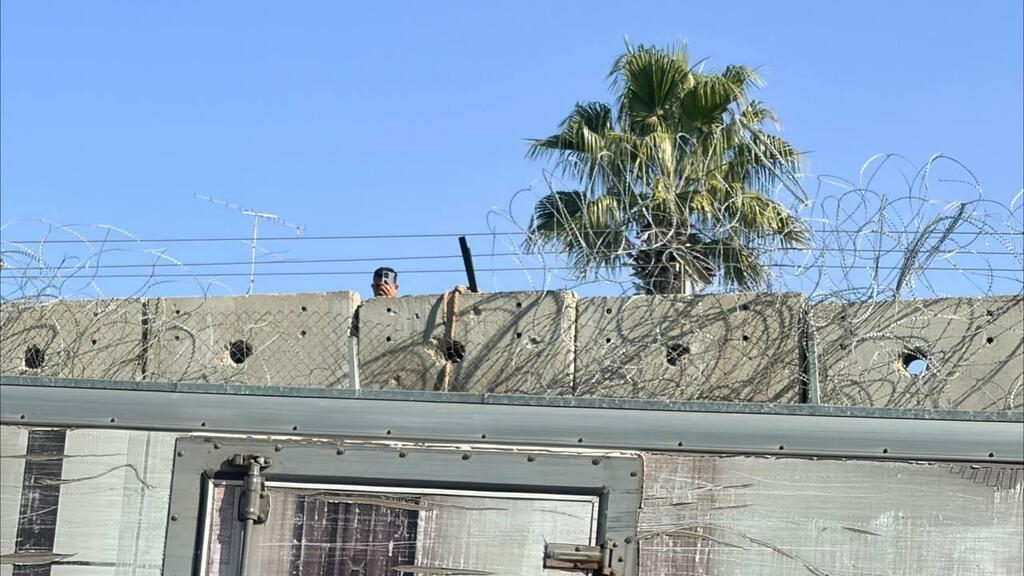
An illegal entrant peers through the fence moments before entering Jerusalem
(Photo: Liran Tamari)
According to the source, a significant portion of terror attacks in Israel have been carried out by illegal entrants. “We see an interesting pattern. The organizers themselves are afraid. They believe bringing someone in for work does not endanger them, but if that person carries out an attack, it becomes a different story. That is why they search them beforehand.”
The infiltration mechanism
So how does this well-oiled machine operate? On the Israeli side, lookouts employed by the brokers monitor the area. Once they identify that the sector is clear of forces, the signal is given. A rope is thrown through a breach in the security barrier, and the illegal entrants squeeze through the metal bars.
In the Dahiya area, they run to a nearby parking lot, where vehicles are waiting to collect them. At times, according to a security official, they hide in a nearby mosque. “They think that because the mosque is adjacent to the breach it offers protection. We go in there too,” he said. For the Border Police, this is one of the main arenas occupying units around Jerusalem. A senior official stated that most attention is focused on preventing breaches of the security barrier. “Most of the forces are conducting searches. From my perspective, the Dahiya is the hottest point. Fighters remain in the field for long hours.”
Despite fears of a large-scale terror incident originating from Judea and Samaria, two illegal entrants managed to cross yesterday into Israel in full view of Ynet cameras and despite a police presence. Minutes after the crossing, a team of fighters fired tear gas grenades toward the security barrier to deter additional crossings, but those who had already entered remained inside Israel.
‘The failures should keep leaders awake at night’
Following Hamas’ October 7 terror attack, concerns grew over infiltration from the West Bank. The state comptroller’s review found that the Jerusalem-area barrier does not provide adequate protection against illegal entry or terrorist infiltration.
In the report published today, Englman wrote that these failures heighten the need for ongoing discussion, review and oversight by the political and security leadership, particularly given the changing security reality and escalating threats since the war.
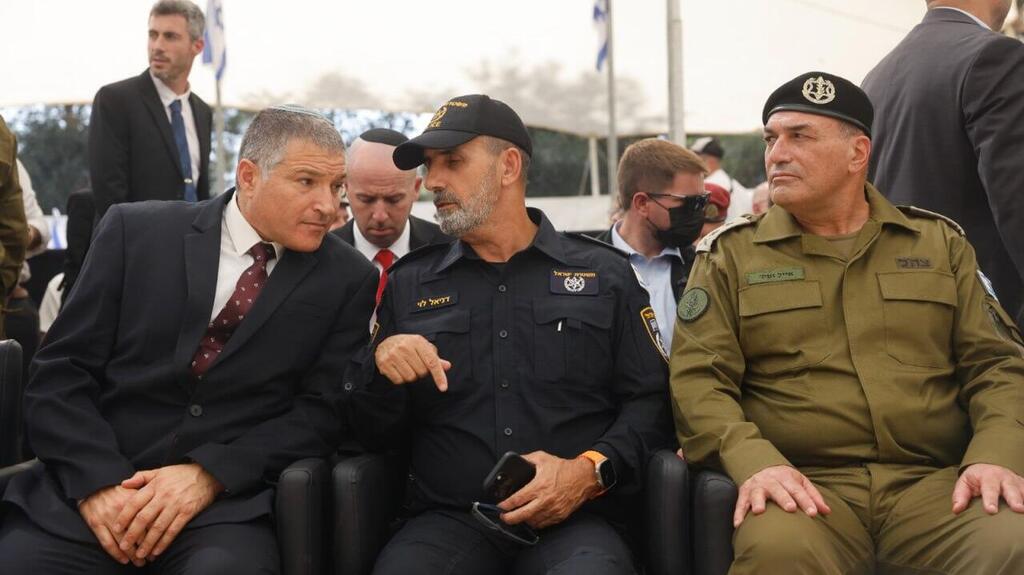
IDF Chief of Staff Lt. Gen. Eyal Zamir, Police Commissioner Daniel Levy and Shin Bet chief David Zini
(Photo: Olivier Fitoussi)
“The failures detailed in the report are troubling and should deprive decision-makers, political and security alike, of sleep,” Englman said ahead of publication. He added that responsibility for correcting the deficiencies lies with the prime minister, the defense minister, the national security minister, the IDF chief of staff, the police commissioner, the head of Central Command, the Jerusalem district police commander and the Border Police commander, each at their respective level. A Knesset subcommittee decided not to place the full report on the Knesset table, releasing only portions of it for security reasons.
The total length of the seam line around Jerusalem spans several dozen kilometers. The comptroller found that only 61% is protected by a barrier. Gaps include 11 kilometers in one section, six kilometers in another, about 250 meters in a third and several dozen kilometers across two additional routes.
The report paints a troubling picture in which Palestinians can enter Israel without inspection or oversight, posing a security risk. Englman warned that barrier gaps, diversion of forces to crossings and harm to routine security missions create a danger of terror attacks, as attackers can exploit these openings.
Police response
The Israel Police said the report raises significant issues affecting the security of all Israeli citizens and receives continuous organizational attention. The police stressed cooperation with all relevant bodies around Jerusalem, using trained commanders and Border Police fighters to carry out assigned missions.
Police emphasized that responsibility is clearly divided, with the IDF charged with defending Israel’s borders against hostile infiltration. Regarding illegal entrants, police said security preparations must be conducted on both sides of the security barrier, with primary responsibility resting on the IDF and other agencies to prevent departures from Palestinian Authority territory into Israel.
On the fence itself, police noted that the barrier and crossings were built years ago and that maintenance falls under IDF responsibility. Police said they do everything possible to improve service at crossings, adding that for security reasons they would not provide further details and urged caution in media coverage during a sensitive period.