

Iran witnessed a third consecutive day of protests on Tuesday as frustration mounted over the country’s worsening economic crisis and the collapse of its national currency.
What began as demonstrations in Tehran has now spread to other cities, with student protests reported in both the capital and in Isfahan by midday. At Tehran University, students chanted slogans such as, “Not Gaza, not Lebanon—my life for Iran,” reflecting growing discontent over the government’s foreign priorities amid domestic hardship.
Student protesters chant 'Not Gaza, not Lebanon—my life for Iran' at Tehran University
(Video: from X)


Earlier in the day, Iranian President Masoud Pezeshkian called on his government to “listen to the legitimate demands of the protesters,” following rare demonstrations and strikes by shopkeepers in Tehran.
“I have asked the interior minister to listen to the legitimate demands of the protesters and hold dialogue with their representatives so the government can do all it can to resolve the problems responsibly,” Pezeshkian said in his first public remarks on the protests.
Later Tuesday, Pezeshkian met with merchants and representatives of professional guilds in an attempt to ease tensions. Following the meeting, his office announced that “the government and parliament have agreed on four measures to support traders and professional unions,” adding that a special committee would be formed to directly address their concerns.
Iranians take to the streets in protests of the deteriorating economic situation
Government spokesperson Fatemeh Mohajerani said authorities were taking the demonstrations seriously, acknowledging the public’s concerns over inflation and cost of living. “The demands of the Iranian people are clear and legitimate, and we are listening to them carefully,” she said, adding, “We will not allow enemies to exploit these legitimate complaints.”
On Sunday, the Iranian rial hit a record low of 1.42 million to the U.S. dollar—compared to 820,000 to the dollar just a year earlier. The ILNA news agency, which is affiliated with Iranian labor groups, reported that demonstrators were demanding immediate government intervention to stabilize the currency and implement a clear economic strategy. Some protesters told the agency that under current conditions, continuing business operations had become “impossible.”
Agence France-Presse reporters noted that price fluctuations have severely disrupted sales of imported goods, with both buyers and sellers hesitating to complete transactions amid uncertainty.
Gallery
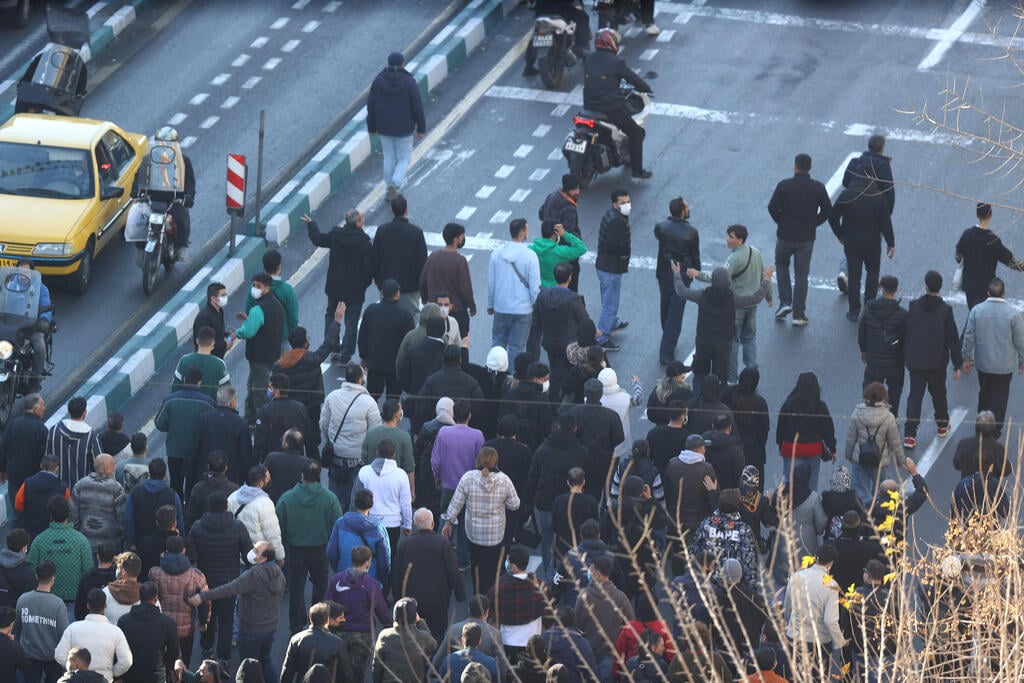
Iranians take to the streets in protests of the deteriorating economic situation
(Photo: HANDOUT / FARS NEWS AGENCY / AFP)
Iran’s Supreme Court Chief Justice Gholam-Hossein Mohseni-Ejei called for the “swift punishment of those responsible for the currency crisis.”
On Monday, the government dismissed Central Bank Governor Mohammad Reza Farzin, replacing him with Abdolnaser Hemmati, a former finance minister ousted by parliament in March, following the rial’s sharp decline.
Clashes were reported Monday between security forces and protesters in Tehran. Security personnel reportedly used tear gas and stun grenades. Fars News, which is closely aligned with the regime, acknowledged only “minor physical confrontations” between protesters and security forces, and warned that such unrest could lead to broader instability.
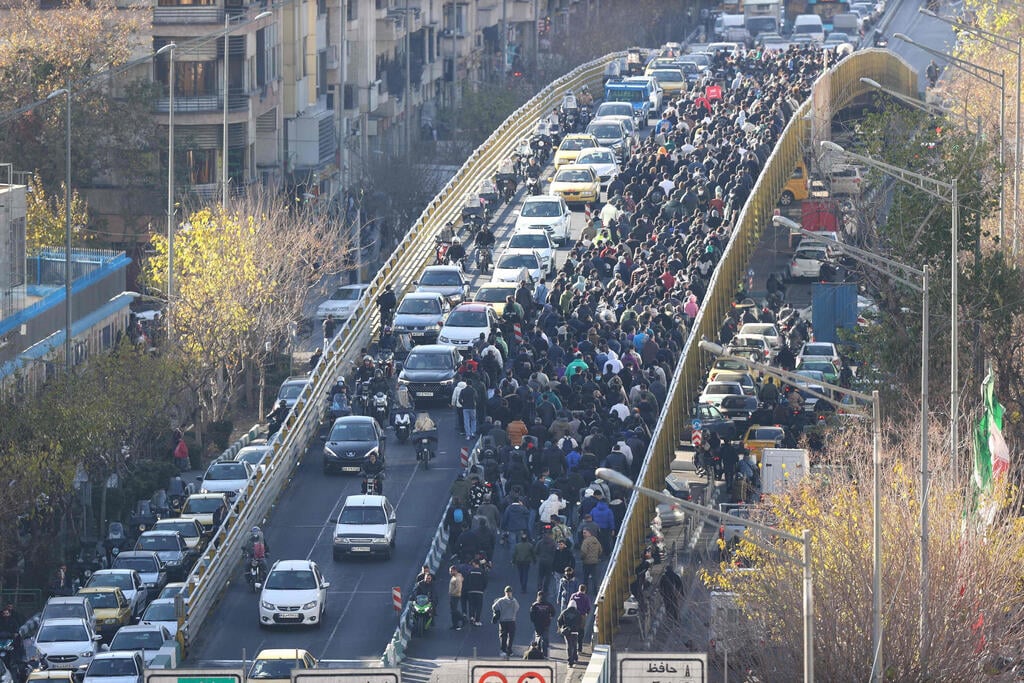
(Photo: HANDOUT / FARS NEWS AGENCY / AFP)
The opposition outlet Iran International reported that the protests, which began in Tehran, had spread to other cities, including Mashhad, where a heavy security presence was reported on Tuesday.
Amid the unrest, Tehran authorities announced a sweeping lockdown across the province on Wednesday, officially citing expected cold weather and a need to conserve energy. All government offices, markets, schools, universities and banks will be closed. Similar announcements were made in the provinces of Hamadan, Qom, Alborz, Razavi Khorasan, Kerman, Kurdistan, Ilam and Kermanshah.
Meanwhile, the Tasnim news agency accused foreign actors of orchestrating the unrest, claiming “anti-Iranian media and foreign intelligence services are using internal agents to exploit the situation and stir instability.” It alleged that even Israeli outlets were encouraging demonstrations, but insisted that these calls “have failed” and that Iranians remain alert, knowing that “unrest solves nothing and only aids those who seek to destroy Iran.”
On Sunday, President Pezeshkian submitted the draft budget for the coming year to parliament, vowing to fight inflation and ease the cost of living in the Islamic Republic.