



Israel's Arab parties, projected to win a combined 19 seats in the next Knesset, have offered to help replace Prime Minister Benjamin Netanyahu's government, even without joining a new coalition. But despite their potentially decisive role in breaking the political deadlock, opposition leader Gadi Eisenkot and key parties in his bloc have so far shown little willingness to embrace their support.
The Joint List formally declared Wednesday evening that it was prepared to cooperate with the opposition to establish an alternative government, following an election in which an unusually high turnout among Arab voters significantly strengthened their parliamentary representation.
Gallery
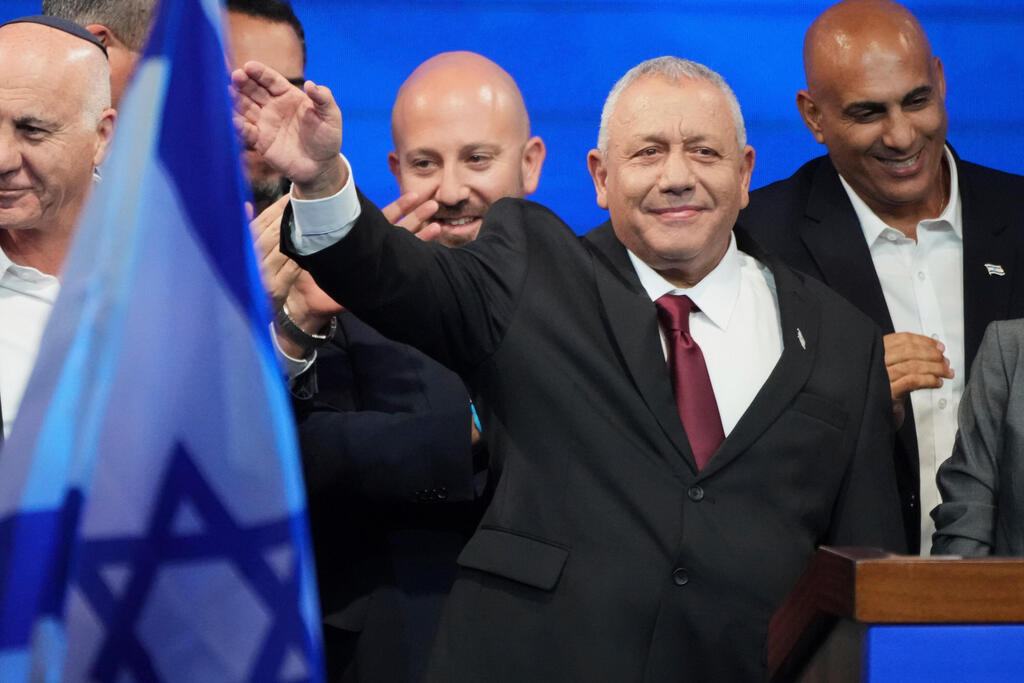
Gadi Eisenkot has yet to reach out to the Arab parties about potential political cooperation
(Photo: AP Photo/Ariel Schalit)
The offer comes as Netanyahu and his Likud party challenge the legitimacy of votes cast for Arab parties, citing alleged election irregularities, while Eisenkot's opposition bloc remains divided over whether it should rely on Arab lawmakers to form a government.
Neither of the two main political blocs is projected to secure the 61 seats needed for a majority in Israel's 120-member parliament, leaving the Arab parties in a potentially pivotal position. Yet their electoral success does not necessarily mean they will be included in the negotiations that determine the next government.
Joint List chairman Yousef Jabareen described the election results as a "historic day," saying they demonstrated the growing political influence of Israel's Arab citizens. "We have proven that we are a political force that cannot be ignored, and that no future can be built here without our voice," Jabareen said.
In an interview with Al Jazeera, he made clear that removing Netanyahu from office was the Joint List's immediate priority.
"The public that placed its trust in us wants to change the current reality and bring down the Netanyahu government. The first step is removing Netanyahu and the Knesset speaker," he said.
Jabareen also strongly rejected Likud's allegations of election irregularities, accusing Netanyahu's party of trying to undermine the legitimacy of Arab voters.
"There are people in Israel who want to deny the legitimacy of votes for Arab parties. There were no violations in the election, and Likud's accusations are the words of sore losers," he said.
Jabareen further claimed that Netanyahu wanted to remain in office as caretaker prime minister and drag Israel into another election as early as next March.
Asked about potential cooperation with Eisenkot, Jabareen said the Joint List had not yet examined the opposition leader's plans for forming a government. However, he emphasized that his party wanted to see the current coalition removed from power.
"Ben-Gvir is responsible for the escalation in murders in Arab communities. Bringing down the government means bringing down Smotrich and Ben-Gvir and the government that incites against us," he said. "We need a change in policy and a government without racists."
In a formal statement issued Wednesday evening, the Joint List went further, explicitly declaring its willingness to cooperate politically with Eisenkot's bloc to replace Netanyahu.
"The Joint List will do everything in its power to bring an end to Netanyahu's rule. We are prepared for political cooperation to establish an alternative government that will present a genuine alternative and commit to a fundamental change in the racist policies of the current government," the statement said.
The party also demanded that any future government recognize the rights of Israel's Arab citizens and end what it described as the exclusion of Arab representatives from the country's political institutions.
The Joint List attributed its electoral gains to an unusually high turnout in Arab communities, which it described as a response to the outgoing government's policies.
"Our public understood the significance of this moment and flocked to the polls, from the Galilee and the Triangle to the Negev," the party said, referring to major regions with significant Arab populations.
"Faced with incitement, intimidation and racism, they turned Election Day into an unprecedented show of strength against the Netanyahu, Ben-Gvir and Smotrich government."
The party also said thousands of Jewish Israelis had voted for the Joint List, arguing that the support reflected a broader constituency committed to peace, equality and Jewish-Arab partnership.
It pledged to continue working toward a future based on full equality and genuine political partnership.
Ra'am chairman Mansour Abbas, whose Islamist party is running separately from the Joint List, also addressed the strong performance of Arab parties, offering an ironic expression of gratitude to members of the outgoing government.
In an interview with i24NEWS, Abbas credited the electoral surge to the very politicians who had been among the Arab parties' fiercest critics. "The unprecedented electoral achievement is entirely thanks to Ben-Gvir, Smotrich and the entire government, which neglected Arab society in Israel," he said.
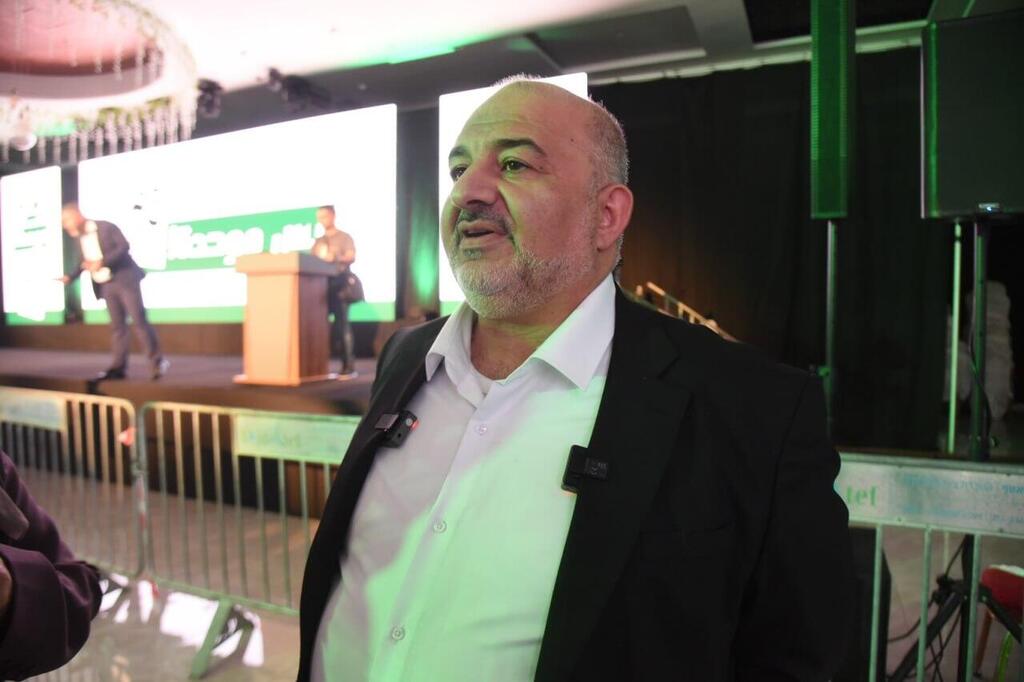
Mansour Abbas
(Photo: Avihu Shapira)
His remarks reflected a broader argument among Arab political leaders that frustration with the Netanyahu government's policies, particularly its handling of crime and violence in Arab communities, helped mobilize voters.
Joint List lawmaker Ahmad Tibi delivered an even more explicit message to Eisenkot, saying his party was willing to help establish a minority government that would remove Netanyahu from office.
Crucially, Tibi stressed that the Joint List was not seeking ministerial positions or demanding to become a formal member of the coalition. Instead, it was prepared to consider supporting such a government from outside, provided it received commitments on issues important to Arab citizens.
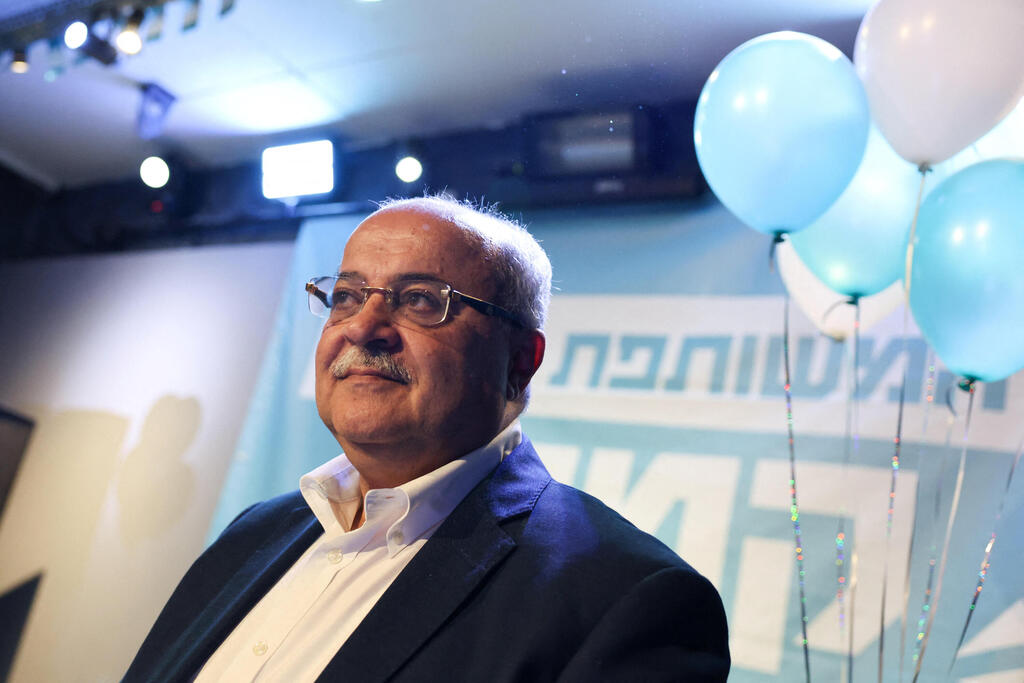
Ahmad Tibi
(Photo: REUTERS/Ammar Awad)
Among those conditions would be a serious government effort to tackle crime and violence in Arab communities, alongside a halt to home demolitions in Bedouin towns and villages. Tibi said the demolitions had intensified during Netanyahu's tenure.
Such an arrangement could allow Eisenkot to establish a minority government supported by Arab lawmakers in parliamentary votes without formally including their parties in the coalition.
Tibi said he had received hundreds of calls and messages since the first exit polls were published Tuesday night, including an approach from what he described as a "significant figure" within the opposition bloc. He acknowledged, however, that Eisenkot himself had not contacted him.
Tibi said he had conveyed a clear message that the Joint List was both "ready" and "willing" to help pave the way for a different government. But for that to happen, he said, Eisenkot and his political partners would have to "show courage."
The appeal comes despite opposition from several prominent parties in Eisenkot's bloc to forming a government that would depend on Arab political support.
Although the Arab parties' projected 19 seats could prove crucial in preventing Netanyahu from securing another term, cooperation with them remains politically contentious among Eisenkot's potential coalition partners.
The 19-seat dilemma facing Eisenkot
The strong showing by the Joint List and Ra'am followed an exceptionally high turnout among Arab voters, approaching 80%, according to election figures cited in the report.
The mobilization helped increase Arab representation in the Knesset and may have prevented Netanyahu's bloc from reaching the parliamentary majority needed to form a government independently.
But it has also created a difficult political question for Eisenkot: How can he replace Netanyahu without relying on the parliamentary strength of the Arab parties?
The dilemma is particularly complicated by the conditions Eisenkot has set for parties seeking to join his government. Those include recognizing Israel as a Jewish state and acknowledging Hamas as a terrorist organization that must be dismantled.
Those requirements could make formal cooperation with Arab parties difficult, even if their support from outside a coalition would not necessarily require them to become government partners.
The Joint List's willingness to consider external parliamentary support offers Eisenkot a potential alternative to a traditional coalition agreement. But it remains unclear whether such an arrangement could overcome the objections of his other political partners or satisfy his own conditions.
For now, the Arab parties are openly signaling their willingness to help bring about a change in government, while Eisenkot has yet to present a framework for cooperation with them.
On Wednesday evening, he reiterated that his priority was establishing what he called a "Zionist government committed to military conscription."
The contrast leaves Israel's opposition facing a central question in the aftermath of the election: whether it is prepared to rely on the Arab lawmakers whose votes could be essential to ending Netanyahu's rule.