

Gayton McKenzie, South Africa’s minister of sport, arts and culture, says a "foreign state" attempted to influence the country’s national pavilion at the prestigious Venice Biennale in Italy to promote the Palestinian narrative and undermine Israel.
McKenzie said he blocked the initiative in recent days. According to diplomatic sources in South Africa, the country behind the effort was Qatar.

The Venice Biennale is widely regarded as the most important and prestigious art event in the world. The work selected to represent South Africa in its national pavilion focuses on "mourning, memory and repair," linking the killing of women by colonial forces in Namibia, hate crimes against the LGBTQ community in South Africa, and what the curators describe as "the killing of tens of thousands of women and children in Gaza since October 2023." The exhibition also includes a tribute to Palestinian poet Hiba Abu Nada, who was killed in an Israeli strike during the war in Gaza.
McKenzie, who served a prison sentence in his youth for robbery before rebuilding his life and becoming a prominent public figure, is considered one of the few pro-Israel voices in South Africa’s government. The administration is widely seen as hostile to Israel and initiated legal proceedings against it at the International Court of Justice in The Hague.
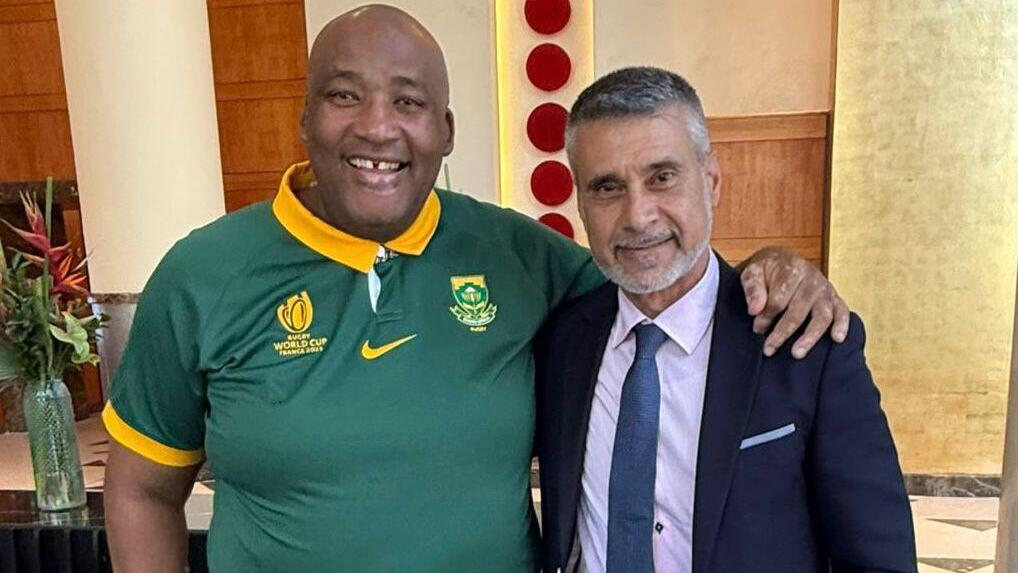
Gayton McKenzie, South Africa’s minister of sport, arts and culture and Israeli Ambassador David Saranga
(Photo: Israeli embassy in South Africa)
In an unusual and sharply worded official statement, McKenzie said he not only canceled the contract with the exhibition’s producing body but concluded that a foreign state had attempted to use South Africa’s pavilion as an indirect vehicle for advancing a political agenda against Israel.
According to McKenzie, Qatar did not appear as an official funder of the exhibition but committed to purchasing South Africa’s artworks at the conclusion of the Biennale. He said this arrangement created an incentive to produce art aligned with the Palestinian and anti-Israel narrative, including claims of genocide in Gaza.
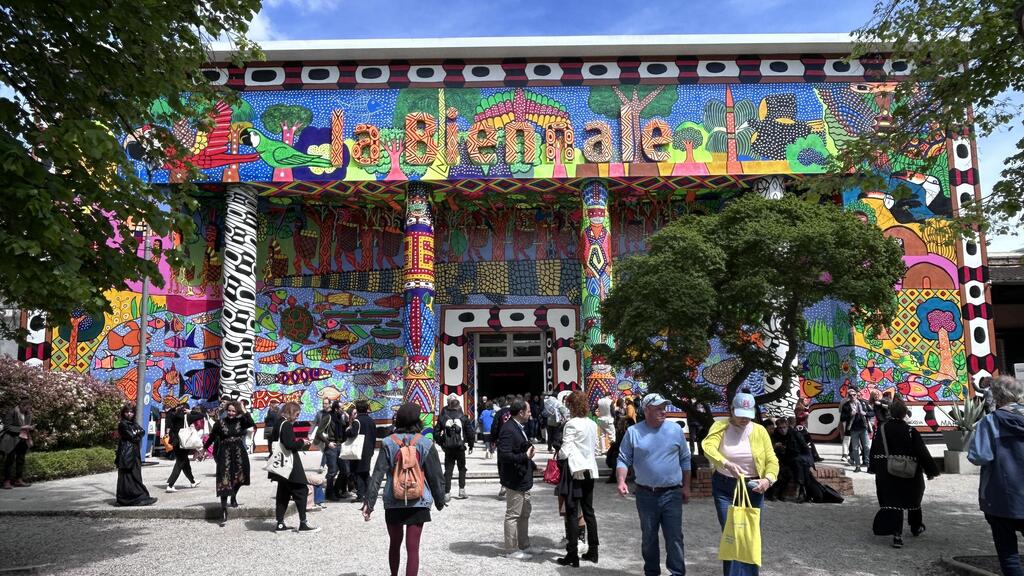
The facade of the central pavilion at the Venice Biennale, 2024
(Photo: Debby Luzia)
In his statement, the minister warned that the effort amounted to an attempt to turn South Africa into a proxy for delivering another country’s political message on the Israeli-Palestinian conflict. "If that country has a position and the resources, why not rent its own pavilion and state its views openly?" he asked.
David Saranga, head of the Digital Diplomacy Division at Israel’s Foreign Ministry and Israel’s visiting ambassador to South Africa, sent a message to ministry headquarters following McKenzie’s remarks. "This case best illustrates how influence operations against Israel are carried out in the cultural sphere by states with significant resources," Saranga wrote. "If the culture minister were not a friend of ours, it could have been dismissed as yet another ‘organic’ anti-Israel initiative by South Africa’s cultural community."
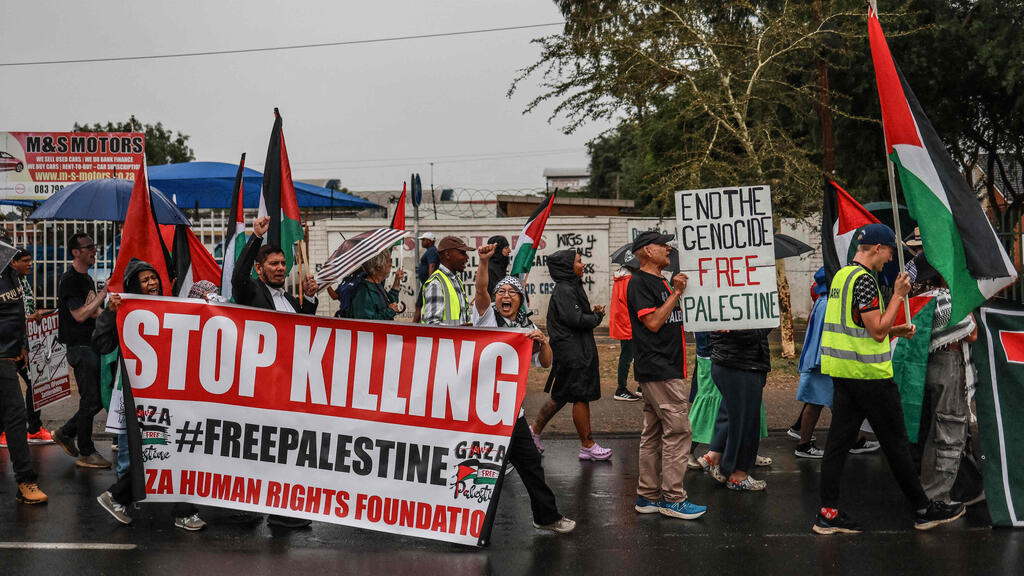
Pro-Palestinian protest in South Africa
(Photo: Emilio Morenatti/ AP)
McKenzie has previously voiced relatively balanced positions on Israel, a rarity in South Africa’s political landscape and often at odds with his government’s official stance. He is regarded as a rising political figure and was the only minister in the current government to meet an official Israeli representative. In October, he met with Saranga and addressed attempts to exclude Israel from cultural and sporting events in South Africa.
According to officials at Israel’s Foreign Ministry, the case sheds light on how Qatari influence operations against Israel operate in the cultural domain. They said that since Gideon Sa’ar assumed office as foreign minister, there has been a growing recognition that Israel must move beyond traditional public diplomacy and operate more directly in the realm of influence campaigns.
As part of that shift, Naor Gilon was appointed last month to head the Foreign Ministry’s public diplomacy directorate, with a mandate to build advanced capabilities to help Israel contend with what officials describe as cognitive and influence warfare.