

Khaled al Fatawi, speaking in an interview with ynet, described the agreement as a continuation of longstanding ties rather than a sudden breakthrough, and said cooperation has expanded in diplomacy, tourism, energy and innovation. “This agreement was not the beginning of relations between Israel and Morocco,” al Fatawi said. “It was the continuation of relations that existed before, but were not official.”
He said Morocco’s international standing has strengthened since the deal was signed, with economic growth in sectors including tourism, handicrafts, renewable energy and technology. Solar energy and innovation projects, he added, have seen particular momentum.
Khaled al Fataw |Interview
(Video: Yaron Brener)


Al Fatawi rejected claims that regional tensions have weakened the agreement, arguing that Morocco remains a stabilizing force in the Middle East and Africa. “Morocco is stable and developing all the time,” he said. “Today Morocco is the heart of Africa. Together, Morocco and Israel can do many good things for Africa and for the world.”
Addressing the situation of Morocco’s Jewish community, particularly in Marrakesh, al Fatawi emphasized that Jews are an integral part of Moroccan identity and society. “It is not just a community,” he said. “They are Moroccans. We studied together, we lived together, and we are proud of them.”
He said Jewish heritage sites, synagogues and cemeteries are protected and restored by the Moroccan state, and noted ongoing investment in preserving Jewish history, including plans for a major museum in regions with a long Jewish presence. Asked whether Moroccan Jews are considering immigrating to Israel amid current tensions, al Fatawi dismissed the idea of separation between the two countries.
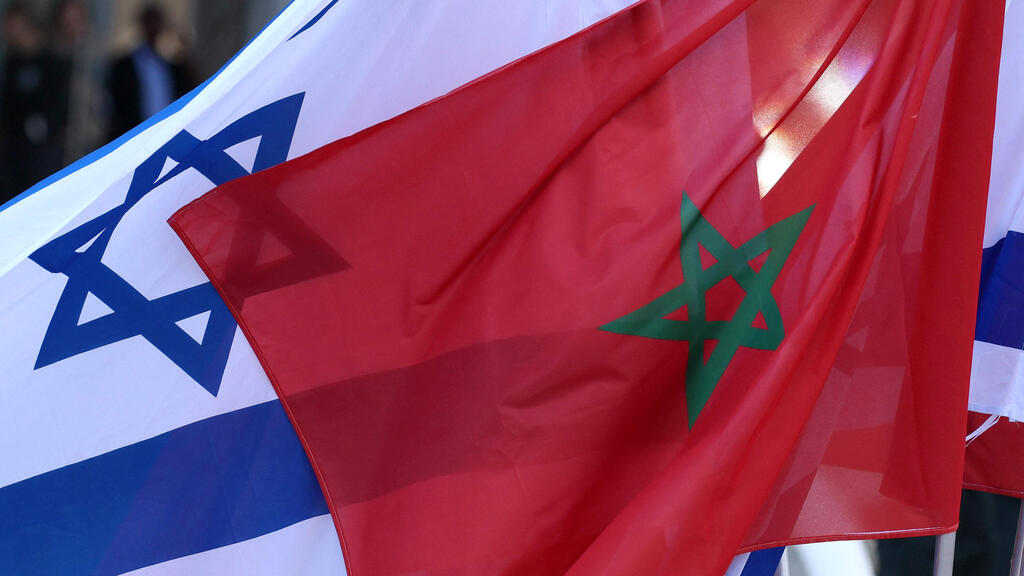
Israeli and Moroccan flags at the Kirya in Tel Aviv
(Photo: AFP)
“When we go to Israel, we do not immigrate. We go home,” he said. “Just as Jews consider Morocco their home, we consider Israel our home.” He described Israeli citizens of Moroccan origin as a living bridge between the two nations and said their shared identity strengthens bilateral ties.
On public opinion in Morocco, al Fatawi acknowledged limited protests against normalization but said they do not reflect the broader population. “We are 40 million people,” he said. “If 10,000 demonstrate, that is not Morocco.”He said ordinary Moroccans remain welcoming toward Israelis and expressed hope that direct flights between the two countries will resume soon.
Looking ahead, al Fatawi said Israel and Morocco could play a key role in regional development, particularly in Africa’s Sahel region, including Mali and Burkina Faso. He highlighted opportunities for Israeli companies in infrastructure, ports and road projects, as well as cooperation in technology and job creation. “Israel is a leader in innovation and startups,” he said. “Together we can create stability, peace and progress for Africa.”
Al Fatawi said the relationship between Israel and Morocco offers a model of coexistence and tolerance that could serve as an example beyond the region.