


Key opposition leaders met on Wednesday in a private session to coordinate efforts to bring down Prime Minister Benjamin Netanyahu’s government as early as the coming winter parliamentary session.
The gathering, which lasted about an hour, brought together opposition leader and Yesh Atid chair Yair Lapid, Yisrael Beiteinu leader Avigdor Liberman, former Prime Minister Naftali Bennett, National Unity chair Benny Gantz, former Knesset lawmaker Gadi Eisenkot and Democratic Party leader Yair Golan. The Arab parties were not invited.
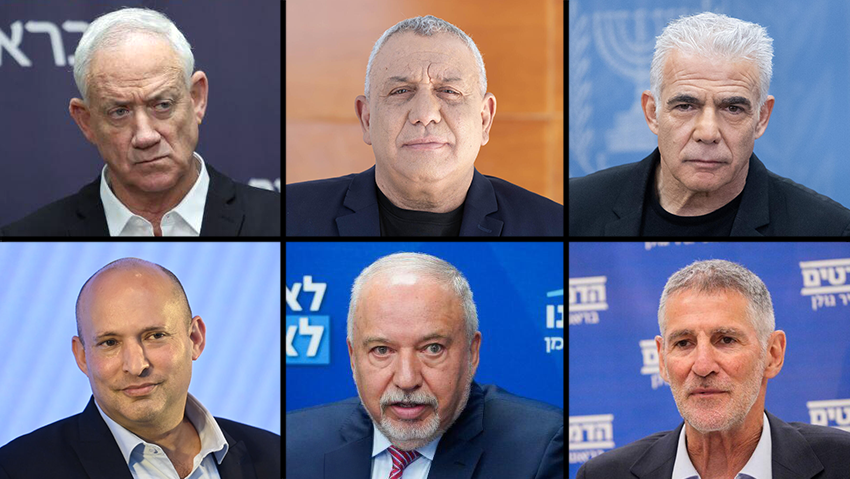
(Photo: Shalev Shalom, Yair Sagi, Yuval Chen, Alex Kolomoisky )
In a joint statement released after the meeting — notably without a group photo — the participants said they discussed plans to coordinate political moves to topple the government and form a “government of restoration and healing.” The statement also called for the implementation of President Trump’s plan to secure the release of all 48 remaining hostages, emphasizing their readiness to provide a political safety net for a potential deal.
The participants agreed to strengthen their cooperation, support Trump’s proposal, and continue joint efforts both to free the hostages and to pave the way for a political alternative to Netanyahu. A follow-up meeting was scheduled. The previous meeting of opposition figures — from which Gantz and Bennett were absent — focused on electoral integrity and other policy issues. The two leaders’ teams have now joined those coordination groups.
The renewed talks come amid intensified discussions among the opposition factions in recent weeks about possible alliances or joint electoral runs ahead of potential elections next year. According to sources in the bloc, their central goal is to create a coalition framework capable of securing at least 63 Knesset seats, enough to form a stable government to replace Netanyahu’s.
Sources close to Bennett said last month that he favors forming a single centrist list uniting the opposition’s base to present a clear alternative to the Netanyahu bloc. However, some of his potential partners remain hesitant, fearing that merging parties could lead to the loss of votes. Their immediate objective is to ensure that none of their parties fall below the electoral threshold.
The leaders reportedly agreed that if a unified list is formed, it will be led by whoever polls strongest against Netanyahu — signaling both pragmatism and a shared determination to challenge his hold on power.