

The second Iran war has disrupted nearly all Ramadan activities, limiting movement during a month when fasting Muslims are usually accustomed to family visits, large communal meals, festive gatherings, intensive mosque prayers and other traditions. Because of the war’s consequences, many of these activities simply are not taking place.
Mohammed Sharif of Kalanswa, who works as a clerk at a community center, said the holiday usually includes numerous special events. “Every year we prepare special activities for children and parents, religious and social gatherings, and we distribute gifts,” he said. “But this war canceled those plans and brought us into a sad atmosphere, even though Ramadan is a special month with traditions that bring joy to everyone. These circumstances have taken that joy away from us and erased everything that was planned.”
Gallery
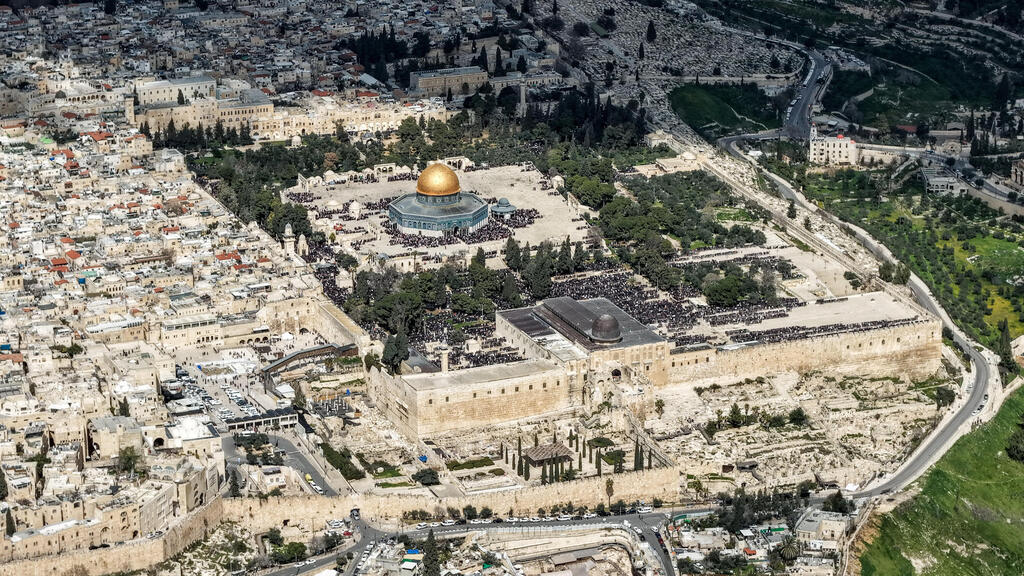
Ramadan prayers at the Temple Mount, a day before the outbreak of the second Iran war
(Photo: Ilan Rosenberg/Reuters)
Business owners and restaurants say they have also been hit hard. Abu Adam, owner of the well-known “Abu Adam Shawarma” restaurant in Kalanswa, said the war has sharply reduced customer traffic. “During Ramadan we used to receive customers from several towns and the restaurant would be full,” he said. “But because of the war we started selling mostly through orders and demand is much lower.”
“The war has made customers from outside Kalanswa afraid to come because of the missiles. No one disputes that fear,” he added. “But it also shows the scale of the losses for me and for others.”
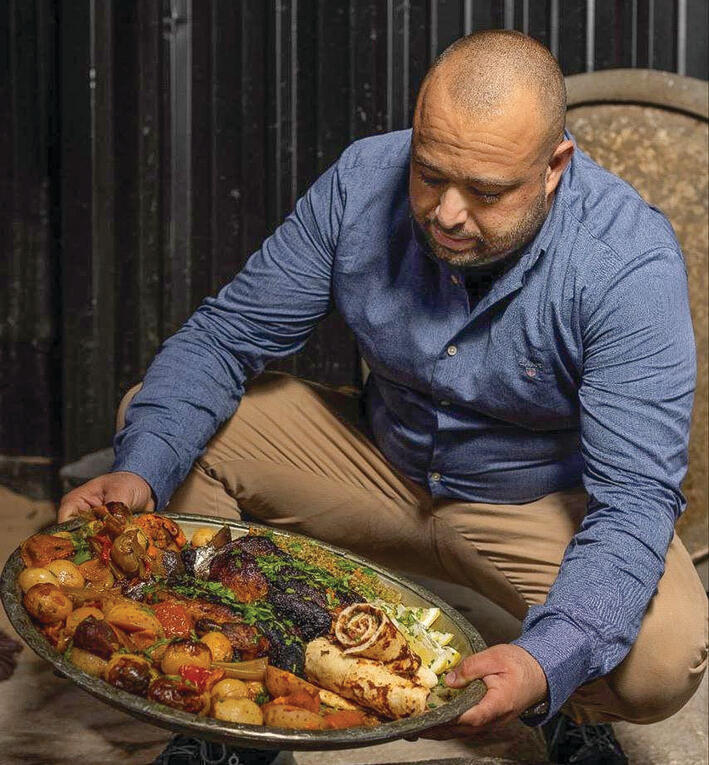
Abu Adam, a shawarma shop owner: 'Customers are not coming'
Mustafa Sarsur, a resident of Kafr Qasim, said the situation has changed the atmosphere of the holiday. “Shrapnel fell on our city and caused damage, so movement during Ramadan is weak and the atmosphere is not what we are used to,” he said. “This war has reduced many activities, from sales to mosque prayers and visits. I never imagined we would reach a point where Ramadan would become a paralyzed month.”
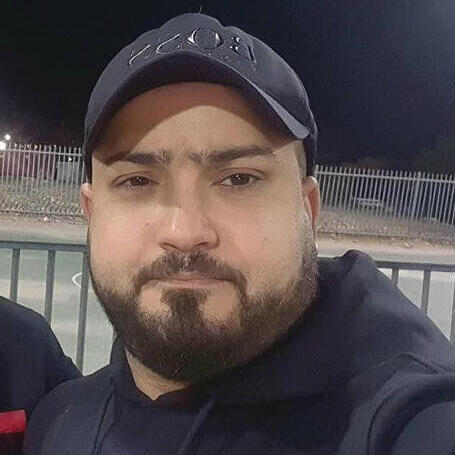
Mustafa from Kafr Qasim
Salama Abu Karama of Rahat, who owns a bookstore, said the change is deeply felt. “Ramadan used to be a time of special moments, gatherings and prayers in mosques around the clock,” he said. “Because of the war it has become an orphaned and sad month, and it hurts that we cannot celebrate Ramadan.”
“Even as a bookstore owner, I used to receive customers who bought books and gifts during Ramadan,” he added. “Now I barely manage to sell anything worth 50 shekels.”
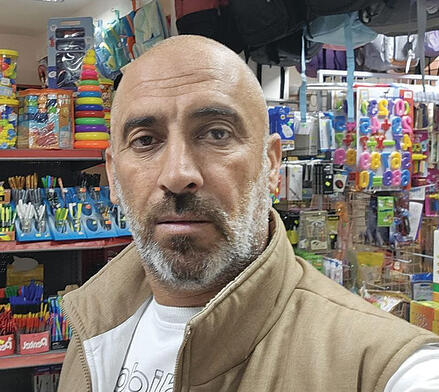
Salama Abu Karama from Rahat
A resident of Taybeh said family plans were also disrupted. “I had two family gatherings planned and everything disappeared because of the war,” she said. “This time Ramadan is restricted. Our family even thought about traveling abroad for the whole period so we could still feel the Ramadan atmosphere, and we are still considering it.”
Arab communities also continue to face a shortage of shelters, particularly in the Negev. Several organizations, including AJEEC, sent a letter to Prime Minister Benjamin Netanyahu addressing the issue. “We seek to bring to your attention a policy document regarding gaps in protection and sheltering in the Arab Bedouin society in Israel,” the letter read.
“The result is dozens of civilians who have been injured or killed, and tens of thousands living in an unbearable reality of fear and anxiety, unable to take the minimal steps required to protect their lives,” it continued. “We ask that the issue be placed on the national agenda as a matter of priority, and we are ready to cooperate in advancing solutions.”