

French President Emmanuel Macron’s speech Tuesday night at the UN General Assembly immediately sparked an uproar in Israel after he claimed that Hamas had never “caused trouble” in the West Bank, a statement contradicted by nearly four decades of the terrorist organization’s activity there.
Just two days earlier, hours before Yom Kippur began, Netanel Shukrun, a French citizen and father of six, was killed in a shooting attack at the Ein Re’iya spring. The attacker, Qadri Samara, was identified as a Hamas operative.

Hamas’ presence in the West Bank did not begin this week. In fact, its activity there dates back to the late 1980s, not long after the terrorist organization was founded in the Gaza Strip in December 1987, with the outbreak of the First Intifada.
The organization began participating in demonstrations and clashes with IDF forces while simultaneously building an independent infrastructure that competed with the PLO and Fatah, and established a leadership presence on the ground that continues to this day.
During the late 1980s and early 1990s, Hamas operated an underground network in the West Bank that also carried out attacks against Israelis. In April 1993, several months before the Oslo Accords, Hamas reached a turning point when it carried out its first suicide bombing, at Mehola Junction in the Jordan Valley.
The signing of the Oslo Accords in September of that year turned Hamas into a major opponent of the diplomatic process, particularly in its confrontation with more moderate Palestinian organizations in the West Bank. The group rejected mutual recognition between Israel and the PLO and the establishment of the Palestinian Authority, and continued violent activity aimed, among other things, at undermining the process.
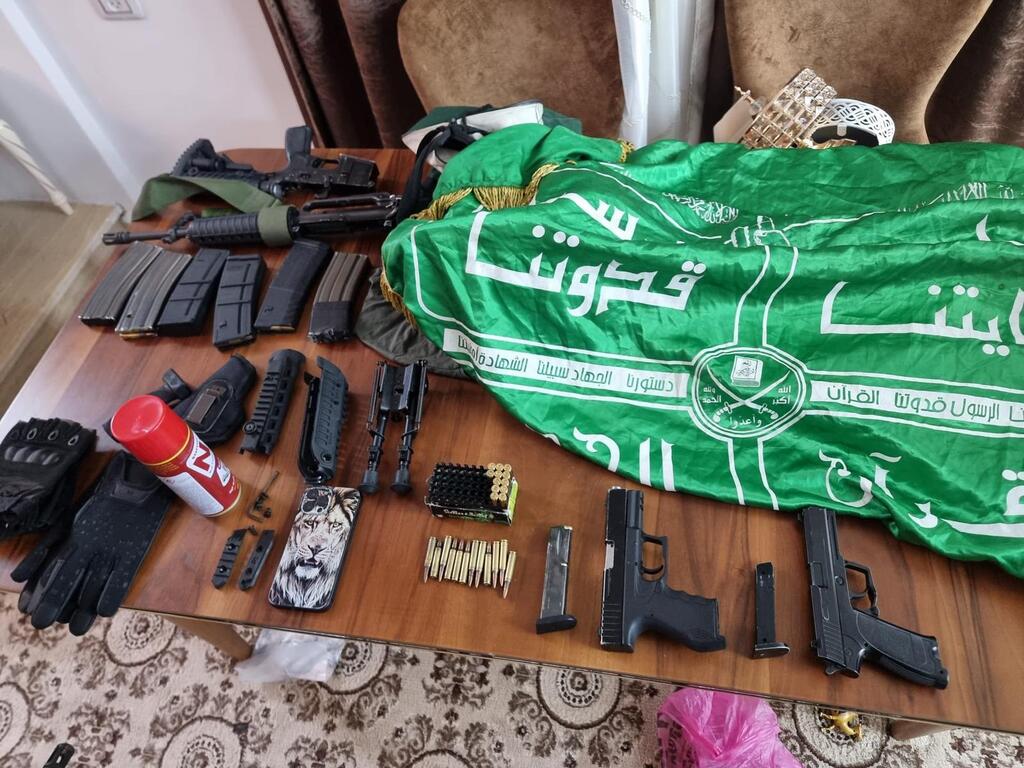
Weapons and a Hamas flag found at the start of the war
(Photo: IDF)
During the wave of attacks in the 1990s, Hamas claimed responsibility for dozens of attacks in which Israelis were killed, including attacks carried out by terrorists who came from the West Bank.
In 1996, Hamas’ bombing campaign reached a peak when, over roughly two weeks, it claimed responsibility for four deadly attacks in Jerusalem, Tel Aviv and Ashkelon in which 59 Israelis were killed. Hamas continued carrying out attacks afterward.
With the outbreak of the Second Intifada, Hamas became an even more significant force in the armed struggle against Israel, which had initially been led by Fatah. The organization’s infrastructure in the West Bank quickly became a central part of the deadly terrorist campaign, while Hamas also gained strength in Palestinian public opinion.
Over three and a half years of the Second Intifada, Hamas carried out hundreds of attacks. The terrorist organization was behind, among others, the Dolphinarium bombing, in which 21 people were killed and dozens more wounded, and the 2002 Passover bombing at the Park Hotel in Netanya, in which 30 people were killed and more than 150 wounded.
The Park Hotel bombing is considered a principal reason Israel launched Operation Defensive Shield, during which Israeli forces conducted a broad campaign against terrorist infrastructure in the West Bank.
Later, after Hamas seized control of the Gaza Strip, it continued building its presence in the West Bank. In 2014, Marwan Qawasmeh, a Hamas terrorist released in the deal to free Gilad Shalit, commanded the kidnapping of three Israeli teenagers in Gush Etzion: Naftali Fraenkel, Gilad Shaar and Eyal Yifrach.
Israeli security officials determined at the time that Hamas was the principal threat in the West Bank amid its efforts to rebuild a military infrastructure in the territory.
In the years since, and continuing to this day, Hamas has launched attacks from the West Bank and continued trying to harm Israelis through its operatives. Numerous Hamas cells and terrorist infrastructures have also been uncovered and dismantled in IDF operations and raids, including Operations Home and Garden, Break the Wave and Summer Camps.
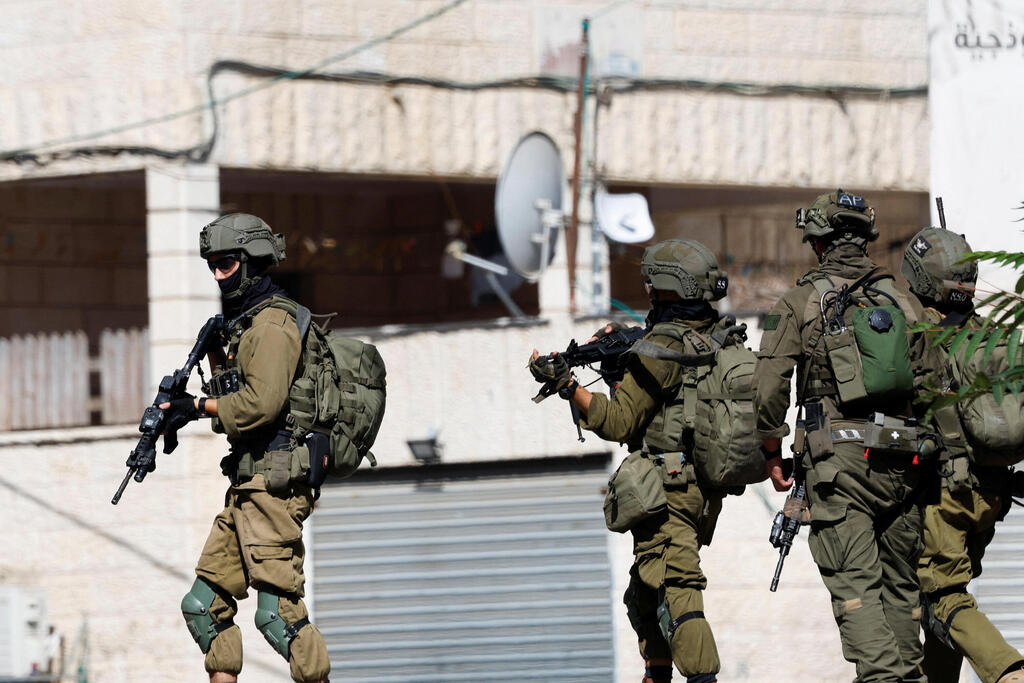
IDF troops in the West Bank
(Photo: REUTERS/Mohammed Torokman)
IDF activity in the West Bank has become a daily occurrence since Oct. 7, 2023, while Hamas and other organizations have intensified efforts to expand their operations there.
In addition to the deadly attack in which Shukrun was killed in front of his son, Duvdevan troops arrested two Hamas-affiliated terrorists in Qabatiya in the northern West Bank during Yom Kippur. The two were suspected of planning to carry out an attack “in the immediate timeframe.”
The arrests followed a series of thwarted plots in recent weeks in which several terrorists and local cells suspected of planning imminent attacks were detained.
Prime Minister Benjamin Netanyahu quickly responded to Macron’s remarks through the Prime Minister’s Office.
“The grotesque absurdity of Emmanuel Macron’s statement is astounding,” Netanyahu said. “On Sunday, the eve of Yom Kippur, just two days ago, Netanel Shukrun, a French citizen and father of six, was murdered in his car by a Hamas terrorist in Judea and Samaria.”
“With his final breath, he told his son to run. Hamas terrorists carry out attacks against Jews almost every day. They have murdered countless Israeli civilians in Judea and Samaria. Ignorance is no excuse for erasing their blood.”