

Iran has emerged from six months of intermittent war with the United States more confident in its ability to inflict damage across the Middle East and increasingly convinced that it can sustain the conflict for months, according to recent U.S. intelligence assessments cited by The New York Times.
Officials familiar with the reports say Tehran now has a clearer understanding of both its own military capabilities and the limits of American power. That confidence is feeding concerns in Washington that Iran’s leadership may be prepared to escalate after weeks of renewed fighting.
Trump again threatens a strike on Pickaxe Mountain, says ‘this is not a war’
(Video: White House)


The shift has become visible on the ground. Over the past week, Iran has targeted shipping in the Strait of Hormuz and American forces in the region, while the United States has carried out strikes inside Iran that killed military personnel and civilians.
The latest exchanges have remained relatively limited. But officials who reviewed the intelligence said the assessments indicate that Iran’s hard-line leadership may be considering a broader confrontation.
The reports also suggest that a comprehensive agreement ending the war remains difficult to imagine. U.S. officials see little indication that Tehran is preparing to make major concessions, while some believe Iran is content to prolong the confrontation and deepen President Donald Trump’s political problems ahead of the U.S. midterm elections.
Trump is not currently pursuing negotiations. Instead, he has argued that economic pressure will eventually force Iran to make concessions over the Strait of Hormuz and perhaps, later, its nuclear program.
In the short term, however, officials who reviewed the intelligence believe additional sanctions could have the opposite effect and prompt further Iranian escalation.
U.S. officials say Tehran could soon repeat some of the tactics it used in July, when Iran attacked American military bases across the Middle East, killing three Americans in Jordan, struck shipping in the Strait of Hormuz and targeted infrastructure in Kuwait and elsewhere.
Cyberattacks remain part of Iran’s arsenal
Washington is also closely watching Iranian cyber activity.
U.S. officials believe Iran-linked hackers were most likely responsible for cyberattacks against more than 100 American water systems in late July. None of the attacks is known to have made drinking water unsafe, but some caused disruptions that required manual intervention and precautionary boil-water advisories.
Gallery
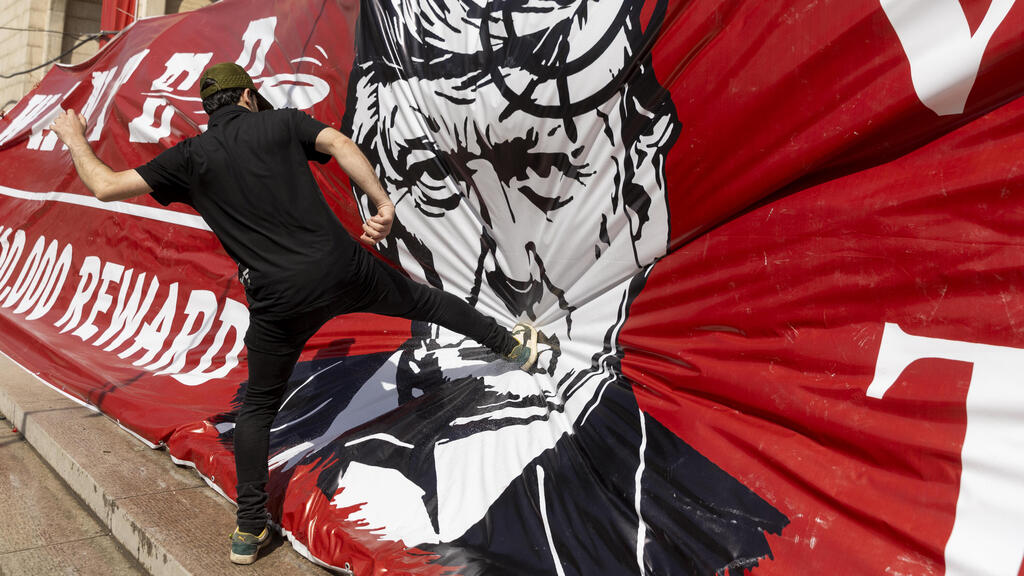
Iran seeks to wear Trump down politically; Tehran resident steps on image of US president
(Photo: Majid Saeedi/Getty Images)
Iranian hackers have also shown interest in U.S. oil and gas infrastructure, according to current and former officials, although such systems are generally considered more difficult to penetrate. It remains unclear whether any energy infrastructure has actually been breached.
There are indications that Iranian hacking groups have regrouped after suffering losses early in the war.
Even when cyber operations fail to cause major physical damage, former intelligence officials and security experts say Tehran may see them as a useful way to increase public anxiety and weaken American support for an already unpopular conflict.
Alex Orleans, a former U.S. government cybersecurity contractor who tracks Iranian hacking groups, said Iranian cyberoperators are likely feeling more confident.
“Even if such attacks fail to meaningfully unsettle the American public, they can still play into a broader effort to exhaust domestic patience with this administration’s handling of the conflict,” he said.
Vice President JD Vance also acknowledged Thursday that Iran was likely to continue trying to disrupt the United States, although he played down the scale of the threat.
“If you look at the Iranian ability to disrupt the normal lives of Americans, I think it is quite limited,” Vance said. “It’s not zero, but it’s quite limited. I’d be much more worried about cyberattacks from other actors.”
Iran believes it can absorb the damage
Trump predicted a swift and decisive victory when U.S. and Israeli forces launched the war on Feb. 28. Six months later, critics of the administration argue that Washington underestimated Iran’s ability to absorb military and economic punishment.
Representative Jason Crow, a Colorado Democrat who sits on the House Intelligence Committee, said Tehran appears increasingly confident in its position.
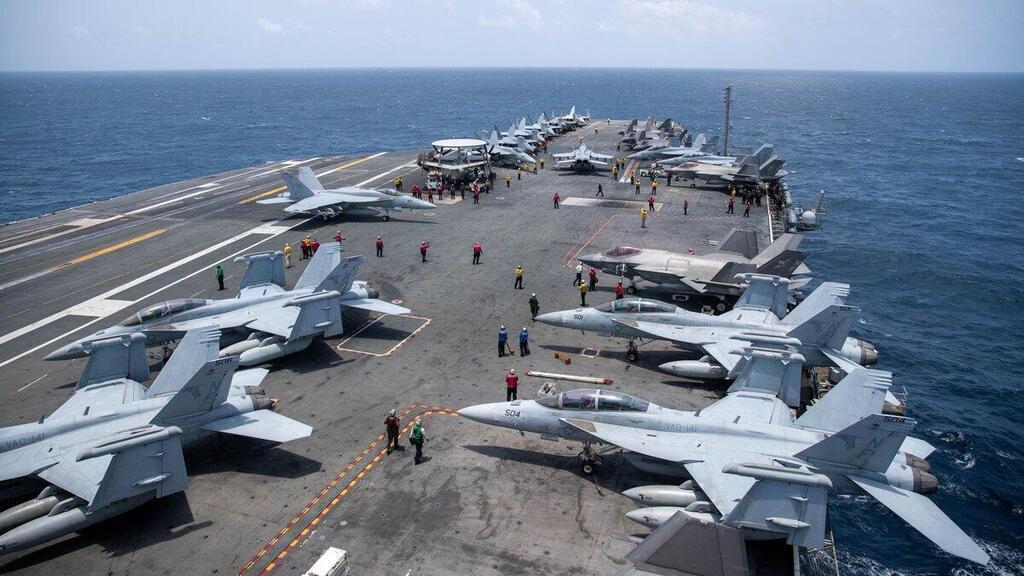
Could the war drag into 2027? USS George Washington deployed to the Middle East
(צילום: CENTCOM)
“Iranians are feeling pretty bullish about their position,” Crow said. “They have taken substantial damage, but that has always been built into their system. They understand they can take damage, and they are playing a much longer game here.”
Crow declined to discuss classified assessments directly, but said several factors appear to have strengthened Iran’s sense of leverage.
Iran’s leadership, previously divided by internal rivalries, is now more unified, he said, while domestic opposition has been largely silenced. Tehran also continues to hold significant stocks of missiles and drones despite months of attacks.
Just as importantly, Iranian leaders now appear to have a better understanding of how much pressure they can exert through the Strait of Hormuz, a waterway that carried about one-fifth of the world’s oil before the war.
“They have always known the strait was a big bargaining chip, but have come to realize to a greater degree the leverage that gives them,” Crow said.
Iran may believe US military options are narrowing
Officials briefed on the intelligence also say Tehran may believe the United States will struggle to sustain another large wave of strikes as American weapons stockpiles are depleted.
That perception may be encouraging Iran to extend the conflict.
Current and former U.S. officials say there are signs Tehran intends to keep fighting at least through the midterm elections, calculating that the war and the high gasoline prices caused by disruptions in the Strait of Hormuz are damaging Trump and the Republican Party politically.

Centrifuges at Natanz before Operations Rising Lion and Roaring Lion
(Photo: AP)
“The Iranians think they have maximum leverage,” said Representative Josh Gottheimer, a New Jersey Democrat and member of the Intelligence Committee. “So, from their perspective, why not keep sticking it to the president?”
Iran has additional tools beyond military pressure.
U.S. officials see indications that Tehran is again trying to influence American political debate, building on interference efforts seen during the 2020 and 2024 presidential elections.
Meta said last week that it had removed a small network of Facebook and Instagram accounts originating in Iran that focused on U.S. politics. Some of the material was generated with artificial intelligence, and Meta said the accounts promoted “anti-Republican views.”
Threat intelligence company Alethea also found that Iranian domestic media published more than 1,200 Persian-language articles over a two-week period referring to both Trump and the midterm elections. According to the company, the dominant message was that the war had become a political liability for the president.
A war with no clear end
Gottheimer, who said he initially supported the war, argued that the Trump administration has failed to establish a coherent strategy for ending it.
He said Iran’s government has so far been able to absorb both military attacks and economic sanctions despite the damage inflicted on the country.
“Because the Iranian government does not care much about the suffering of its people, it has been able to withstand both punishing economic sanctions and military bombardments,” he said.
The emerging U.S. intelligence picture suggests that endurance itself has become a source of confidence for Tehran.
After months of strikes, sanctions and military losses, Iranian leaders appear to believe they have identified where the United States is vulnerable: regional bases, global shipping, American infrastructure, domestic political opinion and the economic pressure created by disruptions in the Strait of Hormuz.
That does not mean Iran is stronger in every military sense. It has sustained heavy losses and remains under enormous economic pressure. But U.S. officials increasingly believe Tehran now understands the battlefield better than it did at the start of the war and sees fewer reasons to compromise quickly.
That calculation could make the next phase more dangerous.
Rather than pushing Iran toward a settlement, six months of conflict may have convinced its leadership that it can absorb American pressure, prolong the war and wait for the political and economic costs in the United States to rise.