

The deadliest known scene so far was in the western city of Pereira, where 18 people were killed. Fatalities were also reported in Manizales, Buenaventura and Valle del Cauca, including three children who were killed when a wall collapsed on them.
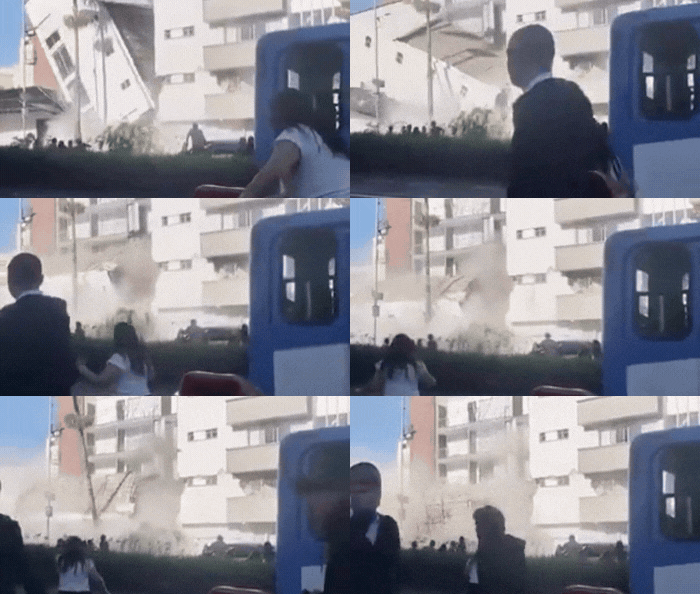
Buildings collapse as survivors jump and flee: Footage from the Colombia earthquake


In Cali, Colombia’s third-largest city, the mayor said at least 20 buildings had collapsed and rescue teams were working to reach people trapped inside.
Heavy structural damage was also reported in Quibdó, which along with Pereira appeared to be among the main centers of destruction. In Bogotá, buildings swayed and frightened residents rushed into the streets, but authorities said no significant damage had been reported in the capital.
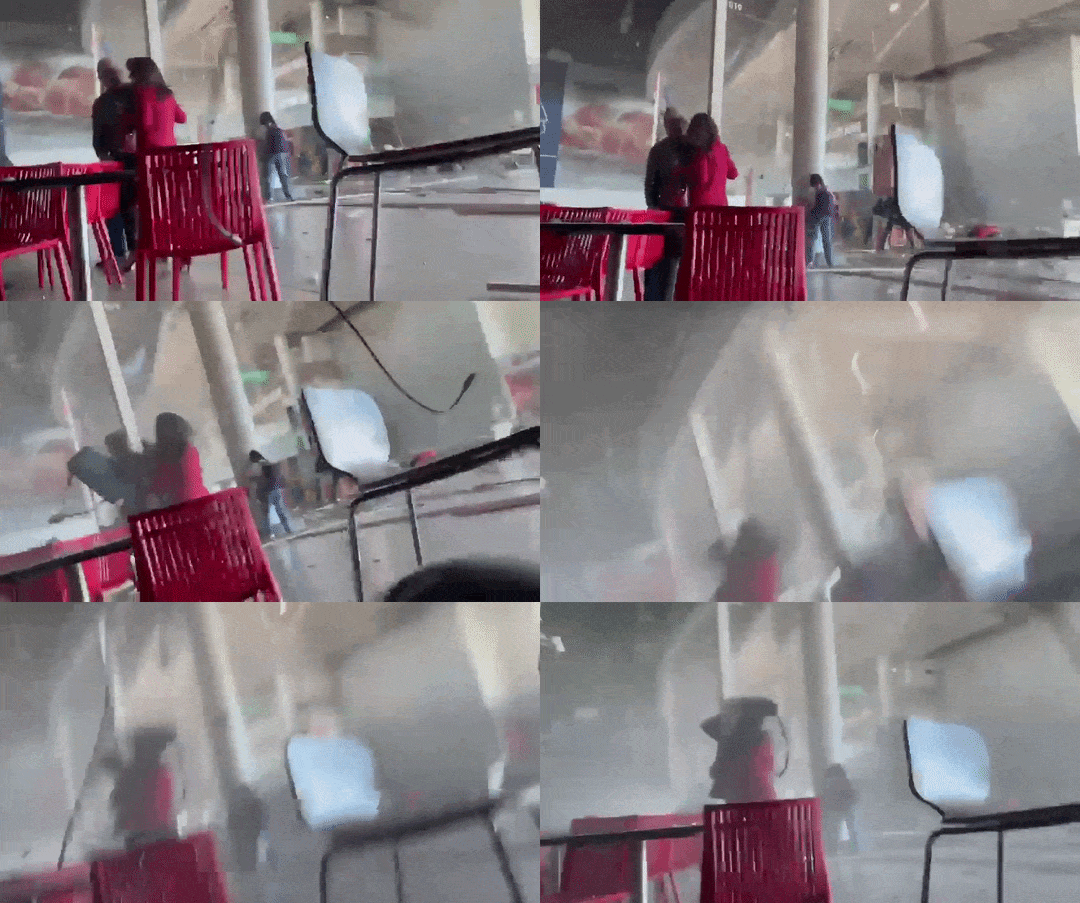
Ceiling collapses at Pereira airport as passengers struggle to stay on their feet
(Photo: Social media)
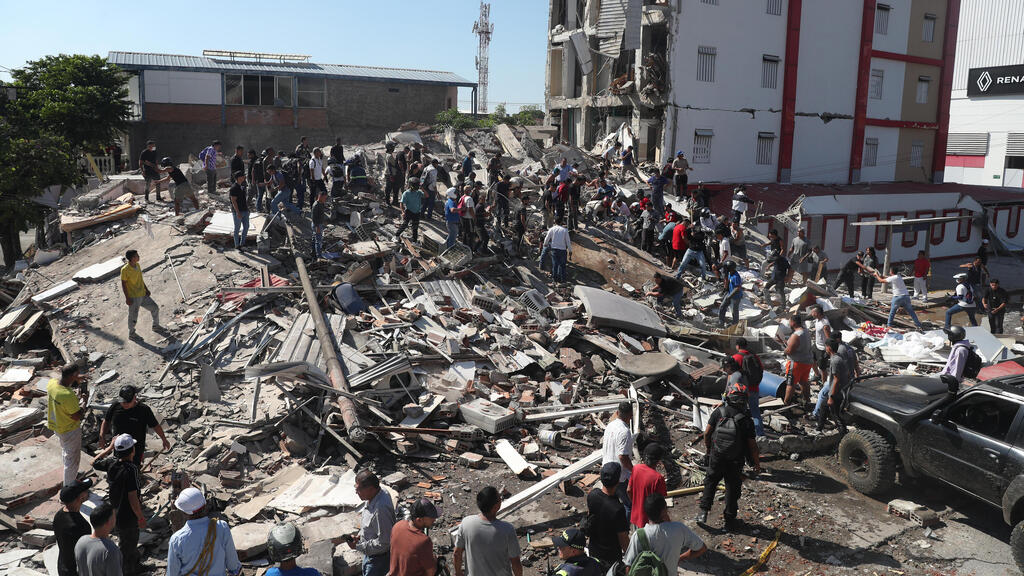
Earthquake damage in Cali, Colombia
(Photo: AP Photo/Santiago Saldarriaga)
Local media broadcast images of buildings with shattered facades, while videos circulating online showed residents fleeing as debris fell around them. In one video, a woman struggled to stay on her feet as the facade of a nearby building collapsed before jumping across the road to escape.
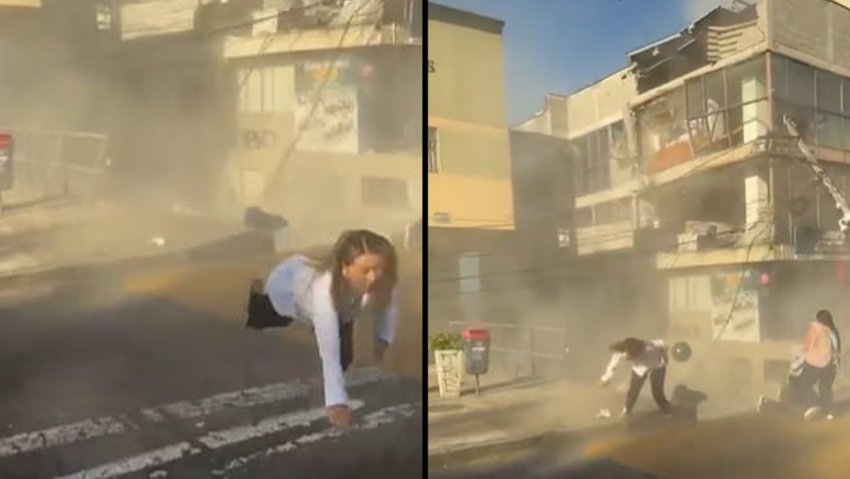
Footage from Colombia
Buildings collapse as survivors jump and flee: Footage from the Colombia earthquake
The earthquake struck at 7:34 a.m. local time. Its epicenter was near San José del Palmar, about 400 kilometers west of Bogotá, at a relatively deep 96 kilometers below the surface.
The tremor was also felt in neighboring Ecuador, including the capital Quito, as well as in Venezuela and Panama. No tsunami warning was issued.
In Bogotá, the powerful shaking triggered panic as residents and tourists evacuated buildings, though significant damage was not reported there. Farther west and in central Colombia, however, authorities reported widespread destruction, including the collapse of dozens of structures.
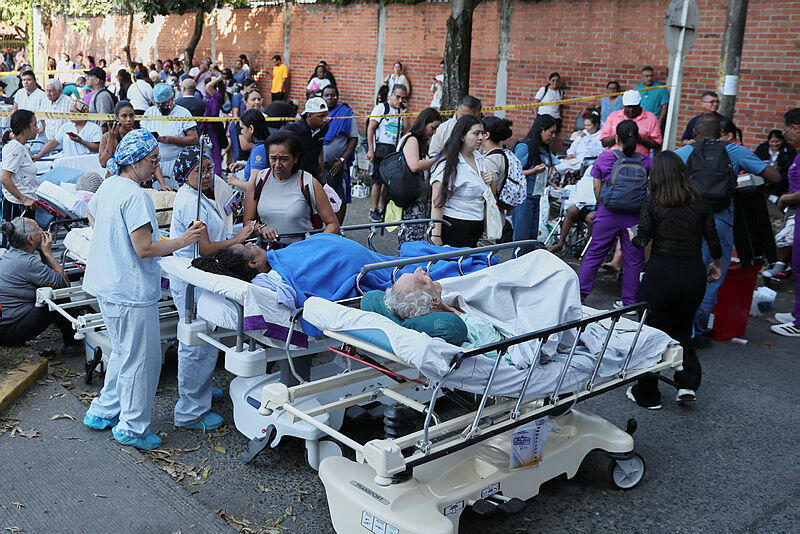
Earthquake victims outside a hospital in Cali, Colombia
(Photo: AP Photo/Santiago Saldarriaga)
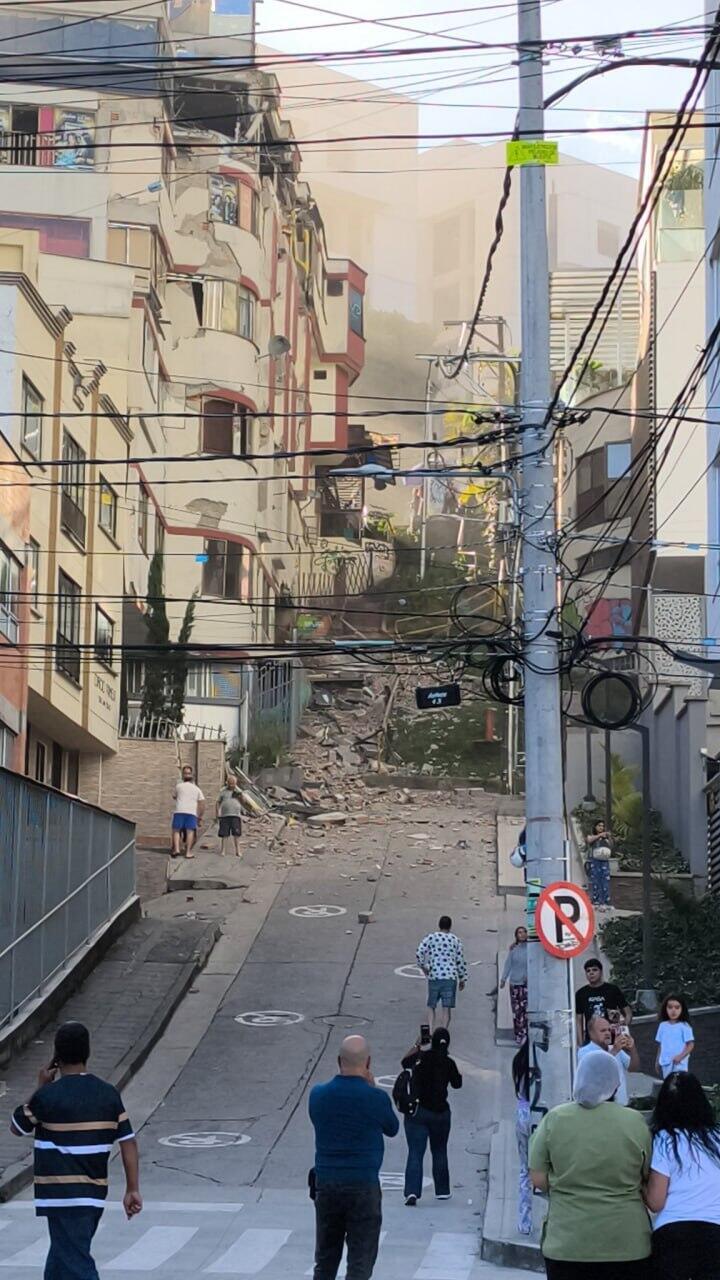
Initial footage of the destruction in Colombia, as published by local media
Colombia’s aviation authority reported damage at airports in Pereira, Manizales, Quibdó, Armenia, Cartago and Buenaventura and said operations at all six had been suspended.
Video from Pereira airport showed pieces of ceiling falling as passengers struggled to remain on their feet during the earthquake.
In Manizales, the city’s neo-Gothic cathedral was also heavily damaged, with one of its towers collapsing.
Less than an hour after the main earthquake, a magnitude 4.6 aftershock was reported in Chocó, the department closest to the epicenter. The aftershock occurred somewhat closer to the surface.
Panic in the minutes after the Colombia earthquake
The earthquake came less than two months after two devastating quakes struck Venezuela in June. Those earthquakes, measuring magnitudes 7.2 and 7.5, killed more than 5,000 people and destroyed hundreds of buildings.
Colombia and its neighbors lie along the Pacific “Ring of Fire,” a region of intense seismic and volcanic activity caused by the movement of tectonic plates.
Minor earthquakes are common in central and western Colombia, but tremors above magnitude 6 are relatively rare. In 1999, a magnitude 6.2 earthquake near Armenia killed more than 1,100 people. The deadliest earthquake in Colombia’s history struck in August 1868 and killed about 70,000 people.
During the earthquake: Water spills from a penthouse pool in Bucaramanga
‘I ran out wearing my kippah, and people asked me to pray for them’
Israeli Rabbi Yosef Garmon, who was in Bogotá during Monday’s earthquake, said he had arrived in the city only hours earlier with a volunteer delegation that had been assisting communities affected by the Venezuelan disaster.
“I arrived in Bogotá before dawn, went to sleep at 5 a.m., and then the earthquake woke me up,” Garmon said. “I’m on the eighth floor and everything here was shaking. It was long, seconds that felt like an eternity, and then I heard screaming. Everyone went down through the stairwell.”
Garmon said frightened residents remained outside and that the ground continued to shake. He added that his delegation was assessing whether assistance was now also needed in Colombia.
Colombia’s newly inaugurated president, Abelardo de la Espriella, said in a post on X that he would personally oversee rescue and recovery efforts and establish an emergency center in San José del Palmar, near the epicenter.
De la Espriella, who took office only days ago, is a vocal supporter of Israel and announced after winning the election that Colombia would restore ties with Israel and open an embassy in Jerusalem.
Against the backdrop of warming relations between the countries, Foreign Minister Gideon Sa’ar said Israel was closely following developments and had offered assistance.
“We are following with concern the reports of the earthquake that struck Colombia,” Sa’ar wrote on X. “I offered my Colombian counterpart any assistance Israel can provide. Israel is prepared to help Colombia as needed.”
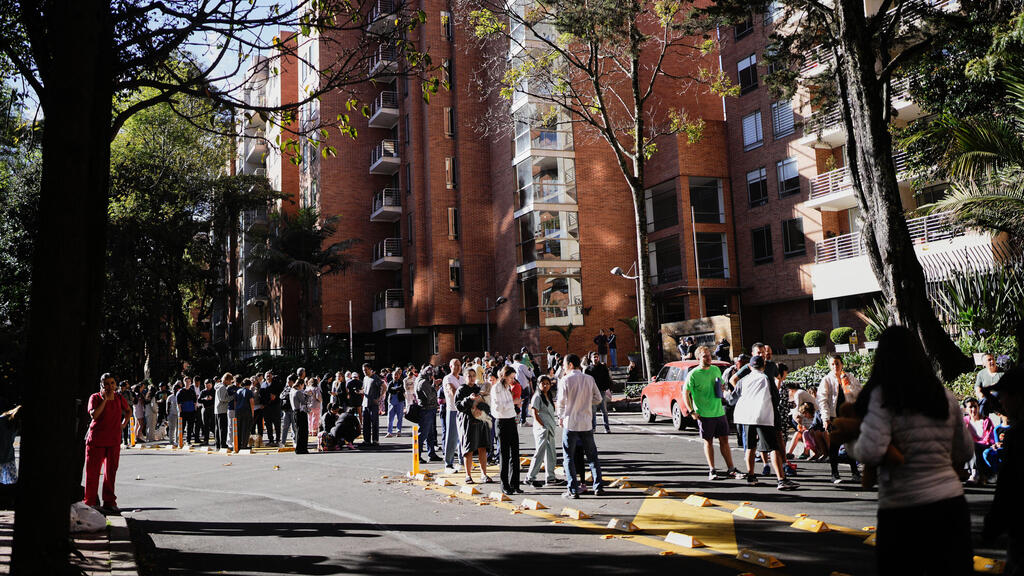
Residents evacuated in Bogotá, Colombia, after the earthquake
(Photo: AP Photo/Ivan Valencia)
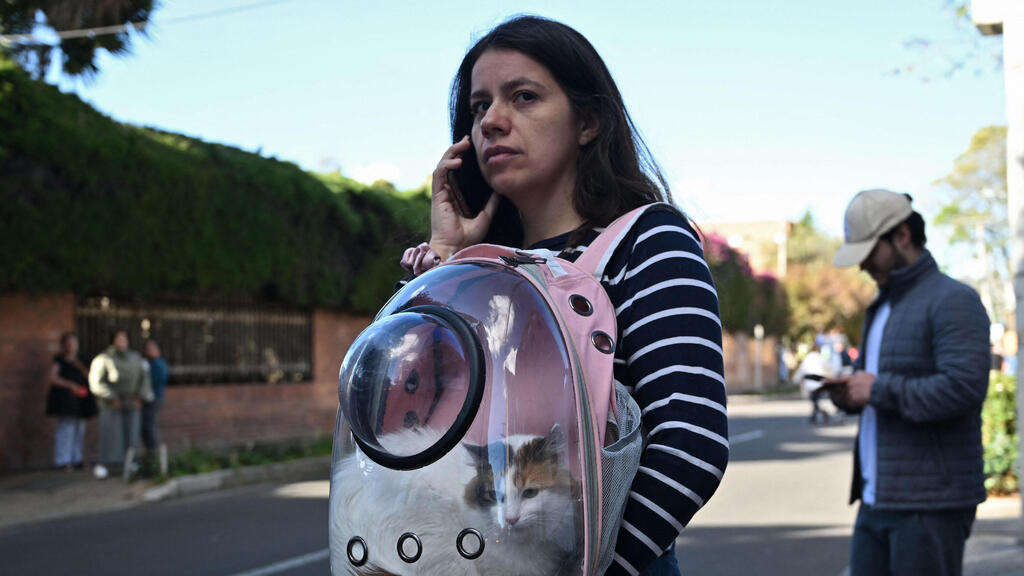
(Photo: Raul ARBOLEDA / AFP)
Israeli businessman Fernando Haim Bisker, who attended de la Espriella’s inauguration, said he experienced the earthquake at his home in Bogotá with his wife, Haya, and their children.
“In the middle of breakfast there was a strong earthquake. Everything started shaking. You hear an alarm like in Israel, and I thought, like in Israel, that it was because of missiles, until my brain understood that it was an earthquake,” he said.
“All the buildings were shaking, all the power lines were falling like in a hurricane. We immediately ran into the street. We didn’t know whether the building would collapse or not. It was very frightening, and everyone in the street was crying. There were people in pajamas and children.”
Bisker said strangers noticed that he was Jewish after he fled the building wearing his kippah.
“I came down wearing my kippah, and suddenly non-Jews said to me, ‘Bless us, pray for us,’” he said. “The opposite of hatred.”
First published: 17:51, 08.10.26