

Since the war began, Iran’s judiciary chief Gholam-Hossein Mohseni Ejei has been everywhere: on state television, at regime marches, in propaganda clips — and at the center of a growing campaign of arrests, threats and executions against Iranians accused of betraying the regime.
When Gholam-Hossein Mohseni Ejei threatens “traitors,” Iranians know it is rarely just rhetoric.
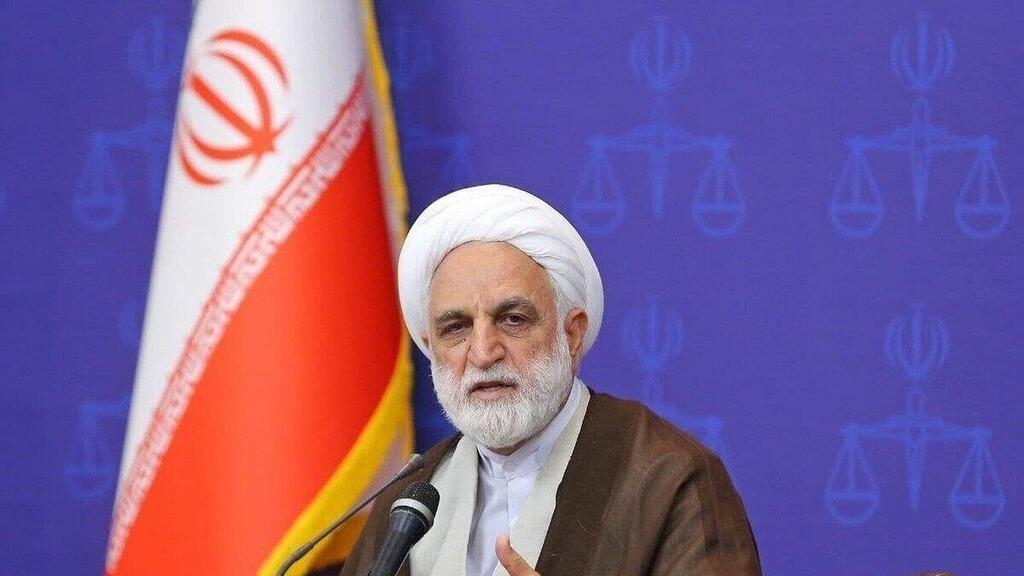
“The main strategy of the judiciary in the current situation is the prosecution and arrest of spies, infiltrators and traitors,” Iran’s judiciary chief declared over the weekend, warning that those he described as “traitors” would be tried and punished harshly.
For Ejei, such statements are nothing new. He is not merely another senior Iranian official railing against Israel or the United States. His real power is directed inward — against the Iranian public itself.
As head of the judiciary, Ejei is one of the key figures behind the regime’s legal machinery: the system that turns protesters into “rioters,” dissidents into “traitors” and ordinary civilians into alleged “Mossad agents.” In recent months, especially since the anti-regime protests in January, that machinery has been working at full force. Reports have multiplied of Iranians accused of spying for Israel and hanged after being branded collaborators by the authorities.
Ejei, a jurist, cleric and veteran Iranian politician, has led Iran’s judiciary since 2021. He was appointed by Supreme Leader Ali Khamenei himself, who was killed in the opening strike of “Rising Lion.” Born in 1956, Ejei was educated in the Shiite religious city of Qom and, since the Islamic Revolution, steadily climbed the ranks of Iran’s judicial and security establishment.
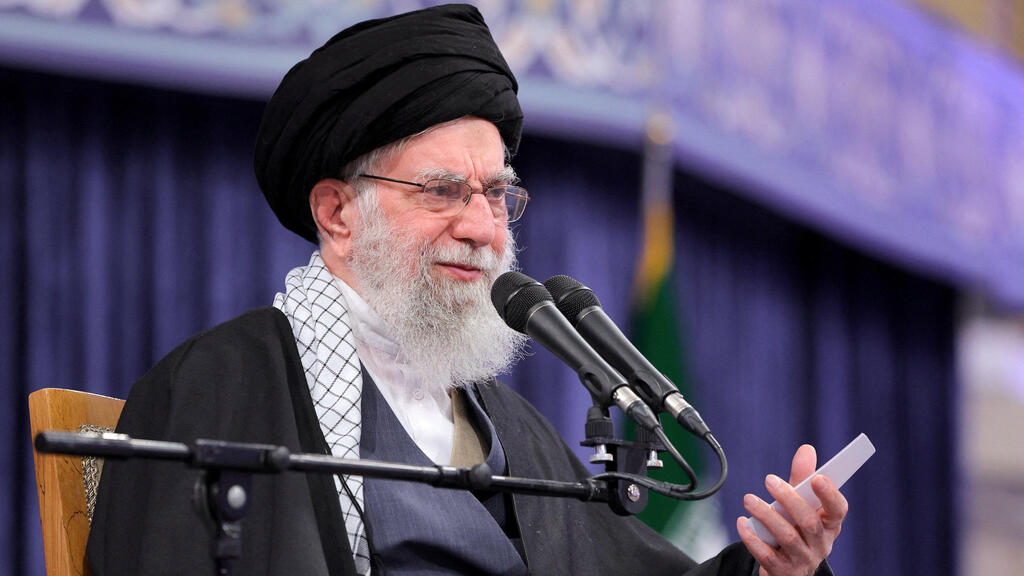
Appointed by Khamenei himself
(Photo: Office of the Iranian Supreme Leader/WANA (West Asia News Agency)/ Reuters)
Over the years, he served as intelligence minister, prosecutor general and deputy judiciary chief before receiving his current post. Today, he wields enormous power in Iran. His position gives him sweeping authority over criminal policy, the appointment of judges, judicial legislation and several bodies operating under the judiciary’s control.
Ejei is known as a figure who has been involved for years in waves of arrests and executions of regime opponents.
After Khamenei’s death, Ejei was also part of Iran’s interim leadership council — the three-member body tasked with temporarily replacing the supreme leader until the selection of Khamenei’s son, Mojtaba, about a week later. Within that trio, Ejei was considered the hard-line figure, and certainly the one with the most violent record.
A few days later, during Iran’s annual “Jerusalem Day” events, Ejei was filmed marching in Tehran in the middle of the war alongside other senior officials. Among them was Iranian police chief Ahmad-Reza Radan, who is often seen at his side because of the overlapping responsibilities of their institutions.
During that march, while Ejei was giving a television interview, an attack took place nearby. “Our people are not afraid of attacks,” he said at the scene. Turning to his guards, he added: “We will continue on our way. Nothing happened.”
The moment was quickly turned into propaganda by Iranian state channels.
Ejei has long been a prominent media figure, but since the start of the war his status appears to have solidified into something closer to that of a regime “star.” Quotes from him and footage of his appearances are now broadcast almost constantly by media outlets aligned with the Iranian regime.
In January, after the anti-regime protests, footage was circulated showing Ejei personally interrogating one of the alleged “rioters,” whose face was blurred in the video.