

More than 50 people have been arrested in Britain over the past year in operations linked to Iran, MI5 Director General Sir Ken McCallum revealed Tuesday, warning that Tehran is expanding its hybrid campaign against the United Kingdom, with much of its aggression directed at Jewish communities. He also warned that terrorists could exploit artificial intelligence to develop biological weapons.
Delivering his annual threat assessment at MI5 headquarters in London, McCallum described how Britain is confronting hostile states, including Iran and Russia, in a new era of national security. He compared the scale of the changes facing the intelligence service to the transformation that followed the September 11 attacks.
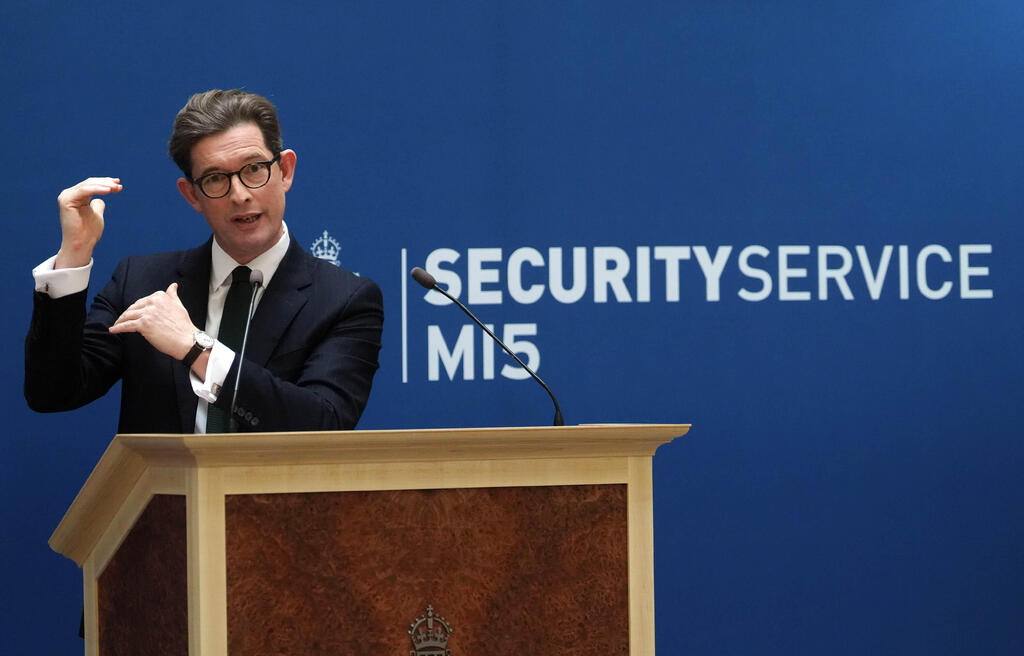
McCallum described Russia as Britain's leading state aggressor, while identifying Iran as another country seeking to outsource violence on British soil. He said he had been warning about the Iranian threat since 2022, particularly Tehran's use of criminal proxies to intimidate opposition figures, Iranian media organizations and Israeli targets.
According to McCallum, 2026 has seen Iran, like Russia, attempt to expand its hybrid campaign against Britain. Over the past 12 months, MI5 operations connected to Iran have resulted in more than 50 arrests across the country.
He expressed solidarity with Britain's Jewish communities, saying they had been among the principal targets of Iranian-linked aggression. He pointed to the recent arrest and charging of two Iranian nationals over an alleged plot targeting Manchester's Jewish community.
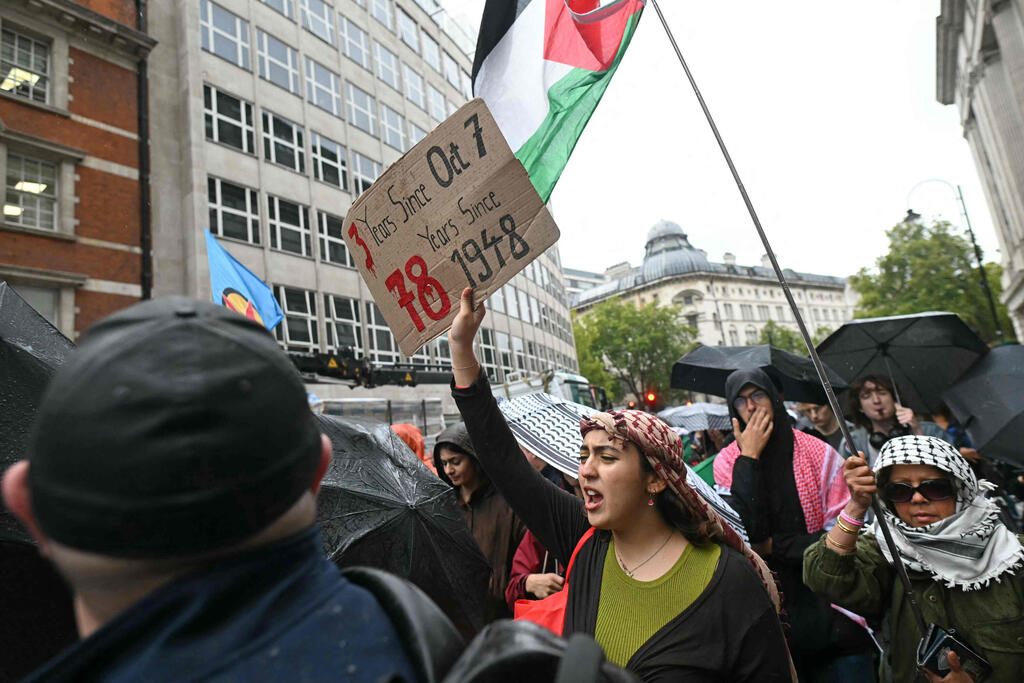
Pro-Palestinian demonstration in Britain
(Photo: JUSTIN TALLIS / AFP)
McCallum also referred to a wave of arson and sabotage attacks during the spring against Jewish communities in Britain and elsewhere in Europe. The incidents included attacks on ambulances, synagogues and businesses.
Responsibility for the attacks was claimed by a group calling itself the Islamic Movement of the Companions of the Right. McCallum said members of Iran's Islamic Revolutionary Guard Corps were behind the organization.
He explained that both the group and the IRGC had since been designated under Britain's National Security Act, giving authorities additional powers to disrupt their activities and pursue prosecutions.
McCallum warned that those seeking to carry out violence on British streets, whether criminals recruited locally or the foreign actors directing them, would face a determined response.
Addressing the wider terrorist threat, McCallum said MI5 continued to confront threats from Islamist extremists, the far right, the far left and groups associated with Northern Ireland.
Although sustained counterterrorism operations have weakened the leadership of the Islamic State group, he said both ISIS and al-Qaeda continue to direct and inspire attacks.
He stressed that MI5 was still dealing with attempts to carry out mass-casualty attacks in Britain. In February, three Islamist extremists were convicted of plotting to use automatic weapons against Manchester's Jewish community. McCallum also revealed that MI5 is now devoting more resources to threats posed by hostile states than it did during the Cold War.
Another major concern, he said, is the growing ability of terrorists and hostile actors to exploit artificial intelligence.
AI is already intensifying the struggle between attackers and defenders in cyberspace, helping produce propaganda and extremist recruitment material, and allowing hostile groups to improve their intelligence-gathering capabilities and attack planning.
McCallum said MI5 had encountered terrorists seeking to use AI to improve reconnaissance and attack methods, while AI-enabled drones were creating additional security challenges. He warned that an even more serious potential threat was the use of artificial intelligence to advance the development of biological weapons, including the possibility of new biological agents.
Although that particular threat has not yet materialized, he said the technology could place dangerous knowledge within reach of people who previously lacked the expertise to obtain or use it.
McCallum also raised concerns about the broader implications of artificial intelligence, noting that humanity has never before faced the prospect of an adversary capable of outthinking human beings.
His remarks came after two Iranian nationals appeared in a London court earlier this month accused of plotting an attack against the ultra-Orthodox Jewish community in Salford, Greater Manchester.
Rahman Salehi, 34, of Salford, and Salam Ahmadyan, 36, of Liverpool, face charges of engaging in conduct in preparation for terrorist acts, including allegedly planning or assisting an attack around Yom Kippur last month.
The two were arrested on September 20 on Newton Street in Manchester's Northern Quarter, as thousands of British Jews were preparing to observe the holy day.
Prosecutors allege the suspects conducted hostile reconnaissance of Manchester's Jewish community, identifying potential targets including the Manchester Jewish Museum and the Heaton Park synagogue.
The prosecution says the two men planned to use an improvised explosive device and had been in contact with a third person overseas, believed to be operating from Iran, who allegedly provided instructions for the attack.
At a hearing at Westminster Magistrates' Court on October 3, prosecutors alleged that the defendants had obtained a document containing instructions for making a homemade bomb, along with video material explaining how to manufacture or assemble an improvised explosive device.
They are also accused of obtaining liquids, components and equipment needed to construct the device, as well as researching potential targets and acquiring maps and photographs of locations they allegedly intended to attack.