

Air-raid sirens on Saturday morning sent residents across Israel into safe rooms and bomb shelters. For firefighters, however, it was the signal to shift from routine to a state of “special alert”: reinforcing crews at fire stations nationwide, mobilizing volunteers and “orange firefighters” — Home Front Command reservists trained as firefighters.
At the fire station in Ramat Gan, firefighters are already accustomed to going from zero to full speed in 60 seconds. That was the case yesterday as well. “We heard the siren and went into the protected space. At the same time, the station bell rang, and the sound indicated a level 3-4 emergency reserved for major incidents,” said Master Sgt. Dolev Ezra, a crew commander at the station. “Within a minute we were already on the way with the fire engine to the impact site in Ramat Gan. On the way I gather information over the radio network and try to picture in my head what kind of scene I’m about to encounter.”
A pergola caught fire in a northern community following an interception
(Video: Israel Fire and Rescue Services)


Only a few minutes passed between the 2:52 p.m. siren and reports of impacts at several locations in the Bnei Brak and Ramat Gan area.
“This is the moment I enlisted in the fire service for — racing to the scene knowing every second can save lives,” said firefighter Ron, who arrived at the impact site in Bnei Brak. “Driving through the streets was complicated. Residents were celebrating Purim outside, and the scene was full of curious young people. We shut off the gas and searched the building that was hit. Its residents were in the safe room, which saves lives. There’s a sense of relief when you reach a scene and there are no injured.”
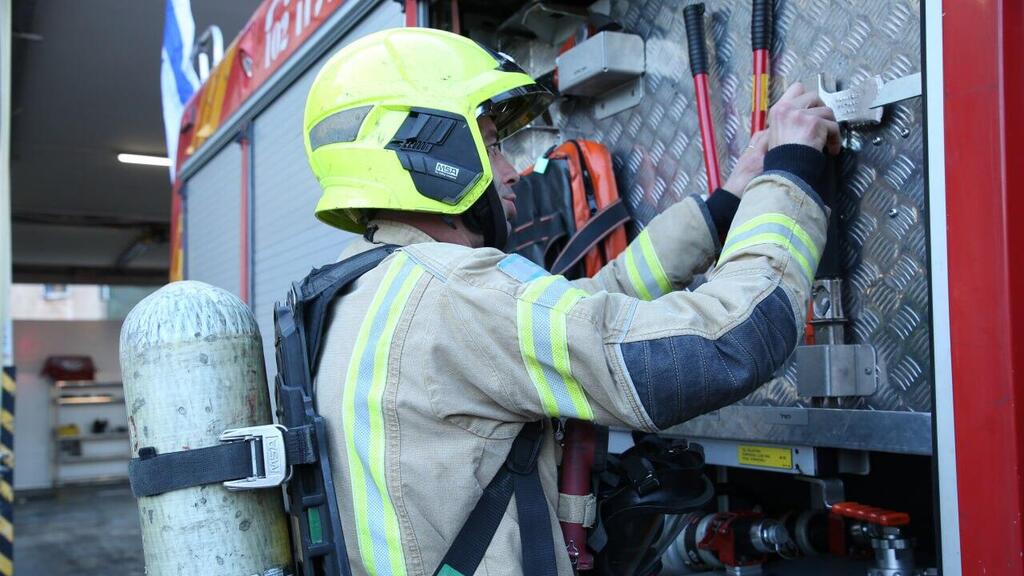
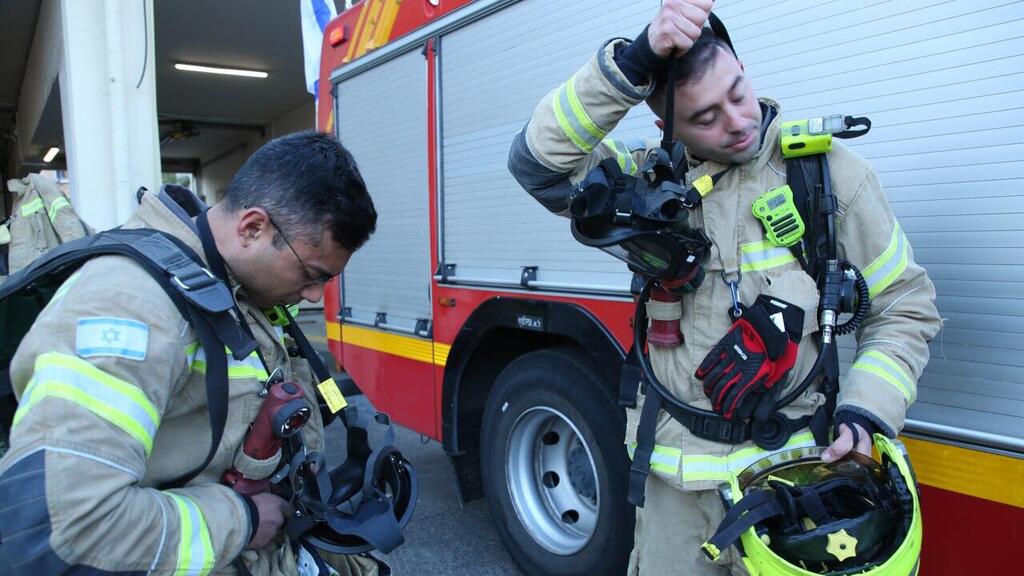
(Photo: Ryan Frois)
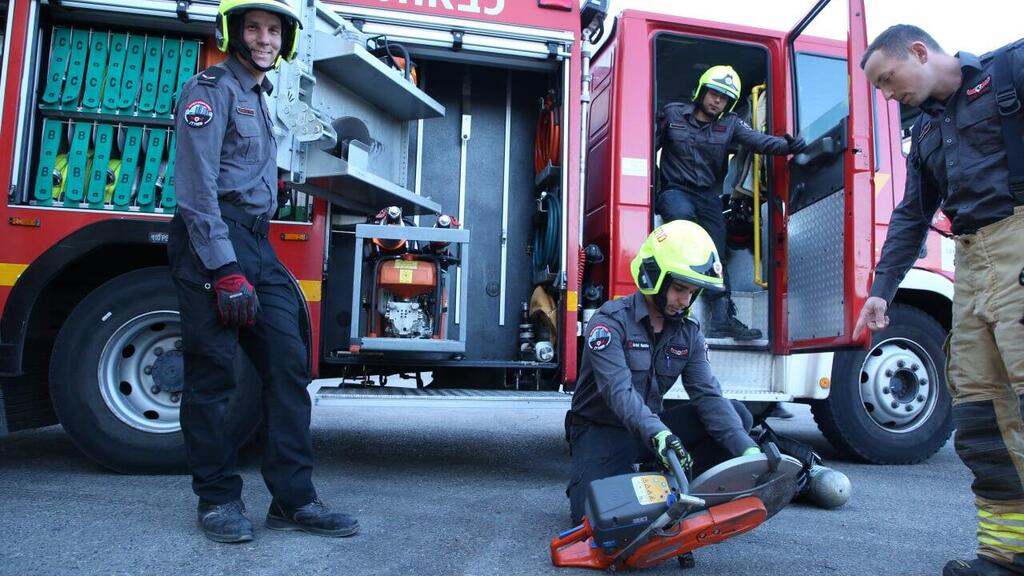
(Photo: Ryan Frois)
Ezra, who commanded the scene in Ramat Gan, recalled: “We were the first crew to arrive. We encountered flames several meters high and smoke rising toward the apartments. We began rapid firefighting operations, with the fear in the back of our minds that we might find people trapped in vehicles in a fire trap no one could survive. We searched the three burning vehicles, and when we saw they were empty it was a moment of relief. We then dealt with toxic smoke that began to spread, until we reported full control of the scene — which fortunately had no casualties.”
Like an apocalyptic film
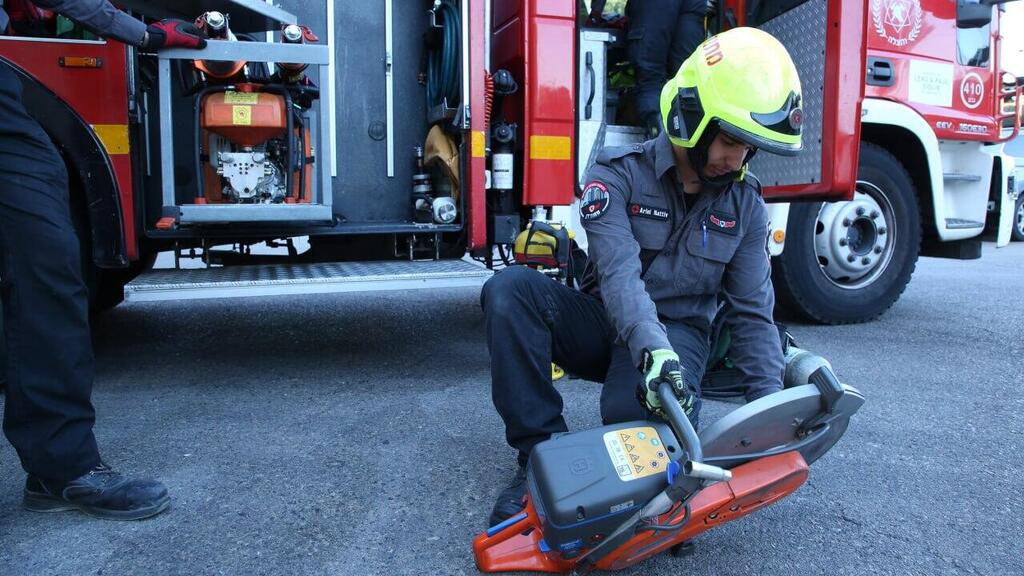
About two hours later, firefighters returned to the station from five scenes in Ramat Gan and Bnei Brak. “A sip of water, catch our breath,” Ezra said as he and his team organized their equipment to be ready for the next bell, the next scene.
Adi Reshef, the station’s operations officer, had barely closed his eyes since Saturday morning. “With the destructive force of half a ton of explosives, the biggest fear is finding fatalities or severely wounded people,” he explained. “From the strength of the boom alone we can already tell whether it’s shrapnel or a direct missile strike.”
Bezalel Cohen, a crew commander and firefighter for 30 years, added: “A few seconds make the difference between life and death. Today we are preparing to see difficult and deadly scenes, after we encountered Iranian missiles already during Operation Rising Lion.”
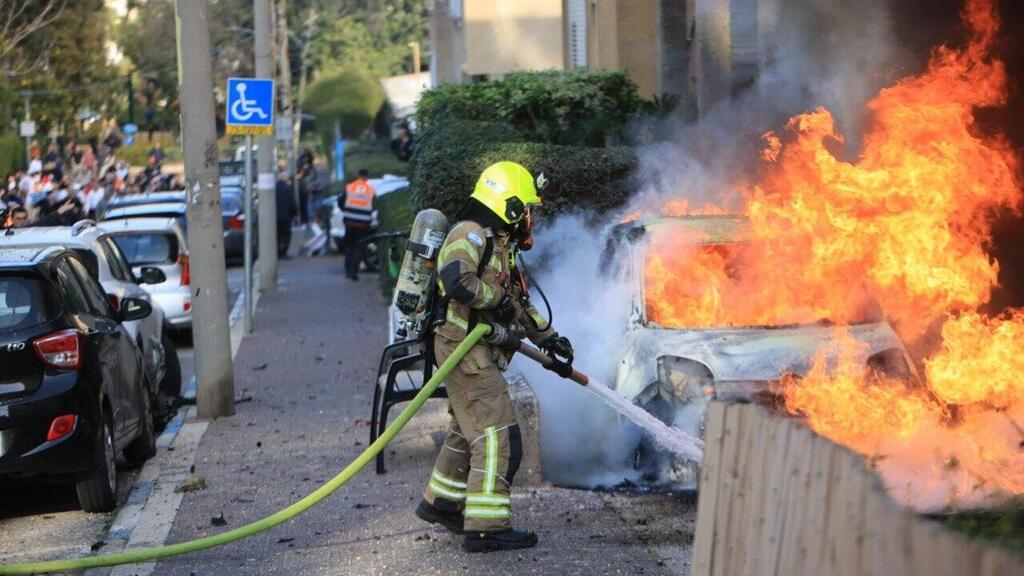
Dolev Ezra in the site
(Photo: Israel Fire and Rescue Services)
(Photo: Ryan Frois)
The siren on Saturday night caught Master Sgt. Nir Nachmani, a 14-year veteran of the service, on duty at the Tel Aviv Yigal Alon fire station. “The boom was so strong that we knew in a few seconds the bell would send us from zero to 100,” he said. “Within 60 seconds we were already on the fire engine heading out of the station. When we arrived at the scene it looked like something out of an apocalyptic film. Buildings collapsing, fires on the upper floors, cars burning in the street.
“It takes a second or two to recover from the sight, and then you push into the buildings. Every second matters. People are coming out of the buildings, some covered in blood, not understanding what’s happening, shouting from every direction.”
Always ready for the call
Ramat Gan fire station commander Deputy Commissioner Avi Cordova had been preparing for the outbreak of Operation Roaring Lion for more than a month.
“We prepared for severe destruction scenes like those we already saw in Operation Rising Lion, when entire buildings collapsed from a direct hit,” he said. “Within the first minutes we are ready to rescue people trapped under building rubble or concrete beams weighing several tons, and to clear collapsed walls to allow passage for rescuing the trapped. Our working assumption is that we must do everything to reach every injured person at a destruction site.
“Firefighters are ready to extract victims and provide initial response at the scene until Home Front Command rescue teams arrive with specialized equipment.”
(Photo: Ryan Frois)
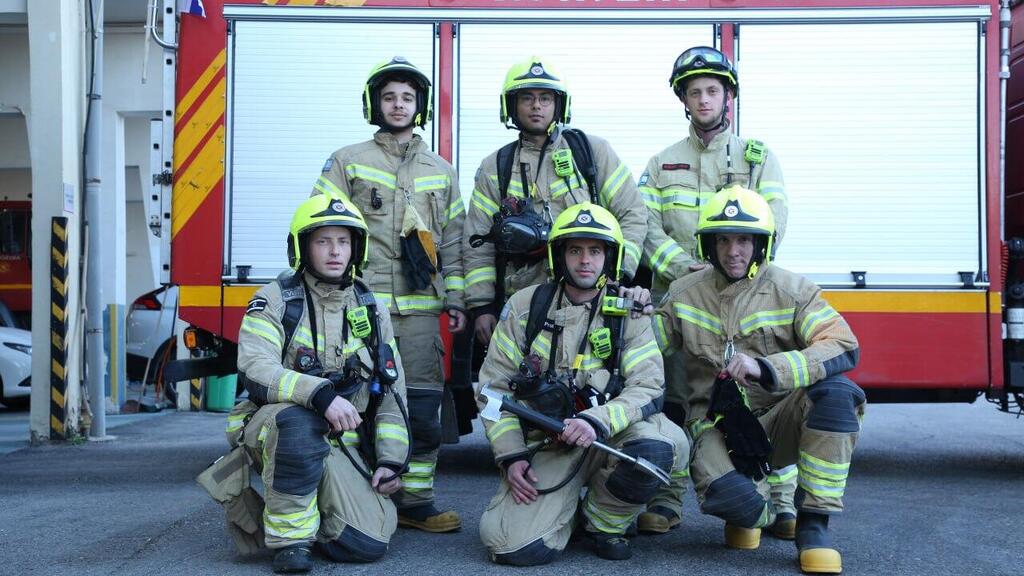
Firefighters from the Ramat Gan station
(Photo: Ryan Frois)
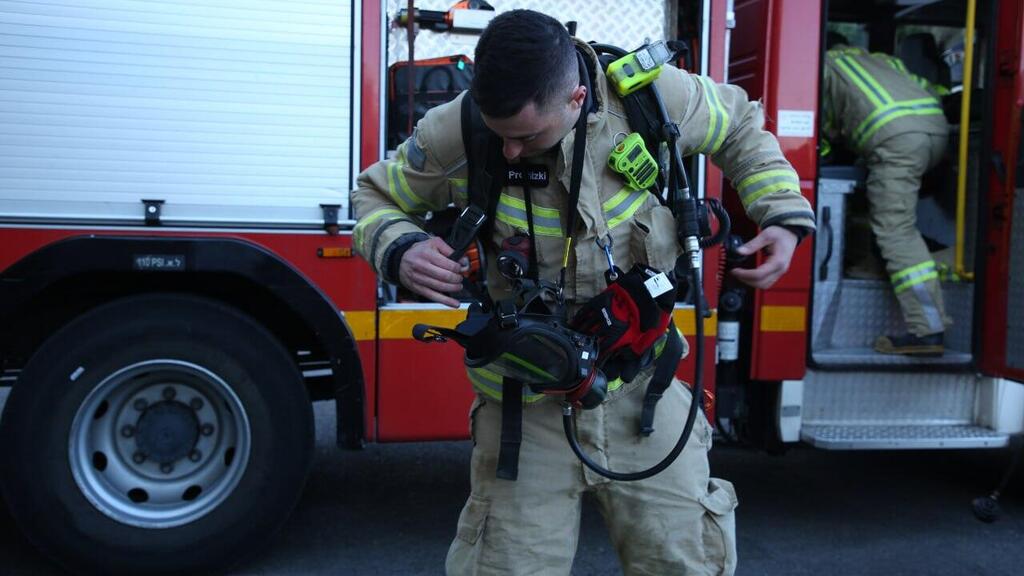
As part of the preparations, firefighters added ceramic vests to their protective gear. They are also carrying more specialized rescue tools than in routine times, including lifting or support airbags capable of raising up to 69 tons.
“The Iranian missile, with 500 kilograms of explosives, is unlike anything we’ve encountered before,” said Ron Proshizky, 28, who fell in love with firefighting in the 10th grade and began as a junior volunteer before becoming a full firefighter.
He still remembers the difficult scene in Ramat Gan during Operation Rising Lion. “I thought I had seen everything, but when I arrived at the scene, buildings had simply collapsed.” He began his Sunday shift with a prayer not to face such a scene again. “But my fellow firefighters and I are ready for any call to save lives. That’s our mission,” he said.
At the Ramat Gan station, firefighters use the waiting hours to prepare their protective and rescue equipment for the next call, ensuring the fire engines are in excellent mechanical condition and mentally preparing for the sound of the station bell — when, as Cohen describes it, “something snaps into place in your mind, and all of us are focused on reaching the impact site.”