


Pvt. A., 18, and her service dog have become well known in the Israeli Air Force’s Special Air Forces Wing, known as Wing 7. Everyone on base already knows Vali, the third service dog to complete basic training at the Mahane Alon base in the Galilee.
Pvt. A. serves in a classified role with Vali at her side as part of the IDF’s “Titkadmu” program, a unique enlistment track designed to integrate young men and women on the autism spectrum into military service.
Vali, the service dog, is known in the Israeli Air Force’s Special Air Forces Wing
(Video: IDF)


From the first day of basic training, commanders made it clear to the company that Vali was a service dog with a job to do and was not to be touched or disturbed.
During formations, the dog sat or lay quietly, and at the basic training graduation ceremony she synchronized herself with A.’s movements, sitting at attention and lying down at rest.
“She took part in all the marches, including a night march, as well as field and camouflage exercises,” A. said. “The other girls in the company welcomed Vali with great enthusiasm and a lot of respect for her role.”
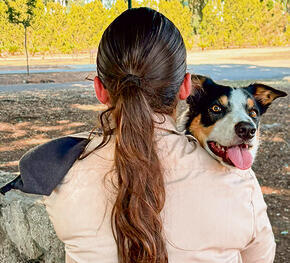
Maj. H. said the IDF’s attitude toward service dogs has evolved over time, particularly as awareness has grown of their importance for soldiers with disabilities.
Israel’s Equal Rights for Persons with Disabilities Law enshrines the right to bring service dogs into public places, and their use was later expanded to support people with post-traumatic stress disorder and autism.
“The trend increased significantly after October 7,” Maj. H. said. “Although A. was not allowed to bring the dog into the dining hall during basic training, at her permanent base Vali integrated very well and became part of the unit’s daily life. There are several career soldiers, including a lieutenant colonel, who serve with assistance dogs, as well as reservists with PTSD who come with their dogs.”
The road to Wing 7 was long and filled with bureaucracy.
“I arrived at the recruitment office with a regular first-call notice. Of course, I came with the dog,” A. said. “When they asked why I had a dog, I explained that she was a service dog because I have anxiety attacks. About half an hour later, the head of the mental health section came and said they don’t enlist soldiers with service dogs.
“At that moment, I insisted on going through the first-call process. The mental health officer gave me an exemption on the spot, and that is how I began the volunteer process and joined the ‘Titkadmu’ track.”
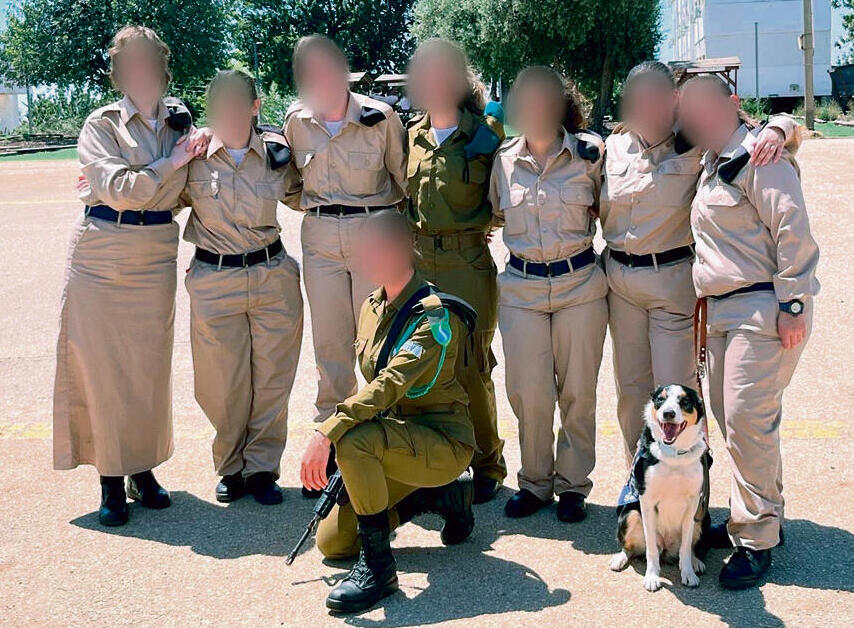
Vali took part in all the training
(Photo: IDF)
Pvt. A. eventually reached Maj. H., who told her he would support her.
“He said he thinks service dogs can help a great many people, and that he sees this especially with reservists, and he thinks it is a great idea,” she said.
In the end, Pvt. A. enlisted together with Vali and went through induction and basic training with her.
“The commander at the induction center asked to take a picture of Vali wearing an Air Force beret. So somewhere there is a picture of her with the beret,” she said with a smile.
Now, when A. sleeps at her permanent base, Vali sleeps beside her in her crate.
“The whole base knows Vali and says hello to her. She contributes to the atmosphere and helps reduce tension. I know there is a lot of work being done to encourage enlistment with service dogs.
“There are reservists with service dogs, with levels of experience and knowledge that no one else has, who are able to continue in their roles because of the dogs. The dog also helps the other soldiers in the unit.”
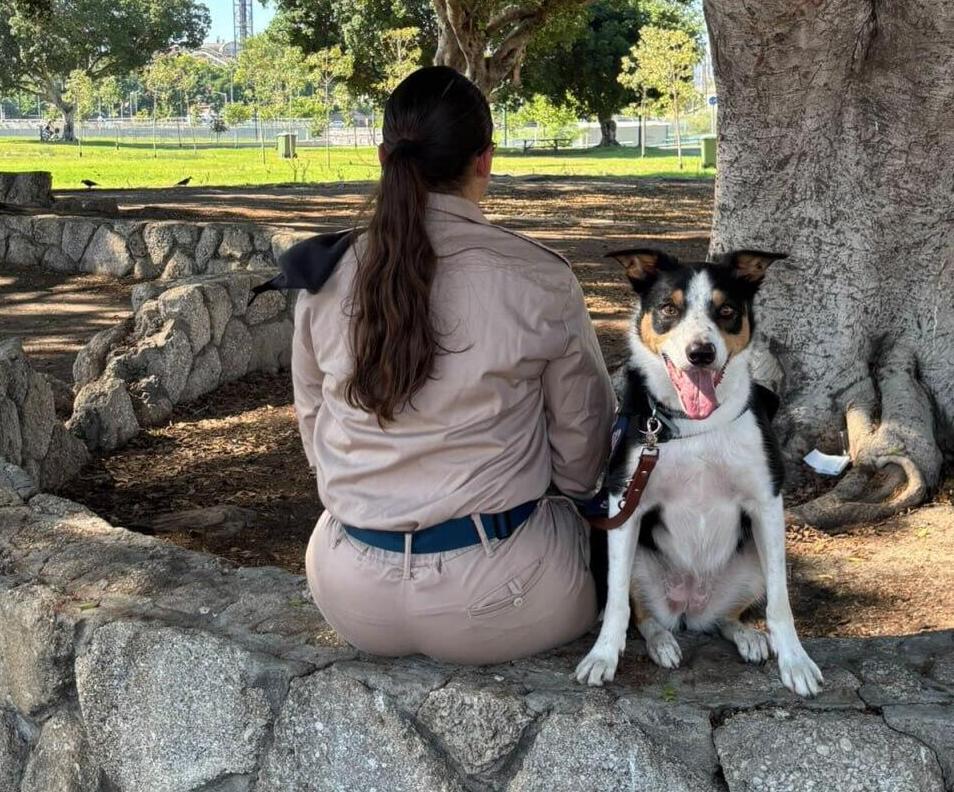
Pvt. A and Vali
(Photo: IDF)
Vali’s training began when Pvt. A. was just 16. Dana Wilker, owner of a training and instruction center for assistance dogs, trained her.
“Service dogs work with and accompany the people who rely on them for about eight to 10 years,” Wilker said. “That is a significant period of time, especially for someone who received the dog at age 16, with so many changes and so much growing up.”
Wilker, who also researches the cognition of working dogs, said: “Over these years, I saw A. open up and, with impressive inner strength, help herself develop and move forward.
“During training, the dogs undergo intensive exposure to a wide range of situations intended to prepare them for anything, including loud noises and unusual smells, until the dog is able to remain calm and continue working and carrying out tasks for the person it assists even in unusual situations.
“That was the case, for example, over the past month, when Vali accompanied A. throughout basic training.
“Vali and A. demonstrated to the military system that it is both possible and worthwhile to integrate and enlist soldiers who are accompanied by assistance dogs.”