

Russia released former U.S. Marine Robert Gilman from prison on Tuesday after more than four years in custody, just days after his family warned that his health had deteriorated so severely that he could be close to death.
U.S. officials told Reuters that Gilman, 32, who was jailed in Russia in 2022 after authorities accused him of assaulting a police officer while intoxicated, was pardoned by President Vladimir Putin on humanitarian grounds.
Gallery
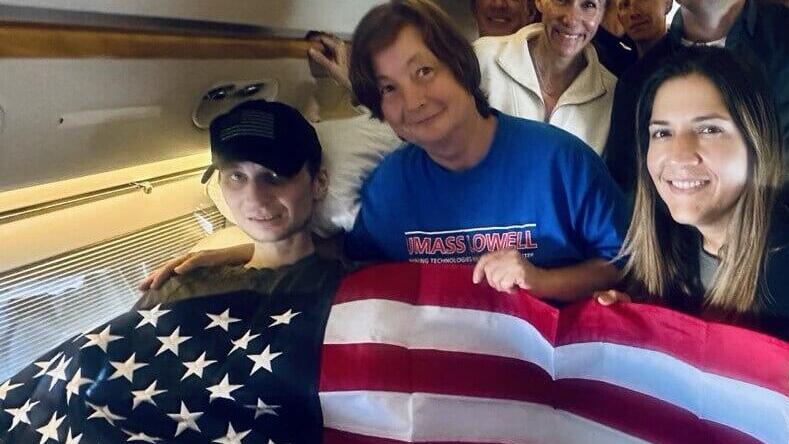
Robert Gilman on the flight home, alongside his mother. Photo posted by Trump earlier Tuesday
Past releases of detained Americans from Russia have often taken place as part of prisoner swaps. President Donald Trump, however, said Moscow had asked for nothing in return and that no Russian prisoner had been released in exchange for Gilman.
Trump posted a photo on Truth Social showing Gilman aboard a plane bound for the United States, looking extremely thin and sitting alongside his mother, Nancy, as others on the flight held up an American flag.
“I am proud to announce that American Citizen Robert Gilman, a former United States Marine, is coming HOME!” Trump wrote.
“In a well known Media story, Robert was imprisoned in Russia in 2022, during the Biden Administration. After my discussions with President Vladimir Putin, Russia has agreed to release him, very much on a Humanitarian Basis.”
Trump said Moscow had not sought anything in return for Gilman’s release.
“We appreciate this decision, and the fact that Russia asked for no one in return — No exchange took place,” he wrote.
Trump said Gilman was expected to land later Tuesday at Andrews Air Force Base in Washington, D.C., where administration representatives would meet him.
“I just spoke to him, and he had one request — A GREAT cheeseburger when he lands. I will take care of that!” Trump wrote.
He added that Gilman had been reunited with his mother, Nancy, who was traveling with him on the flight home, and thanked members of his team involved in securing the release, including Steve Witkoff, Adam Boehler, Sebastian Gorka and Jared Kushner.
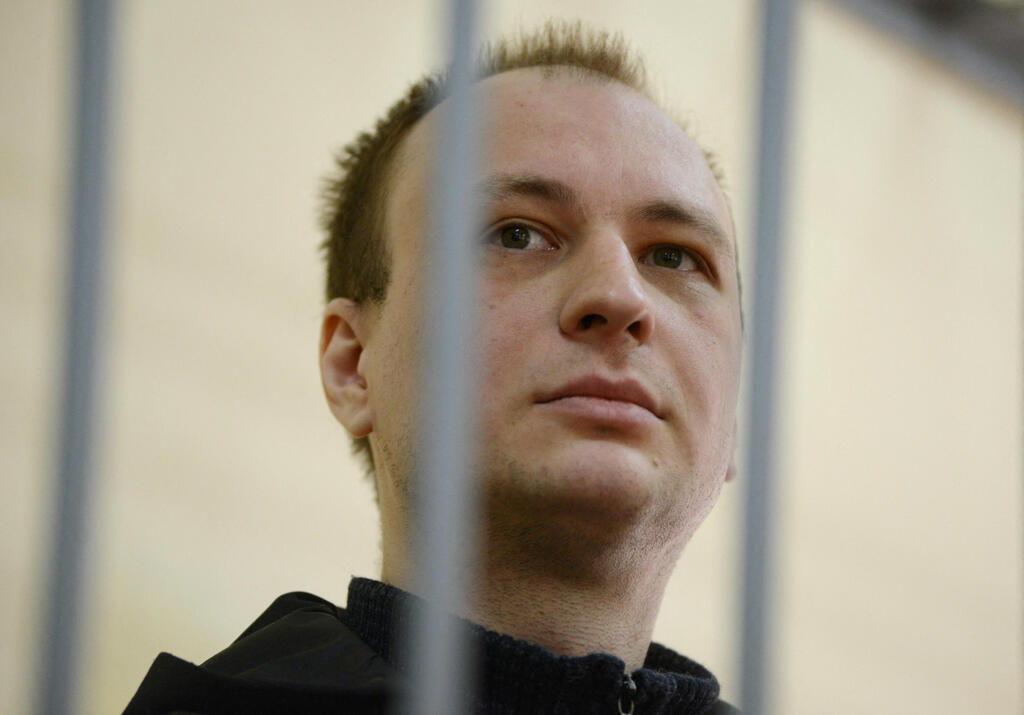
Gilman back in 2022
(Photo: REUTERS/Vladimir Lavrov)
U.S. officials told Reuters that Gilman was being flown home on a State Department aircraft and would be met in Washington by special envoy Steve Witkoff, who was involved in efforts to secure his release.
From there, Gilman is expected to continue to a rehabilitation facility in San Antonio, Texas.
American organizations involved in efforts to free him warned last week that his condition had sharply worsened following alleged abuse in prison.
They said Gilman had entered a near-catatonic state and was barely responding to external stimuli.
One U.S. official told Reuters, however, that he had spoken with Gilman since his release and that he was now walking and talking.
“Considering the circumstances, he appears to be doing well,” the official said.
Reuters reported that four doctors were aboard the flight to the United States monitoring his condition.
Gilman’s mother, Nina, was also on the plane and had been reunited with her son.
The release came amid growing concern over Gilman’s health.
Until recently, he had been held in a prison in Voronezh, about 547 kilometers south of Moscow. Reports said that in late June he was transferred from the prison hospital to the psychiatric ward of a civilian hospital after entering a near-catatonic state diagnosed as dissociative stupor.
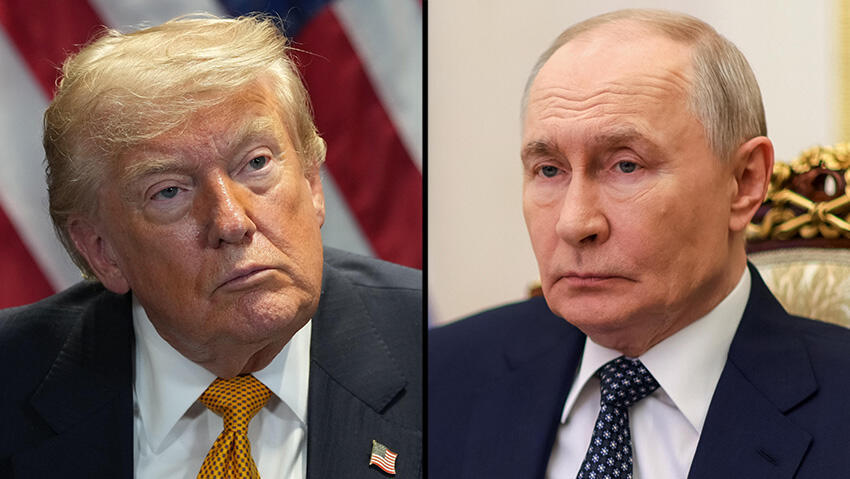
Donald Trump and Vladimir Putin
(Photo: Gavriil Grigorov/Sputnik, Kremlin Pool Photo via AP, AP Photo/Alex Brandon)
The condition can involve a profound reduction, or even complete disappearance, of voluntary movement and normal responses to outside stimuli.
Eric Lebson, a senior official with Global Reach, which represents Gilman’s family, said last Thursday that Gilman could no longer eat on his own and was being fed through a tube.
“We are very concerned that we could see another case like Otto Warmbier,” Lebson said.
Warmbier was an American student imprisoned in North Korea after being accused of trying to steal a propaganda poster. He was returned to the United States in June 2017 in a coma after 17 months in detention and died later that month from severe brain damage without regaining consciousness.
A person familiar with the case told Reuters that Secretary of State Marco Rubio raised Gilman’s case with Russian Foreign Minister Sergey Lavrov during a meeting in Manila on July 23.
The source did not know how Lavrov responded.
Gilman’s sister, Lexi Hudson, who warned last week that her brother could die if he was not released soon, thanked Trump on Tuesday.
“I am so incredibly grateful to President Trump for saving my brother’s life,” she said.
“There is no other reason Robert is alive today except that President Trump heard about the case and took action.”
Gilman served in the U.S. Marine Corps from August 2019 to August 2020.
He was arrested in Voronezh in January 2022 while traveling by train. Russian authorities said he kicked a police officer while drunk.
His family has given a different account, saying that after being taken to a police station, Gilman vomited and accidentally kicked an officer during the incident.
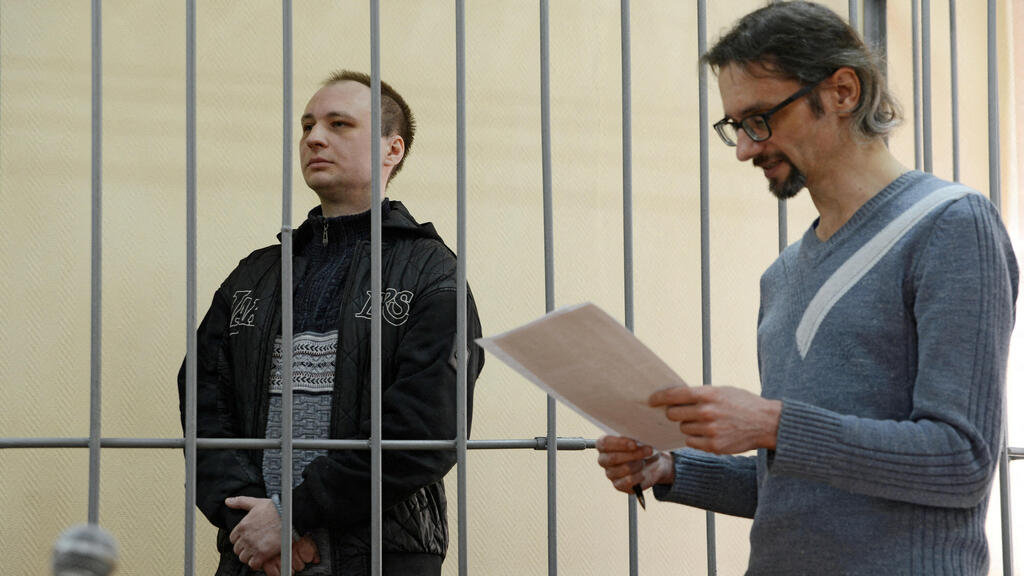
(Photo: REUTERS/Vladimir Lavrov)
The officer was not injured and did not ask to press charges, according to the family, but Gilman was prosecuted and sentenced to four and a half years in prison. His sentence was later reduced on appeal to three and a half years.
U.S. lawmakers argued that although five years is the maximum sentence in Russia for such an offense, Russian citizens convicted in similar cases typically receive a fine, suspended sentence or, in more serious cases, up to a year in prison.
Gilman’s prison term was later repeatedly extended.
In October 2024, he was convicted of assaulting a prison staff member and a government investigator and received a total sentence of seven years and one month.
He admitted to the charges but said he had resorted to violence after a staff member caused him pain in his genitals and after an investigator insulted his father, Vladimir Gilman, who had emigrated from Russia to Massachusetts.
In April 2025, another year was added to his term, bringing the sentence to eight years and one month.
According to Russian state media reports, Gilman was convicted in December 2025 of further assaults on prison staff, raising the total sentence to 10 years.
Organizations supporting the family have not necessarily denied that some of the incidents took place, but they argue that they resulted from severe and prolonged abuse.
They say Gilman was held in harsh conditions, tortured and forced to take mind-altering substances, with his health deteriorating until he was transferred to the civilian hospital.
His relatives have previously expressed suspicion that the alleged abuse was intended to provoke him into violent reactions, allowing authorities to keep extending his sentence and potentially turn him into leverage for a future prisoner exchange.