


It lacks suitable infrastructure, the site is relatively small, and the project’s cost is estimated at 7 billion shekels. Still, the Prime Minister’s Office announced Wednesday that Israel’s supplementary international airport will be built at Ziklag in the Negev, between Rahat and Netivot.
The decision was finalized by Prime Minister Benjamin Netanyahu, and the proposed resolution will be brought to the Cabinet for approval on Sunday.
For a long time, the leading plan for a supplementary airport was the construction of an airport at Ramat David in the Jezreel Valley. Next month, the National Planning and Building Council was expected to complete its work on that plan and submit it for approval. The two additional realistic alternative sites under consideration were Ramat David in the north and Nevatim in the Negev.
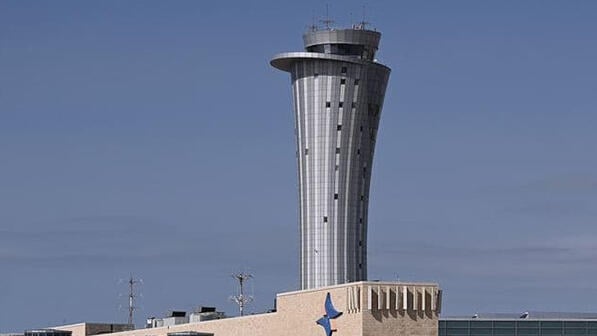
Ben Gurion Airport
(Photo: Nadav Abs)
The decision to choose Ziklag comes after a master plan for an airport in the Jezreel Valley was approved as early as 2007, triggering a residents’ campaign against its construction there. According to the service specifications for the Ziklag project published last month by Netivei Israel, the Negev airport is planned to handle up to 10 million passengers a year and 70,000 aircraft movements, at an estimated cost of 7 billion shekels. It is a relatively small airport that cannot truly function as a complementary airport to Ben Gurion Airport.
The search for a complementary airport has dragged on for many years, but since the outbreak of the war the issue has become more urgent. Last June, Netanyahu announced that an airport would be built at Ziklag, even though military air bases already operate at Nevatim and in the Jezreel Valley, where most of the required infrastructure is already in place. As a result, the new airport is not expected to be completed for more than a decade.
In a statement, the Prime Minister’s Office said that “the establishment of a supplementary international airport is a national necessity in light of the continued growth in the number of passengers traveling to and from Israel. The decision to build the first airport in the south is significant news for Israel’s aviation sector and even greater news for the entire Negev,” or Israel’s southern desert region.
According to the statement, the airport is expected to create thousands of new jobs, strengthen the regional economy and form part of a broader government effort to narrow gaps and effectively eliminate the concept of a periphery.
Transportation Minister Miri Regev, who attended the meeting at which Ziklag was selected, said: “This is a historic decision that strengthens Israel’s skies, the economy and the Negev. A complementary international airport in the south is a powerful growth engine that will generate employment, open new opportunities and connect the Negev to Israel’s centers of activity and to the world.”
Finance Minister Bezalel Smotrich called the decision to establish the new airport "a first-rate economic, national and strategic decision. This is a move that connects security resilience with economic growth, advanced infrastructure development with strengthening the periphery in practice. Building the airport in the south alongside the airport in the north is the way to build the future and truly eliminate gaps.”
Deputy Minister Almog Cohen noted that the international airport will be built “less than seven kilometers from where the accursed white pickup trucks drove during the October 7 massacre. It will provide high-quality, essential employment for the continued prosperity of the Negev. After much hard work, I am pleased that the plan is taking shape, and that the Negev will take off.”