

Not all Gulf Arab states supported efforts to prevent a large-scale U.S. military strike on Iran, according to a report published Sunday by The Wall Street Journal, which said the United Arab Emirates privately encouraged President Donald Trump to carry out a broader military campaign.
Citing senior Gulf officials familiar with the discussions, the newspaper reported that Emirati officials argued Iran's paramilitary Revolutionary Guard would not compromise unless the United States significantly escalated the conflict, including taking control of the Strait of Hormuz and even considering a ground operation.
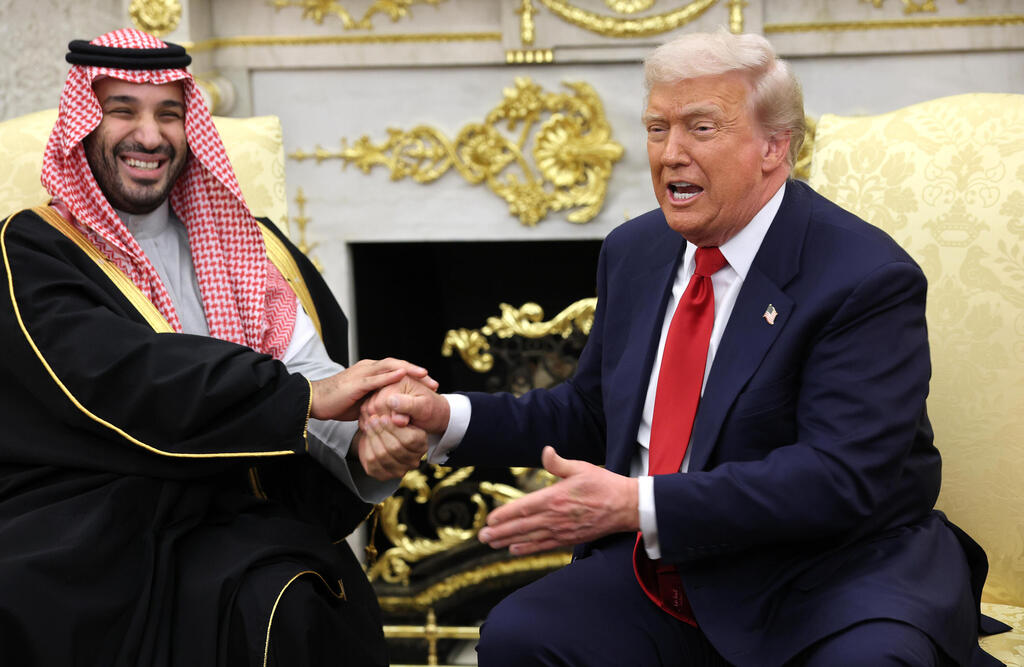
Saudi Crown Prince Mohammed bin Salman an US President Donald Trump
(Photo: Win McNamee/Getty Images)
The report contrasts with earlier reporting by The Associated Press that Saudi Arabia had led behind-the-scenes efforts to dissuade Trump from launching a wider attack. According to the AP, Saudi Crown Prince Mohammed bin Salman warned Trump that U.S. strikes on Iranian energy infrastructure could trigger retaliatory attacks against oil and gas facilities in Saudi Arabia and elsewhere in the Gulf.
Qatar, Turkey and Pakistan also worked in recent days to promote de-escalation and revive negotiations, according to the AP report. The AP also reported that the UAE had joined those efforts, a claim that appears to conflict with the new Wall Street Journal account.
According to the newspaper, Trump ultimately canceled the planned strike after Iranian negotiators responded positively to a new Qatari proposal centered on reopening the Strait of Hormuz, the strategic waterway through which roughly one-fifth of global oil shipments pass.
An Iranian diplomat quoted by the newspaper said commanders in the Islamic Revolutionary Guard Corps, who are expected to oppose the proposal, are considering a preemptive military strike if diplomacy collapses.
A regional official involved in the mediation efforts said the proposal announced by Trump calls for the United States and Iran to return to the negotiating table to address issues that have so far prevented a broader agreement.
According to the official, the proposal includes reopening the Strait of Hormuz and halting attacks across the region, including strikes by Iranian-backed militias in Iraq against Gulf Arab states and Jordan.
In return, the United States would end its naval blockade of Iran and allow Tehran to resume oil exports, in line with a draft ceasefire agreement signed in June, the official said. No agreement has yet been reached, but mediation efforts remain underway, the official added, speaking on condition of anonymity because they were not authorized to discuss the negotiations publicly.
Trump announces strike canceled
Trump said overnight that he had decided to cancel a planned U.S. military strike on Iran after, he said, Tehran and other Middle Eastern countries urged him to refrain because the outlines of a possible agreement had been reached.
"The U.S.A. is locked and loaded and ready to go against the Islamic Republic of Iran, at levels of Military Terror, Strength, and Power not seen since World War II," Trump wrote on Truth Social.
"Despite this, we have just been asked by Iran, and other Middle Eastern Countries, to hold off any attack in that the perimeters of a deal has been agreed to," he wrote.
Trump said the emerging understanding would include "the Immediate, Complete, and Total OPENING OF THE HORMUZ STRAIT" as well as an end to the nuclear threat posed by Iran.
"Based on this request, I have agreed, for the future benefit of the WORLD and, likewise, the survival of a successful and prosperous Iran, to cancel the attack, subject to being able to rapidly make a DEAL," Trump wrote.