

U.S. President Donald Trump said the United States is “nearing completion” of its military objectives in Iran, vowing to “finish the job” as he addressed the nation one month into the conflict.
Marking a month since the launch of Operation Epic Fury, Trump said U.S. forces have dealt a severe blow to Iran’s military capabilities.
US President Donald Trump
(Video: AP)


“Tonight Iran's navy is gone, their air force is in ruins, their leaders, most of them… are now dead,” he said, adding that Iran’s missile and drone capabilities have been “dramatically curtailed.”
Trump said the United States is now “systematically dismantling the regime’s ability to threaten America or project power outside of their borders.”
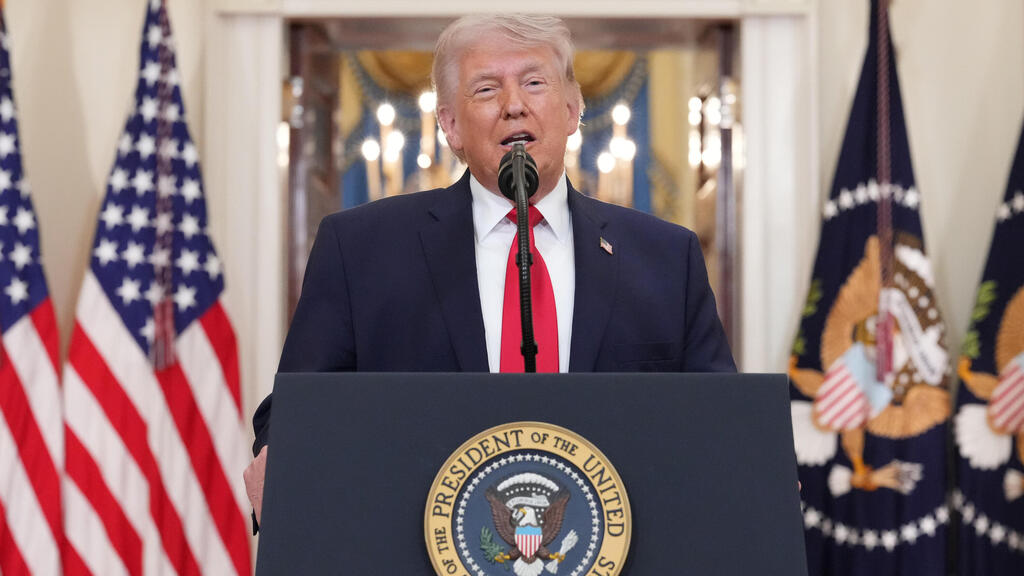
Donald Trump
(Photo: AP Photo/Alex Brandon)
He framed the campaign as essential to global security, calling a nuclear-armed Iran an “intolerable threat.”
“I will never let that happen,” he said.
Justifying the war
Trump argued Iran was “right at the doorstep” of developing a nuclear weapon and accused Tehran of attempting to rebuild its nuclear program even after previous U.S. strikes.
“We totally obliterated those nuclear sites,” he said, referring to the 2025 Operation Midnight Hammer. “The regime then sought to rebuild their nuclear program at a totally different location.”
He also reiterated his long-standing criticism of the 2015 nuclear deal, saying he was “honoured to terminate it.”
“Essentially, I did what no other president was willing to do,” Trump said. “They made mistakes, and I am correcting them.”
Trump went further, claiming that without withdrawing from the deal, “there would be no Middle East and no Israel.”
The president again pointed to the U.S. killing of Iranian commander Qasem Soleimani during his first term, calling him “the father of the roadside bomb,” and suggesting the current situation might have unfolded differently had he remained alive.
Allies, oil and economic fallout
Trump thanked regional allies, including Israel and Gulf states, for their support.
“They've been great, and we will not let them get hurt or fail in any way, shape or form,” he said, adding that Iran’s attacks on those countries underscore the need to prevent it from obtaining nuclear weapons.
He also dismissed suggestions that the conflict is tied to oil.
“We’re now totally independent of the Middle East, and yet we are there to help,” Trump said. “We don’t have to be there. We don’t need their oil.”
At the same time, he blamed Iran for rising gasoline prices in the United States, which have climbed more than 30% to over $4 per gallon since the war began.
“This short-term increase has been entirely the result of the Iranian regime launching deranged terror attacks against commercial oil tankers and neighboring countries,” he said.
The war has disrupted global energy markets, with the Strait of Hormuz effectively closed, raising concerns about fuel shortages in Asia and supply constraints in Europe.
Trump insisted the United States is “better prepared” than ever to deal with the economic impact, though critics argue those pressures escalated following U.S. and Israeli strikes.
Questions over next steps
Trump signaled that the United States could begin scaling back its involvement in the coming weeks, reiterating a previously stated timeline for a drawdown.
At the same time, he urged allies to take on a greater role in securing key shipping lanes.
“Build up the courage,” he said, arguing the United States does not rely on the Strait of Hormuz, even as its allies do.
The remarks raised questions about whether a potential U.S. withdrawal would leave regional partners responsible for maintaining freedom of navigation.
Disputed claims and casualty figures
Trump also cited a figure of 45,000 people killed in an Iranian government crackdown prior to the war, significantly higher than widely reported estimates. He did not provide a source.
Independent reporting has been limited due to restrictions on journalists in Iran, making casualty figures difficult to verify.
Focus on victories
Throughout the address, Trump emphasized what he described as rapid and overwhelming success.
“Our armed forces have delivered swift, decisive, overwhelming victories on the battlefield, victories like few people have ever seen before,” he said.
Despite outlining achievements and long-standing grievances with Iran, Trump did not directly address the immediate trigger for launching the operation earlier this year, instead pointing broadly to decades of hostility from Tehran.