

Holocaust survivors from across Israel gathered Tuesday evening in Hostage Square in Tel Aviv, where they met with families of hostages and former captives. At the conclusion of the gathering, several survivors gave a public statement.
Naftali Furst, 94, who survived four concentration camps including Auschwitz, said: “I came here with strength to support the families whose children are still in the horror of Gaza’s underground. Without hope, we would not have survived. Your future is still ahead of us. I hope your children are freed and that the government gains some wisdom, some heart, and some Jewish values — and that the hostages are released today.”
Gallery
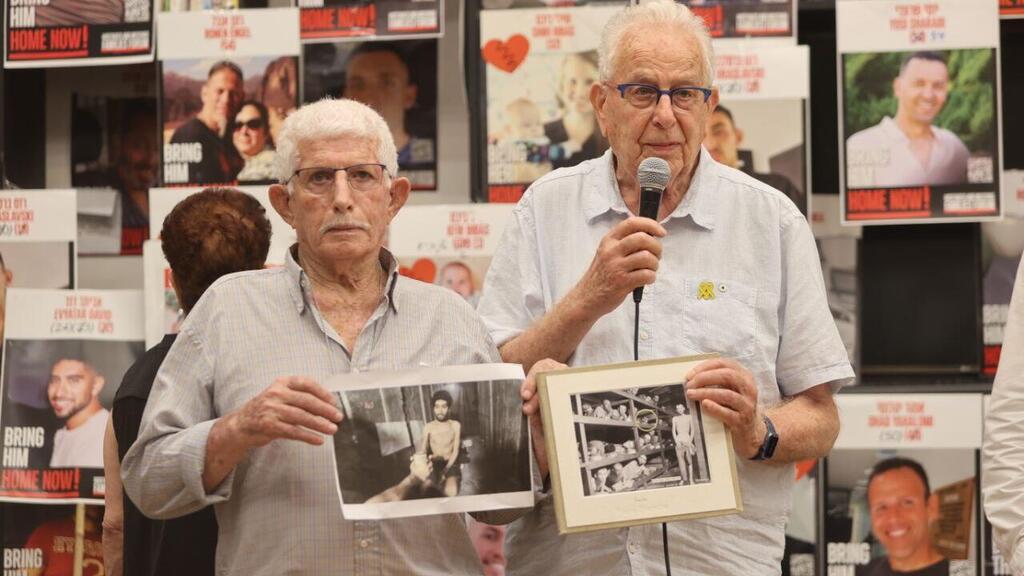
Naftali Furst presents a photo of himself from Auschwitz, alongside a photo of Hamas hostage Evyatar David from captivity
(Photo: Motti Kimchi)
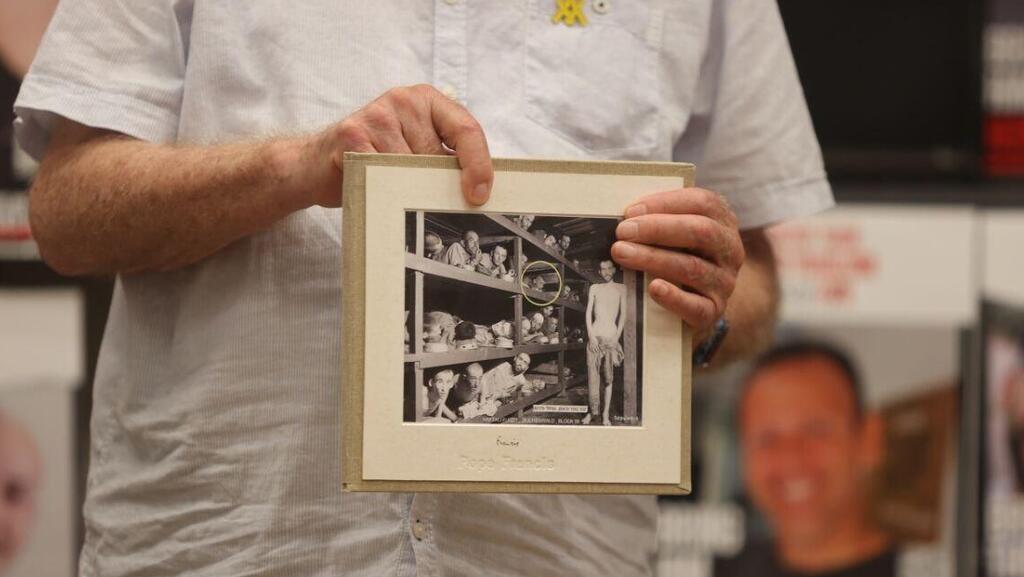
Naftali Furst pictured in the barracks in Auschwitz
(Photo: Motti Kimchi)
Survivor Ariel spoke in English. “When we saw the images of Rom and Evyatar, it felt like the air was sucked out of our lungs. As Holocaust survivors, we know what happens when the world doesn’t look. To be in darkness, not knowing if anyone is coming. We are here to speak for those who cannot. Don’t wait. Bring them home now. They are human beings — and time is running out,” he said.
Aryeh Pinsker, another Auschwitz survivor, said: “I never thought we could reach such neglect. I don’t know if it’s not deliberate. I hope this ends differently and ends well, that we become a united people again, with sane leadership.”
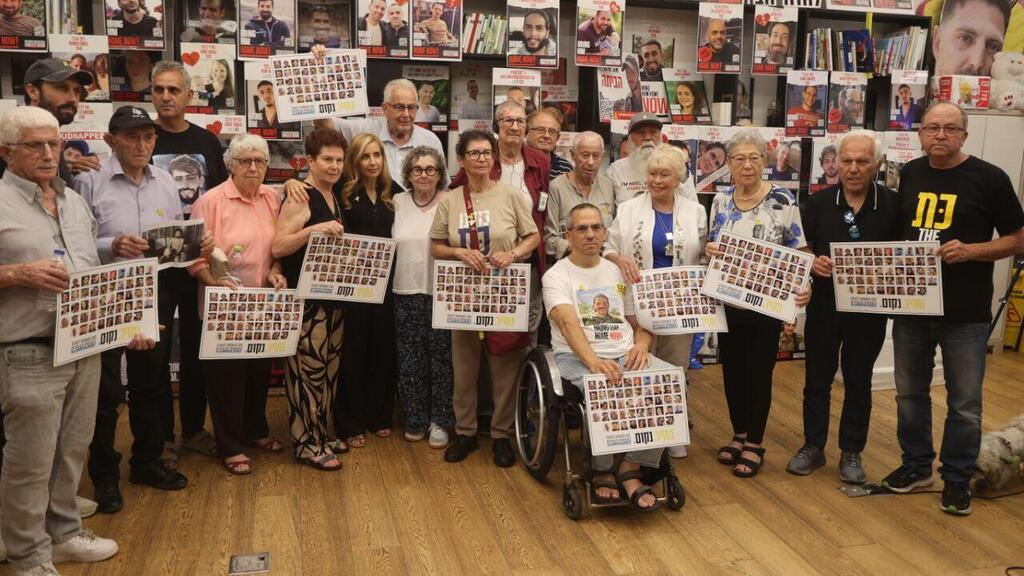
Holocaust survivors at Hostages Square in Tel Aviv
(Photo: Motti Kimchi)
Michel Illouz, father of Guy Illouz, who was murdered on October 7, told the survivors: “I bow my head to you. I don’t understand the strength of spirit you possess. Since I was a child, I never understood how such a catastrophe happened in the Holocaust. I can’t believe it’s 2025 and we still have 50 hostages, and we’re seeing such images. It’s a disgrace that you have to come and support us. To see images that remind you of what you went through — I’m ashamed of this country. I apologize to you on its behalf.”
Danny Miran, father of hostage Omri Miran, added: “In 77 years we built a magnificent country, and we should be proud and strong. I draw my soul’s strength from people like you.”
The meeting followed another powerful encounter on Saturday in Hostage Square between Mordechai David Cohen, 99, a Holocaust survivor and veteran of Israel’s War of Independence, and Yael Eder, mother of slain hostage Tamir Eder. The two shared a raw and moving conversation.
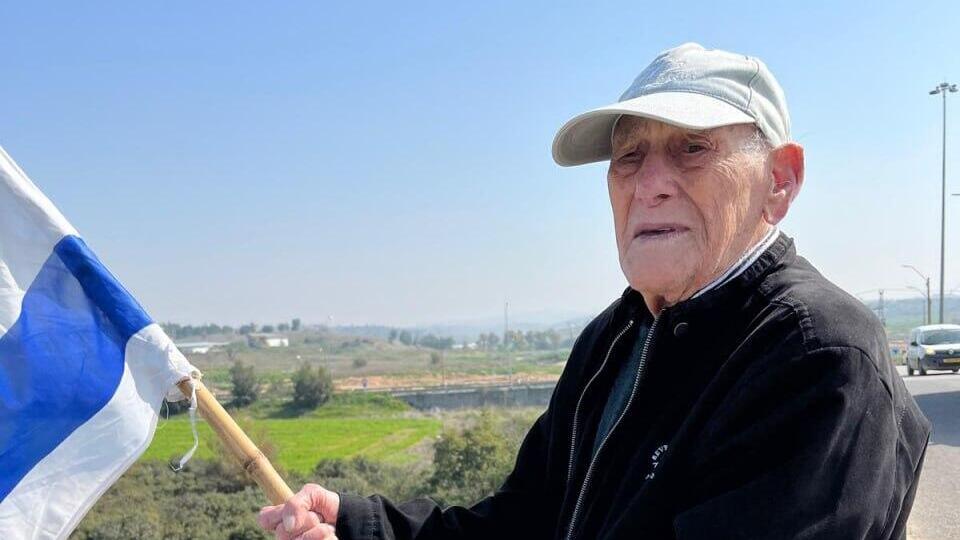
Holocaust survivor Mordechai David Cohen came to Israel from Bulgaria in 1948 at age 21 to fight for Israel’s independence
Mordechai, who came alone from Bulgaria in 1948 at age 21 to fight for Israel’s independence, recalled: “My father asked me if I wanted to come, and I said yes. They taught us for three days how to shoot and throw grenades. Then we guarded Kibbutz Revivim. Since then, I’ve been here.”
He survived the Holocaust under German occupation in Bulgaria. Of his meeting with Yael, he said, “I don’t cry, but I had tears. I couldn’t stop them. Her story hurt me deeply. I don’t know where God was during the Holocaust — or on October 7.”
Today he lives in Bat Hefer, across from his son and grandchildren, and each Friday evening they pray together for the hostages’ return. “That gives me strength — it’s the least I can do.”
Get the Ynetnews app on your smartphone: Google Play: https://bit.ly/4eJ37pE | Apple App Store: https://bit.ly/3ZL7iNv
Yael recalled realizing that an elderly man outside the library wanted to speak to her. When she came out and met Mordechai — sharp and fearless — he told her: “I came here to fight, and everything we built has been destroyed.” She said: “For a moment, I forgot my own pain. I felt I had to comfort him, to tell him we’ll fix it.”
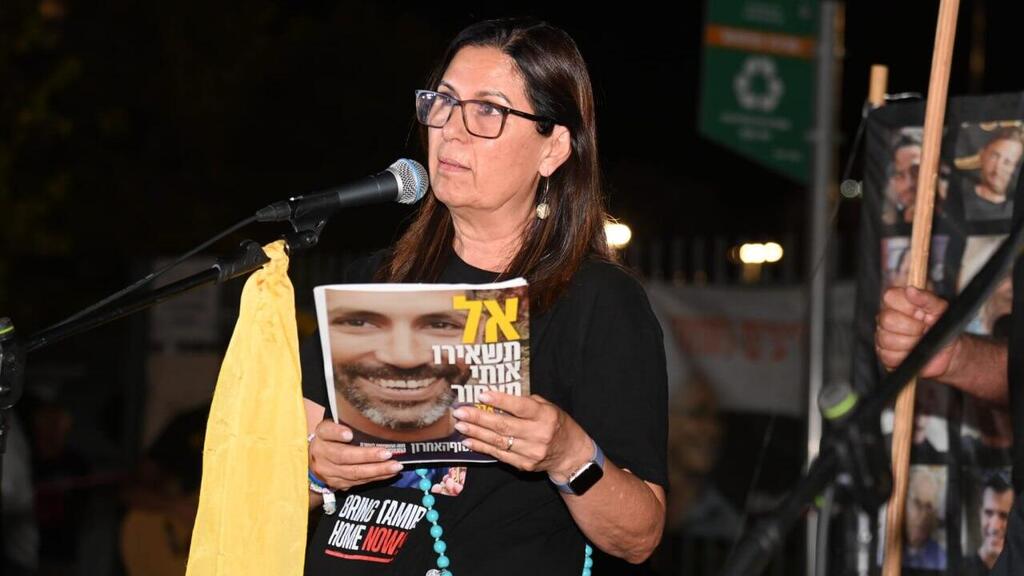
Yael Eder, mother of slain hostage Tamir Eder
(Photo: Herzl Yosef)
They spoke about the struggle to bring the hostages home, which Yael sees as bigger than her personal grief. “This is about the state. Tamir died at a breaking point. Mordechai thought we had a country, security, a home — and then my son was lost. He pointed at his granddaughter and asked, ‘What about the grandchildren?’ I also have grandchildren — Tamir left me children. I must fight for them.”
Yael said Mordechai’s pain was unbearable. “I cried not for myself — and I cry a lot for myself — but for what he feels. I want him, at age 99, to know he didn’t fight for nothing, didn’t build for nothing. I want him to feel there is hope, that he will leave behind not only sorrow but legacy.”
Mordechai nodded and, in a quiet, clear voice, said: “We have nowhere else to go. We have no other country. And if we don’t fight for it now — then what was it all for?”