

For weeks, U.S. President Donald Trump tried to project that he was under no pressure: not from oil prices, not from the stock market, not from political considerations and not from the approaching midterm elections. But this week, at the G-7 summit in France, came the moment of admission: Trump publicly acknowledged that continuing the war with Iran could have led to an “economic catastrophe” — and that this was a central factor behind the decision to pursue an agreement.
“I didn’t want to see an economic catastrophe,” Trump told reporters as he defended the memorandum of understanding signed with Iran. He said that every time the possibility of peace emerged, the stock market “shot up like a rocket,” and when the messages turned negative, it fell sharply. In doing so, he revealed what the White House had tried until now to blur: The agreement was born not only from a security or diplomatic assessment but also from real concern that the energy crisis could spin out of control.
Trump’s moment of admission


The good news for Washington is that the Strait of Hormuz reopened after Iran and the U.S. signed the memorandum of understanding this week. The bad news, according to CNN, is that it may have happened too late. For almost four months, hardly any oil left the Middle East, and according to data from Kpler, the world lost 1.15 billion barrels of oil during the war.
That number explains the pressure behind the scenes. The oil market remains fragile and is rapidly approaching a breaking point. Strategic oil reserves in member states of the International Energy Agency are at their lowest level since 1990, the U.S. emergency reserve is at a 43-year low and commercial inventories have already reached levels the industry defines as “operational stress.”
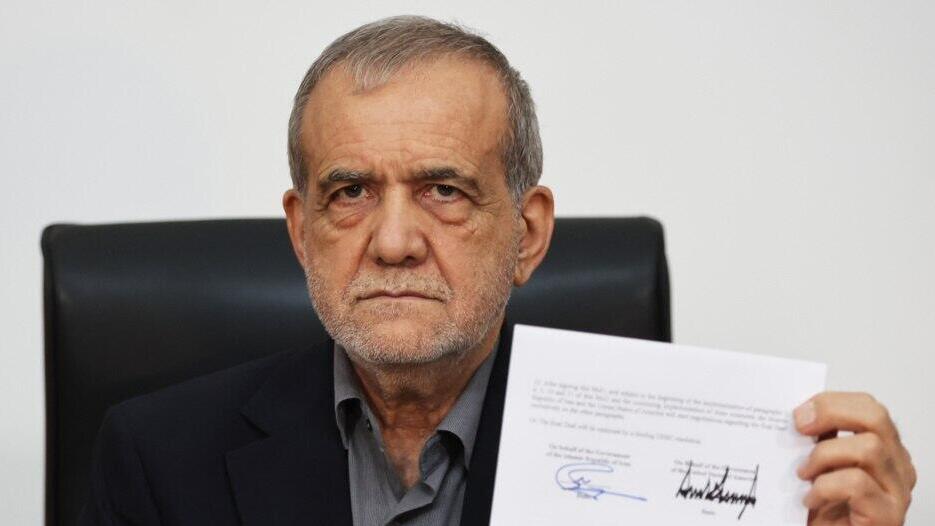
Trump himself put it bluntly at the summit, saying that if people wanted to understand what chaos would look like, they should consider that U.S. stockpiles could be depleted in about four weeks. He also warned that had the strait not reopened, the world would have been nearing what he described as an economic catastrophe, hinting that such a scenario would have drawn comparisons between him and Herbert Hoover, the president in office when the 1929 crash and the Great Depression began.
The market celebrated, but the oil has not returned
On the surface, the oil market received the agreement exactly as Trump had hoped. Brent crude prices, which climbed to $126.41 a barrel at the height of the war, began falling after the ceasefire was announced in mid-April and in recent days were trading below $80 a barrel. For Trump, that was proof that his timing worked. For some analysts, it was a warning sign: Prices may have fallen too quickly.
The reason is that the drop in prices is based mostly on optimism — not on barrels of oil that have already returned to the market. The world entered the war awash in oil, a historic supply glut that helped it absorb the largest supply shock ever recorded. But that safety cushion eroded quickly: According to the data, global oil inventories fell by 190 million barrels in recent months.
One troubling sign comes from the town of Cushing, Oklahoma, one of the most important storage and distribution hubs in the U.S., from which fuel is sent across the country. Inventories there have reached a level of operational stress — a situation in which there is still oil in the tanks but it becomes harder to extract it and move it through pipelines. CNN compared it to a coffee urn in which the liquid has fallen below the spigot: There is still something at the bottom, but to get it out, the container has to be tilted — and even then, much of what remains is unusable sediment.

A vessel in the Strait of Hormuz
(Photo: Stringer/Reuters)
In oil tanks, that sediment is not just a metaphor. Some of what accumulates at the bottom is unusable material that makes it harder to maintain proper pressure in pipelines and deliver oil to customers. And this is not happening only in Cushing: Storage facilities around the world are nearing a similar test point. That means that even if, on paper, oil inventories still exist, the practical ability to use them is steadily eroding.
Reopening Hormuz is only the beginning
That is why reopening the Strait of Hormuz is not like flipping a switch that returns the market to normal. For oil from the Persian Gulf to resume flowing at a regular pace, mines first have to be cleared from the strait, empty tankers have to return to the area, production has to restart, supply chains that were halted have to be reactivated — and then the market has to wait for the oil to begin its slow journey to its destinations.
Oil industry officials estimate that the process could take months until flows return to something approaching “normal.” Until then, the market will continue relying on the same inventories that have been worn down almost to the limit. That is why some analysts believe the oil market is underpricing the risk of an actual shortage before tanks are refilled.
Helima Croft, head of global commodity strategy at the Canadian investment bank RBC Capital Markets, said the market has moved far ahead of the current reality, with many assuming the crisis is already over even though there is still a major logistical challenge in returning to previous conditions. Matt Smith of Kpler also warned that consumers in the U.S. are expected to pay higher prices during the summer months, regardless of what happens in the coming weeks in the Strait of Hormuz. He said the optimism surrounding the agreement has so far kept prices from rising, but that market forces will ultimately have to take effect.
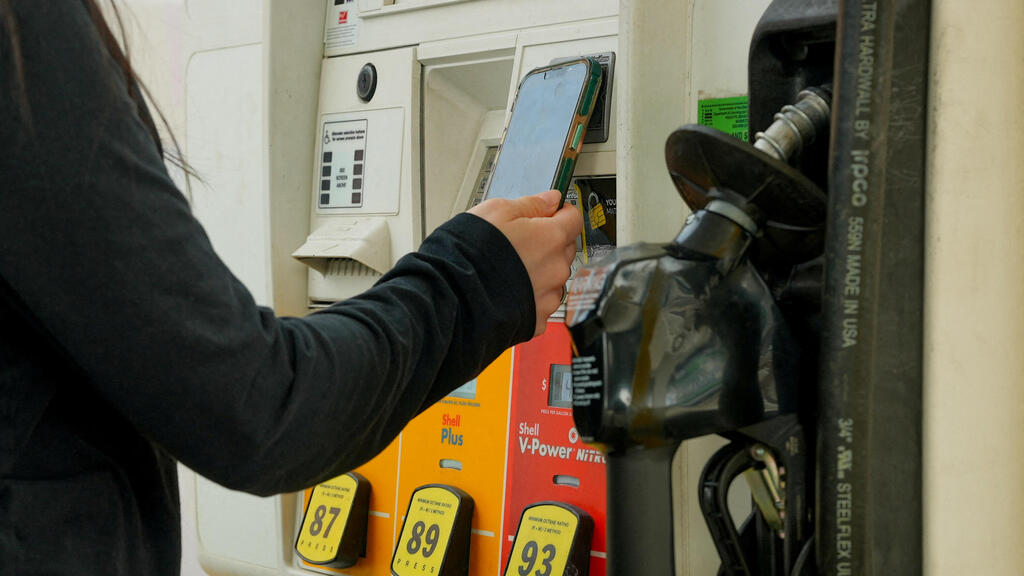
A gas station in Washington
(Photo: REUTERS/Ken Cedeno/File Photo)
The math supports those warnings. According to CNN, even if the global oil market begins producing nearly 5 million barrels a day more than consumer demand — as the International Energy Agency forecasts — it would take about a year to replace the 1.15 billion barrels lost during the war. Dan Pickering, a veteran energy investor and analyst, said that physical barrels ultimately become critical and that losing them has real consequences.
Some say the panic is overblown
But the oil market does not always behave according to that logic. Against the warnings of renewed price increases, there is another camp: traders and analysts looking ahead and seeing the flood of oil that could return to the market, especially from OPEC countries, which need cash and want to quickly increase production.
Jay Hatfield, CEO of the asset management firm Infrastructure Capital Advisors, argued that this new reality will make it hard to reverse the downward momentum in prices. In other words, even if inventories have eroded, the market is already pricing in the return of supply — not necessarily the risk that the oil will not arrive in time.
Perspective also matters. The world entered the war with such large oil surpluses that it is still somewhat protected from the massive drawdown in inventories. Vikas Dwivedi, global oil and gas strategist at the Australian financial group Macquarie Group, said the market had a substantial safety cushion and used it up, leaving inventories below last year’s levels, though not by much.
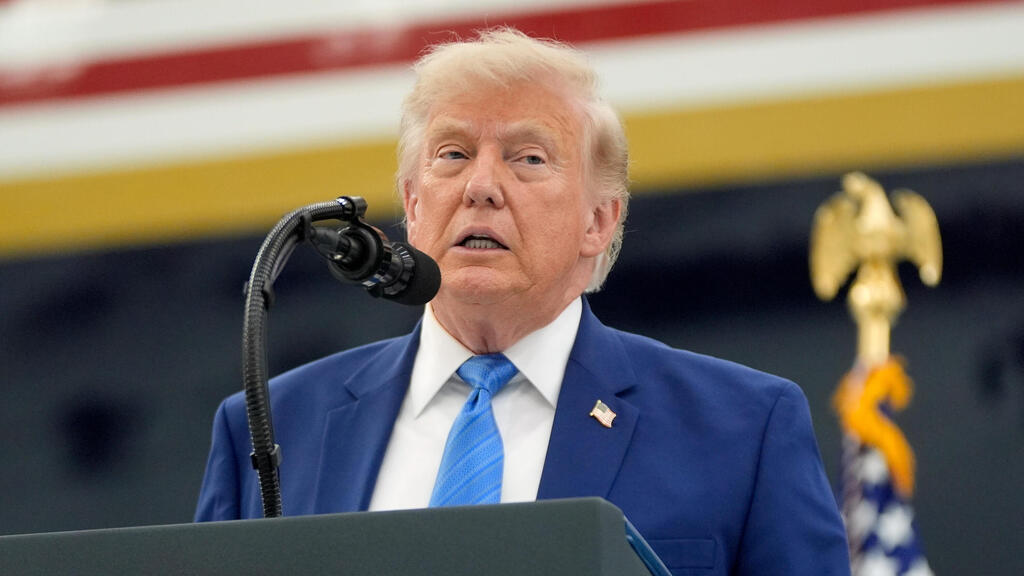
US President Donald Trump
(Photo: AP Photo/Manuel Balce Ceneta)
He said the inventory risk is real, but those betting on a rise in oil prices are giving it too much weight. As an example, CNN noted that U.S. diesel inventories are indeed at their lowest level since 2003, but they are only 12.4% below their five-year average. U.S. gasoline inventories are only 5% below where they were a year ago.
Dwivedi illustrated it by saying that during the crisis, an oil trader at a refinery whose job was to secure oil might have needed to make 10 calls to find it. Now, that trader might need only five or six calls, and in the coming weeks, sellers may start approaching refineries directly with oil to sell.
Either way, for Trump, the very fact that he was forced to speak publicly about an “economic catastrophe” marks a significant change in tone. The president who tried to present himself as someone who does not yield to oil prices, the stock market or political pressure effectively admitted that continuing the war threatened to turn a Middle East security crisis into a global economic crisis — one that could have followed him until the midterm elections and perhaps into the history books.