


A decade after its greatest political achievement and nearly three years after its dissolution, initial talks have begun to reunite the parties that once formed the Joint List—a coalition of Arab political parties.
Leaders of the Arab parties—Balad, Ta’al, Hadash and Ra’am—are set to meet on Monday against the backdrop of growing calls for their reunification. The meeting aims to address the political and social challenges facing the Arab sector in Israel to narrow gaps and advance a potential reunification effort.
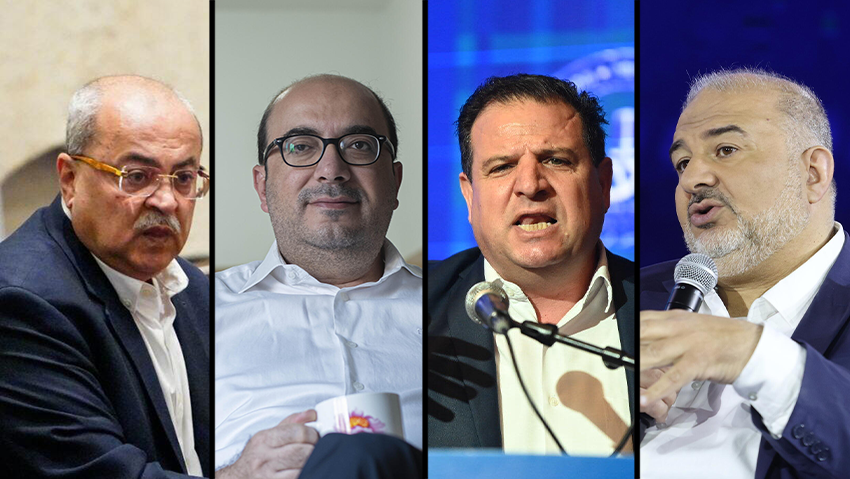
The Joint List was established in 2015, bringing together the four parties. At its peak, it garnered 15 seats in the Knesset—the highest number ever achieved by an Arab political bloc. However, the alliance disintegrated within seven years. The Islamist Ra’am party withdrew to run independently, and Balad later failed to pass the electoral threshold in the most recent elections.
The collapse of the Joint List angered many in the Arab public, who harshly criticized the Arab parties. Many voters chose to abstain from voting, while others called for a renewed political unification to strengthen Arab representation in the Knesset and present a united front. Now, there appears to be growing momentum for such a move among Arab party leaders.
Get the Ynetnews app on your smartphone: Google Play: https://bit.ly/4eJ37pE | Apple App Store: https://bit.ly/3ZL7iNv
“In the face of the many and difficult challenges confronting the Arab sector in Israel and the parties, there is a significant responsibility to make every effort to reestablish the Joint List,” Ta’al Chairman Ahmad Tibi told Ynet, acknowledging differences in approaches, priorities and positions but noting that in 2015, the communist Hadash and Islamist Ra'am parties worked together. “The common ground between us is far greater and broader than what divides us,” he said.
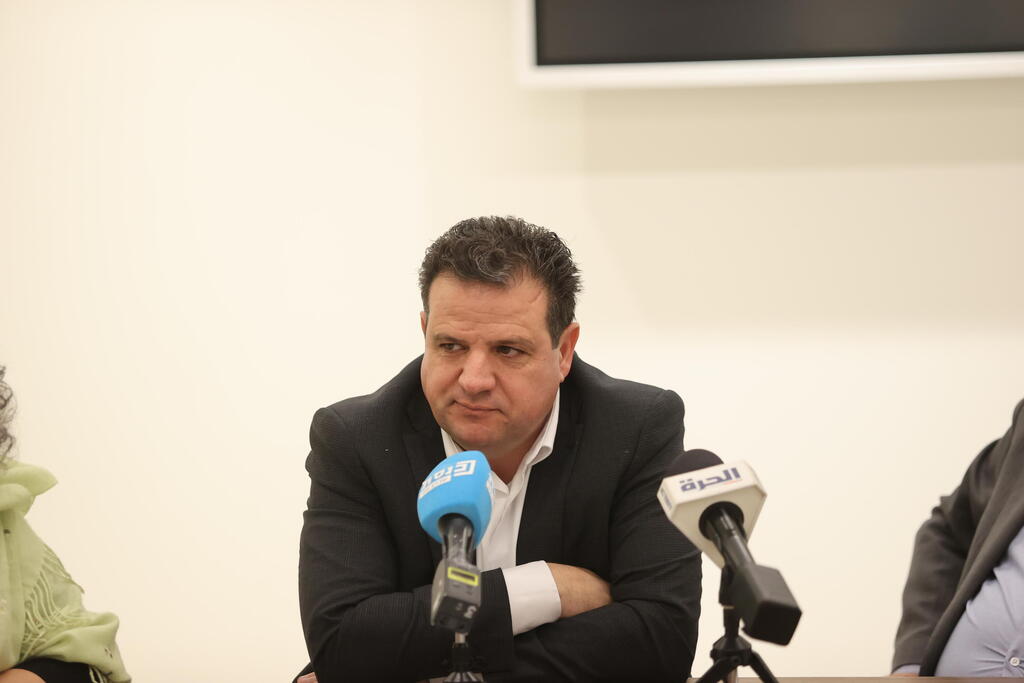
Hadash Chairman Ayman Odeh
(Photo: Alex Kolomoisky)
“It is possible to find a minimum agreement formula that will allow the four parties to run as a single bloc, ensure a high voter turnout, which is our central interest, secure a significant number of Knesset seats to block the Netanyahu-Smotrich-Ben-Gvir government, and present strong, united leadership for the Arab public. An overwhelming majority of the Arab public, over 80-85%, wants and demands the reestablishment of the Joint List.”
Chairman Hadash Ayman Odeh emphasized: “Hadash supports the return of the Joint List with all four of its components.”
Balad Chairman Sami Abu Shehadeh also expressed optimism about the initiative: “We are ready for agreements and will invest all our energy into forming a serious and genuine Joint List, based on shared principles that will serve as a strong parliamentary bloc to confront the challenges. It will not be difficult to reach agreements because everyone has understood the severity of the current situation. There are disagreements and discussions between the various political entities, but the gravity of the situation compels unity at this stage.”