

Prime Minister Benjamin Netanyahu is seeking sweeping changes to the candidate selection process in his Likud party that critics within the party say would give him unprecedented control over its electoral slate ahead of the next national election.
Under the proposal, Netanyahu would allow Likud to continue holding party primaries while securing a record 10 or 11 personal appointments, known as "reserved slots," enabling him to place candidates of his choosing in key positions on the party's list for parliament.
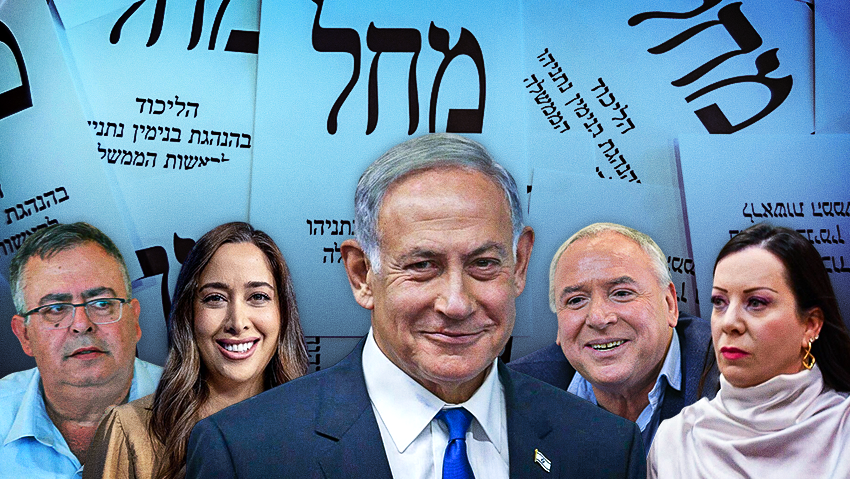
(Photo: Shutterstock, Yoav Dudkevitch, Nadav Eves, Shaul Golan, Alex Kolomoisky)
Senior Likud figures critical of the plan accused Netanyahu of trying to sideline elected lawmakers and transform the party into one dominated by his personal choices.
"Instead of Likud primaries, it will become the Netanyahu party," one senior party official said.
Israel uses a system of nationwide proportional representation in which parties submit ranked candidate lists. The higher a candidate is placed on a party's list, the greater the likelihood of winning a seat in the 120-member Knesset if the party performs well in the election.
According to Likud sources, Netanyahu has concluded from recent polling that the party's current roster of lawmakers has become an electoral liability.
"The composition of the list could cost us the election," Netanyahu recently told one of the advisers with whom he has been consulting on changes to the party's primary system, according to a Likud official familiar with the discussions.
Netanyahu has previously criticized some members of Likud's parliamentary faction but had not sought to fundamentally reshape the party's candidate list, believing they did not significantly hurt the party's electoral prospects, party officials said.
Netanyahu reportedly wants to control much of the top of the Likud list. While party rules already reserve the No. 1 position for the party leader, Netanyahu is seeking four additional reserved slots within the top 10 positions — at Nos. 2, 4, 6 and 8 — a move that would dramatically reorder the party's leadership slate.
He is also seeking another six or seven reserved slots among the top 30 candidates. Under an existing political agreement, Netanyahu is expected to reserve one senior position for Foreign Minister Gideon Sa'ar, leader of the New Hope party, which merged with Likud.
Likud's constitutional committee met this week to discuss proposed changes to the party's primary rules and election procedures, but postponed a decision because Netanyahu was absent. The committee is scheduled to reconvene Sunday with Netanyahu in attendance.
If the committee approves the proposal, Likud's Central Committee is expected to vote Tuesday on adopting the changes.
Likud lawmaker David Bitan has petitioned the party's internal court to require that the vote be conducted by secret ballot rather than an open vote. Party officials expect the ballot to be secret, setting up what they describe as a key test of Netanyahu's standing within the party.
The vote will determine whether Central Committee members back Netanyahu's proposal despite the likelihood that it would push many incumbent lawmakers lower on the candidate list and reduce their chances of returning to parliament.
"Netanyahu has launched a campaign to eliminate the Likud faction in the Knesset," one senior Likud official who is not considered an opponent of the prime minister said. "What he's doing now is casting aside the people who stood by him through four difficult years."
Another party official said Netanyahu was acting out of "panic" after reviewing recent polling and had concluded that only a dramatic overhaul of the party's candidate list could improve Likud's electoral prospects.