


The IDF has begun redeploying in southern Lebanon after demolishing Hezbollah’s underground complex beneath the Ali Taher Ridge, withdrawing from the ridge itself while retaining forces in commanding positions and at the Beaufort complex.
The withdrawal from the area containing Hezbollah’s main underground facility began even before the tunnels were destroyed. Israeli troops have now moved primarily to positions along the so-called "yellow line" ceasefire demarcation, from which the military says it can maintain surveillance and fire control over the ridge.
Demolition of the underground complex on Ali Taher Ridge


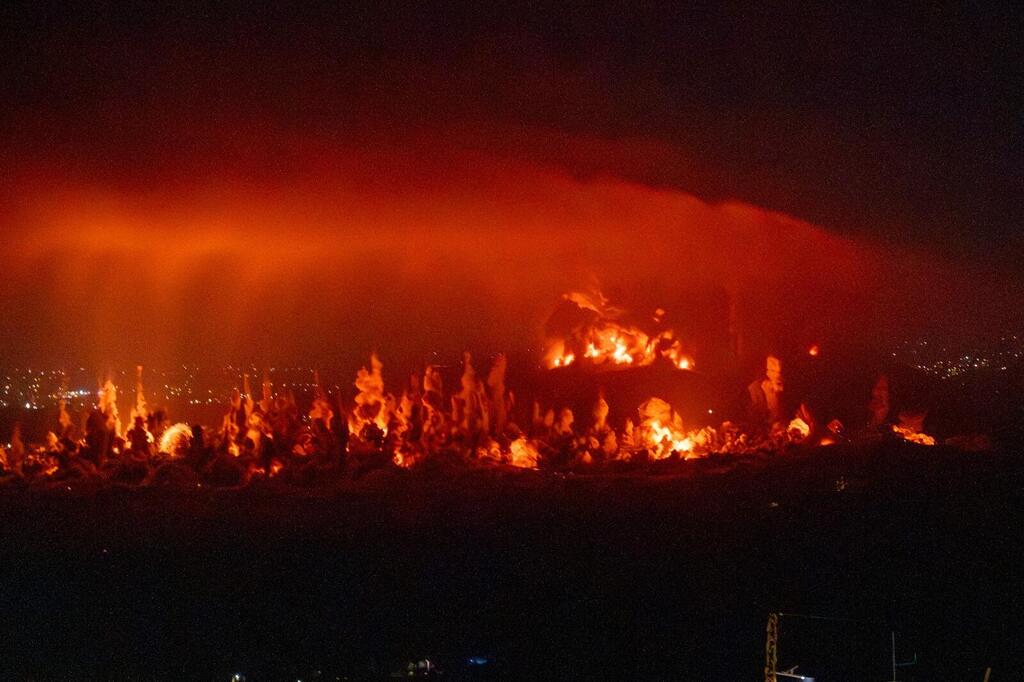
IDF forces had already begun occupying those positions several days ago. The coming days are expected to remain tense as the Israeli defense establishment watches for signs that Hezbollah, or potentially Iran, intends to respond to the destruction of the tunnel network.
While withdrawing from the Ali Taher Ridge itself, the IDF will for now continue to maintain forces in the Beaufort area.
Defense Minister Israel Katz said Sunday evening that Ali Taher “is part of the yellow line and Israel’s security zone in Lebanon, which covers 700 square kilometers from the Mediterranean coast in the west, through Beaufort Castle and to the Mount Hermon area in the east.”
“As Prime Minister Netanyahu and I have made clear many times, we are not leaving the security zone, and the IDF will not withdraw or redeploy until Hezbollah is disarmed throughout Lebanon,” Katz said.
He added that the IDF was positioned to maintain operational control over the ridge and prevent Hezbollah or any other actor from reestablishing itself there.
“Anyone who approaches the ridge will be destroyed,” Katz said. “The IDF will continue operating with force in the security zone, eliminating terrorists and terrorist infrastructure above and below ground and removing any threat to our forces, wherever it comes from.”
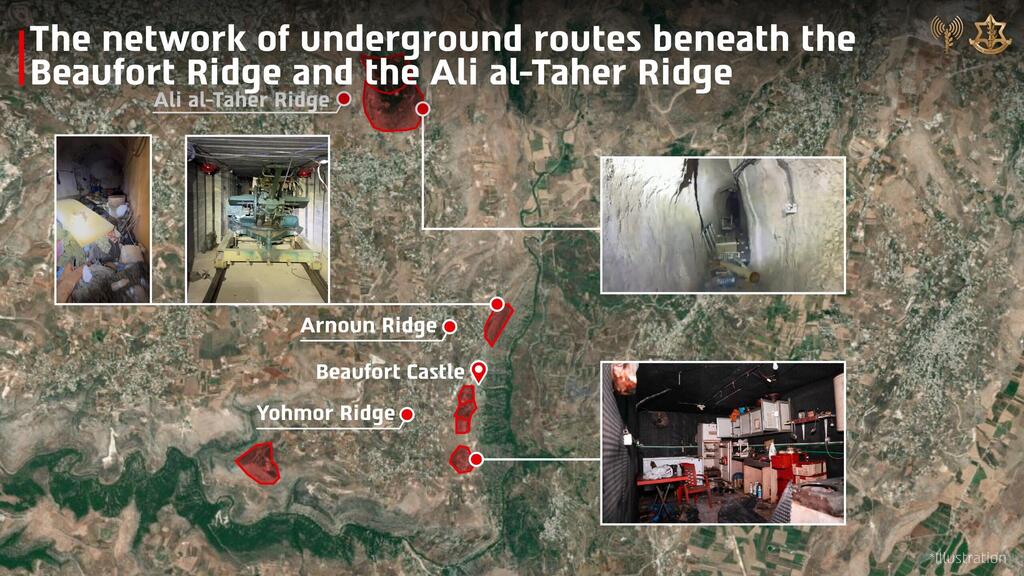
The tunnels beneath the Ali Taher Ridge, which the IDF says were built with Iranian assistance, were considered one of Hezbollah’s most important command centers in southern Lebanon.
Because of the depth and fortification of the complex, the military said it was difficult to destroy it through airstrikes alone.
The underground network stretched for about 5.4 kilometers, or 3,5 miles. Hezbollah had positioned its Badr sector headquarters and heavy weapons on the ridge because the high ground overlooks and provides fire control over routes leading toward the strategically important Nabatieh plateau.
The ridge is also close enough to the Israeli border, according to the IDF, to have served Hezbollah in directing fire toward communities in northern Israel and in conducting a defensive battle against Israeli forces advancing northward.
Inside the underground system, the IDF said troops found command rooms, weapons storage areas, generator rooms, living quarters, showers and a kitchen that “allowed terrorists to conduct combat operations and remain underground for extended periods.”
“This was strategic infrastructure built over two decades,” the military said.
The IDF said the extensive network was constructed by Hezbollah’s Badr Unit and was used to manage the group’s fire systems, conduct combat against Israeli troops and prepare attacks against Israeli civilians.
(Photo: IDF)
The tunnels were blown up Thursday evening using more than 1,100 tons of explosives. IDF spokesperson Brig. Gen. Effie Defrin said the network “was built over two decades, financed and directed by the Iranian terror regime.”
“In recent months, our forces encircled the area and increased the pressure on the tunnels and the terrorists barricaded inside them,” he said. “All the terrorists who remained in the infrastructure were killed or fled. Although Hezbollah declared it would defend the infrastructure at any cost, it failed and even abandoned its men to die inside.”
The Ali Taher Ridge contained eight underground complexes. According to the IDF, troops found dozens of explosive drones and unmanned aircraft, machine guns, anti-tank missiles, hundreds of mines, RPG rockets, explosive devices and other military equipment.
In the months before the network was destroyed, troops from the IDF’s 36th Division, Commando Brigade and Yahalom elite combat engineering unit increased pressure on Hezbollah terrorists inside the ridge.
In the first stage of the operation, commandos established operational control above ground through ambushes, attacks on tunnel shafts using gunfire and grenades, drones and other firepower.
The next stage involved establishing operational control underground as well. The IDF described the operation as a prolonged, geographically limited campaign inside what Israel calls its security zone, intended to remove Hezbollah’s ability to plan and carry out attacks from the underground network against Israeli civilians and troops.
As previously reported by Ynet, some Hezbollah terrorists abandoned the ridge while others were killed. When Israeli forces identified terrorists attempting to leave the tunnels or deliver supplies, the military said they were struck by aircraft or artillery.
In one incident, an Egoz commando killed a Hezbollah terrorist at close range as he attempted to flee one of the tunnels, according to the IDF.
The operation has also been accompanied by concern over a possible Iranian response. Reports said Tehran had warned that a broad Israeli operation against the Ali Taher Ridge would trigger significant retaliation. Hezbollah also reportedly pressed Iran to intervene in an effort to halt the Israeli campaign, and the possibility of a direct Iranian response has been taken into account by Israel’s defense establishment.
Israeli officials have made clear that any Iranian attack would not necessarily be answered only in Lebanon. For now, however, the defense establishment assesses that the likelihood of a broader escalation with Iran is relatively low.
The IDF is nevertheless preparing for other possibilities, including a limited Iranian response or several days of fighting along the northern front.