

Oman said Friday it mediated indirect talks between the United States and Iran, with each side meeting separately with the Omani foreign minister to discuss conditions for renewing negotiations.
In a statement issued in Muscat, Oman’s Foreign Ministry said the foreign minister held separate consultations with the Iranian and American delegations that focused on “creating appropriate conditions to resume diplomatic and technical negotiations.”
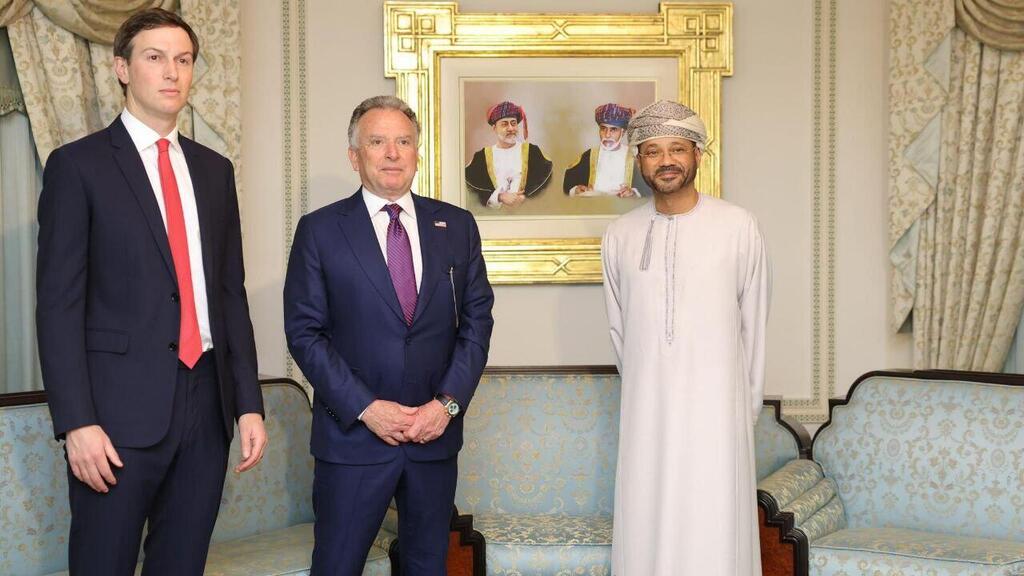
According to the Associated Press, the talks were conducted so that the Iranian delegation left the venue in the Omani capital before the U.S. convoy, bearing American flags, arrived at the palace where the meetings were held. The U.S. delegation remained for about an hour and a half before departing.
Iran’s state broadcaster reported that after the American delegation left, the Iranian team returned for another round of consultations, though that report could not be independently confirmed. Iran’s IRNA news agency said a positive step toward easing regional tensions would be a political statement following the first round of talks.
“The most important demand of Iran in the negotiations is the lifting of economic sanctions,” IRNA reported. It said Iran emphasized its right to enrich uranium on its own territory as a red line and is seeking a realistic agreement that safeguards its nuclear rights and lays the groundwork for sanctions relief.
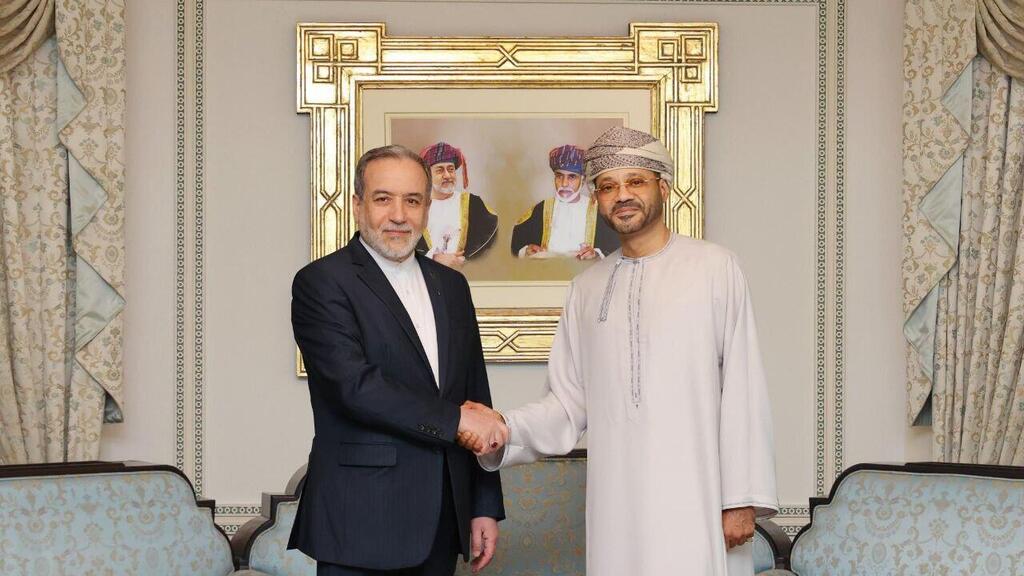
Iranian Foreign Minister Abbas Araghchi
(Photo: Oman's Foreign Ministry)
The U.S. delegation included special envoy Steve Witkoff and President Donald Trump’s son-in-law Jared Kushner. According to The Wall Street Journal, the talks also featured an unusual participant, Adm. Brad Cooper, commander of U.S. Central Command. An Iranian diplomatic source told Reuters that the presence of any military official risks undermining the talks.
Ahead of the meetings, Iranian Foreign Minister Abbas Araghchi hinted that Tehran had not forgotten what led to the collapse of previous negotiations, referring to the 12-day war launched by Israel and later joined by the United States, which erupted while further talks with Witkoff had been planned.
“Iran enters diplomacy with open eyes and with a memory of the past year,” Araghchi wrote. “We act in good faith and stand firm on our rights. Commitments must be honored. Equal standing, mutual respect and mutual interest are not rhetoric, but the pillars of a sustainable agreement.”
The talks took place amid heightened tensions following weeks of sharp rhetoric and military posturing. Trump recently promised Iranian protesters that “help is on the way,” but instead ordered what he has described as a “large armada” to the region, including the aircraft carrier Abraham Lincoln and eight destroyers. He has threatened military action if Iran does not reach an agreement with Washington.
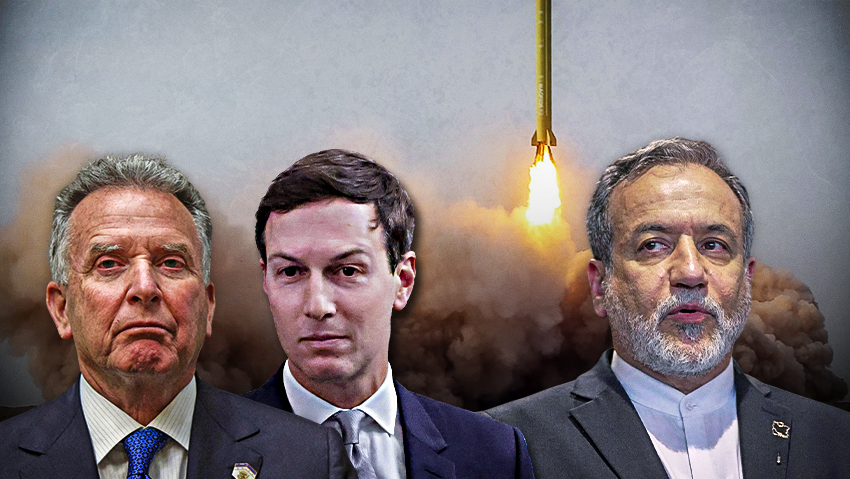
(Photo: RS/Dawoud Abu Alkas, Reuters/Evelyn Hockstein, AP/Hassan Ammar)
NBC News reported overnight that Trump has not yet issued specific orders regarding the naval deployment and has not decided on targets for any potential strike. U.S. officials told the network that the Lincoln and its accompanying warships are moving into strike range of Iran, but described the deployment as a response to tensions rather than preparation for a specific mission. The report said U.S. vessels in the region carry more than 450 Tomahawk cruise missiles.
The Muscat talks were the first since five rounds of negotiations held in the first half of last year, also led by Araghchi and Witkoff and largely mediated by Oman. While those talks were mostly indirect, the two officials did meet face to face and maintained contact during recent weeks of escalating tensions.
The gaps between the sides remain wide. Iran insists negotiations focus solely on its nuclear program. Araghchi said this week in an interview with CNN that if the United States refrains from pressing what he described as “impossible demands,” namely limits on Iran’s missile program, there is an opportunity to reach an agreement quickly.
At the same time, reports suggest Tehran may be open to compromise after Israeli and U.S. strikes in June last year effectively destroyed its nuclear facilities. According to officials cited by The New York Times, Iran may agree to a regional consortium with Arab states to oversee uranium enrichment for civilian energy, with enrichment conducted outside Iranian territory.