

On Sunday, Hungarians will head to the polls for what may be the country’s most consequential election since the fall of communism. After 16 straight years in power, Prime Minister Viktor Orban’s grip on office is shakier than ever, and in the April 12 vote, one figure is scrambling the board: Peter Magyar, leader of the Tisza party.
For Orban — currently the European Union’s longest-serving leader and widely seen as Prime Minister Benjamin Netanyahu’s closest friend in Europe — Magyar is not just another liberal-left rival who can easily be branded a “traitor.”
Hungarian Prime Minister Viktor Orban and US Vice President JD Vance give a joint press conference in Budapest
(Video: Reuters)


He is the ruling establishment’s worst nightmare: a right-wing conservative, nationalist and religious figure who came up through the system and now threatens to tear it down from within. Just as crucially, he is catching fire with voters under 30.
The aristocrat who broke ranks
Magyar, 45, was once flesh and blood of Orban’s ruling Fidesz party. A former lawyer and diplomat who was married to ex-justice minister Judit Varga, he knew every nut and bolt of the machinery of power, as well as the methods used to shore up the party’s electoral strength in general — and Orban’s personal dominance in particular.
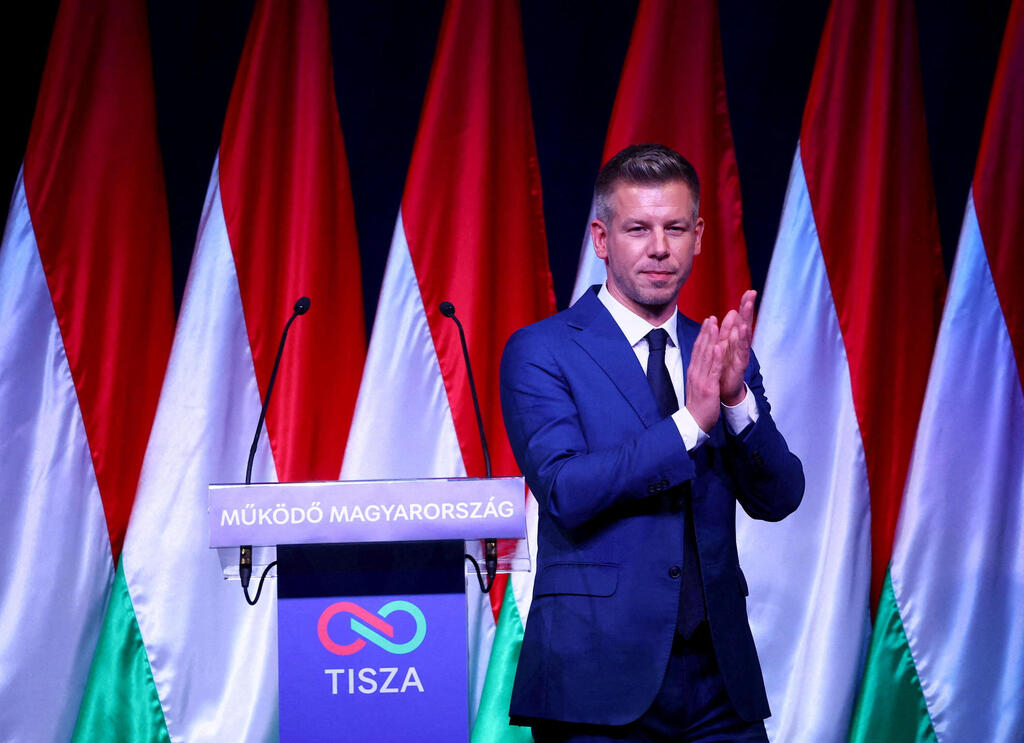
His dramatic defection in February 2024, following a pardon scandal in a child sex abuse case that rocked the country, was not merely an act of conscience. It marked the opening shot in a political crusade against what he calls a “mafia state.”
Magyar is not trying to drag Hungary back to the left. Quite the opposite: He casts himself as the sane right — patriotic, conservative and clean of corruption. His Tisza party speaks to Hungary’s conservative heartland, to those who believe in family values and national pride but have grown sick and tired of a system in which loyalty to the leader matters more than talent, and of corruption that has spread through the corridors of power like wildfire.
Days before the election, U.S. Vice President JD Vance arrived in Budapest in an apparent effort to shore up Orban, one of Donald Trump’s closest allies in Europe. In addition to a joint news conference, he is also appeared with Orban at a campaign rally in a soccer stadium later that day.
An ideological chess match: Ukraine, Russia and the EU
The European Union: The hardest sell for Orban’s propaganda machine is to paint Magyar as “Brussels’ puppet.” Magyar has been treading carefully through the minefield of foreign policy, while holding positions that are difficult to attack from the right.
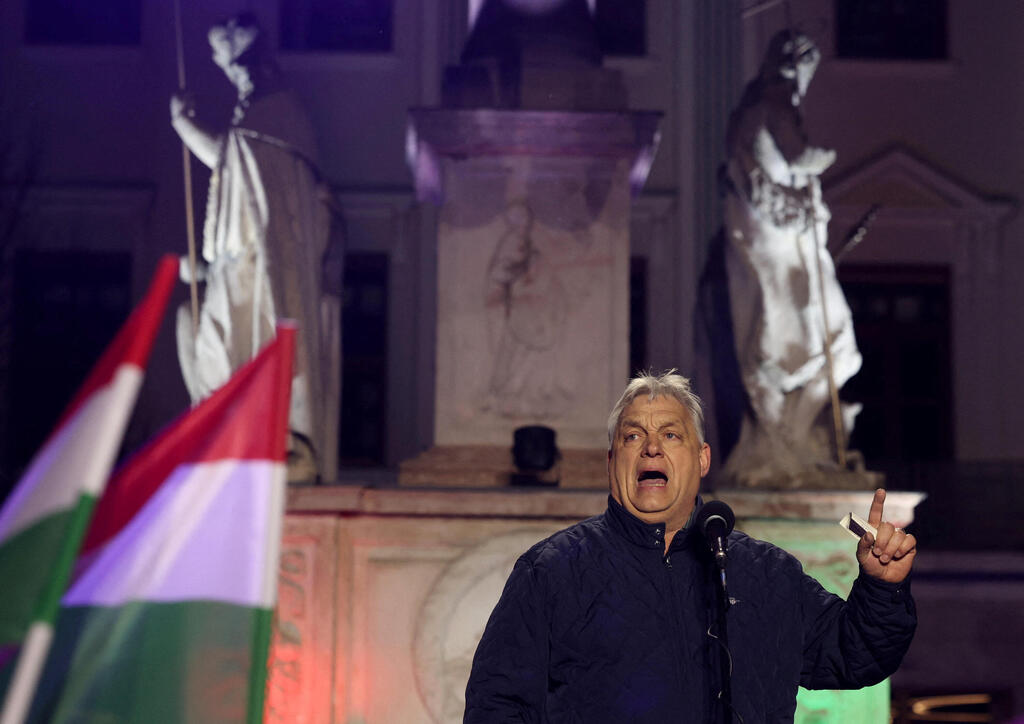
Viktor Orban
(Photo: REUTERS/Bernadett Szabo)
He frequently criticizes the European Union and Brussels’ lumbering bureaucracy, but he also wants a dramatic reset in Budapest’s relations with the bloc and a renewed rapprochement — among other reasons, so the EU will release tens of billions of euros in aid it has withheld from Hungary in recent years over rule-of-law concerns and Orban’s confrontational policies. Magyar wants to smooth things over and steer Hungary back toward a politics of agreement with the European Union.
Russia and Ukraine: This is where the tables turn. While Orban is widely viewed as Putin’s “Trojan horse,” Magyar has taken a more hawkish line toward Moscow. He has condemned the expansion of Russia’s invasion and supports Ukraine’s territorial integrity, blunting Orban’s favorite charge that his rivals are warmongers.
The Israeli angle: Is the Budapest-Jerusalem axis at risk?
From an Israeli standpoint, Magyar’s rise — and the possibility that he could win — raises a sensitive question. Orban is seen as one of Israel’s closest friends in the European Union, maintaining a tight alliance with Netanyahu and blocking anti-Israel moves in Brussels, including efforts to advance sanctions.
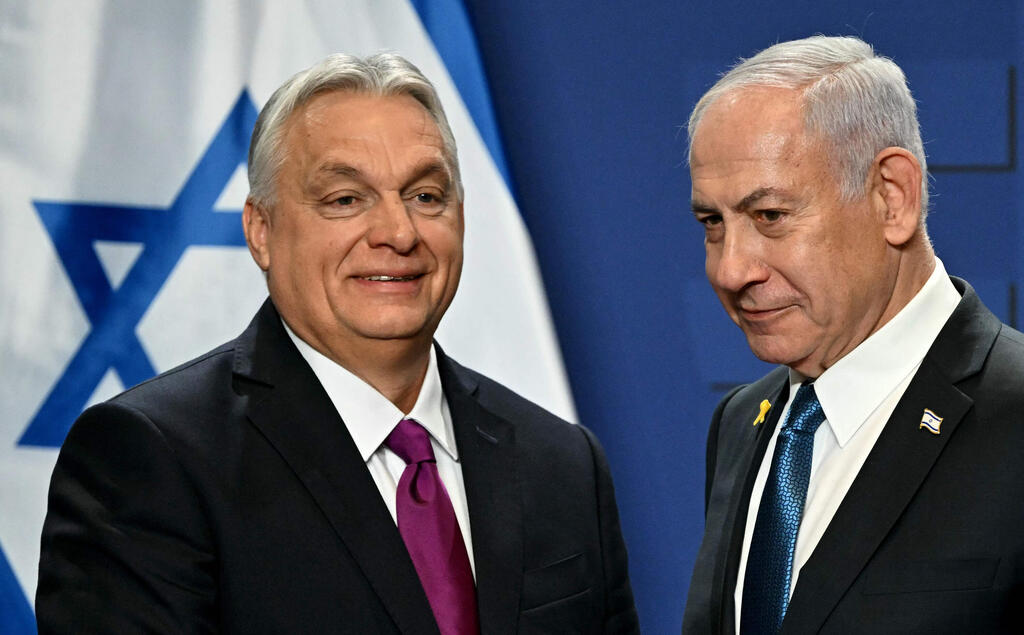
Orban and Prime Minister Benjamin Netanyahu
(Photo: Attila KISBENEDEK / AFP)
Magyar, for his part, has gone out of his way to project continuity and stability when it comes to Israel. As a right-wing conservative, he has said he sees Israel as a strategic partner and a democracy with the right to defend itself.
Still, the key difference between the two lies in style. Magyar wants to pull Hungary out of its diplomatic isolation in Europe. That means support for Israel would likely remain firm, but it may be less confrontational toward EU institutions.
Unlike Orban, who at times uses Israel as a battering ram against Brussels, Magyar would try to fold support for Israel into a broader European consensus — a shift that could actually strengthen the legitimacy of Hungary’s position.
Why him?
Past attempts to unseat Orban failed because they came out of liberal “Budapest bubble” politics. Magyar, by contrast, has been beating the bushes in small towns and villages — Orban’s strongholds. He uses national and religious symbols and talks about kitchen table issues such as the collapsing health care system and the soaring cost of living, all while proving that it is possible to be conservative and patriotic without being corrupt or pro-Russian. Voters — especially younger ones — like what they see and hear.
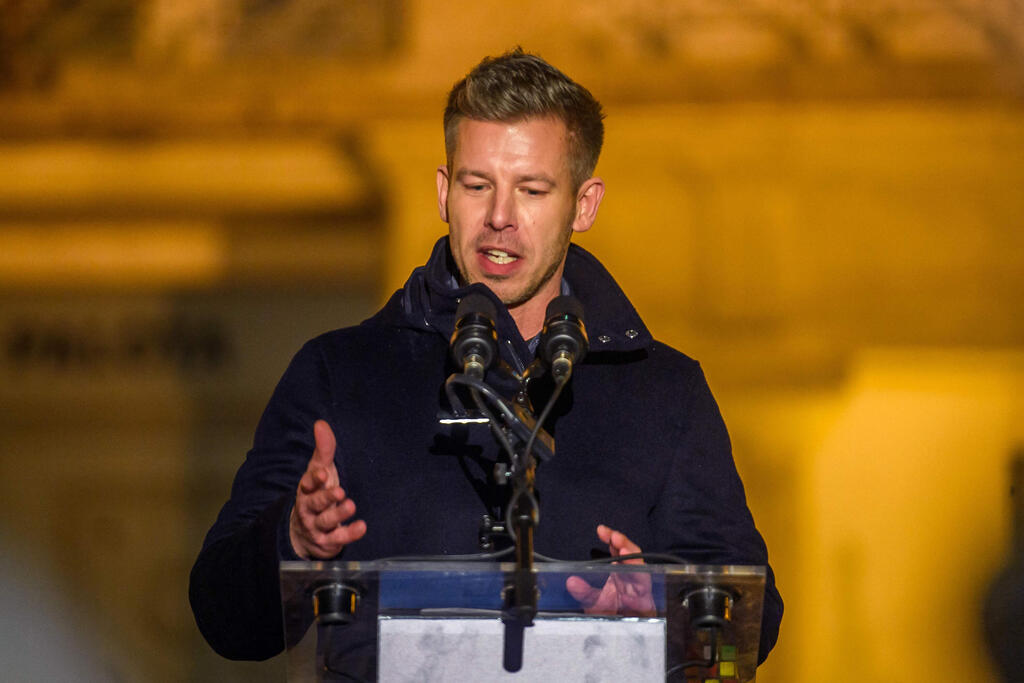
Magyar
(Photo: Ferenc ISZA / AFP)
Polls showing a steady lead of about 10 percentage points for Magyar’s party point to something unprecedented: Hungary’s mainstream right may have found itself a new home. On April 12, the question will not be “right or left,” but whether Magyar’s new right can bring down Orban’s old fortress. Hungary, the rest of the European Union, Russia and Israel will all be watching Sunday night’s results with bated breath.