

Israeli forces remained in southern Lebanon on Friday, with residents and local media reporting sporadic strikes even as President Donald Trump declared that the United States had barred Israel from carrying out further bombing there and pressed for a broader diplomatic opening.
According to Hezbollah-aligned Al Mayadeen, intermittent artillery fire was reported toward the southern Lebanese village of Kounine.
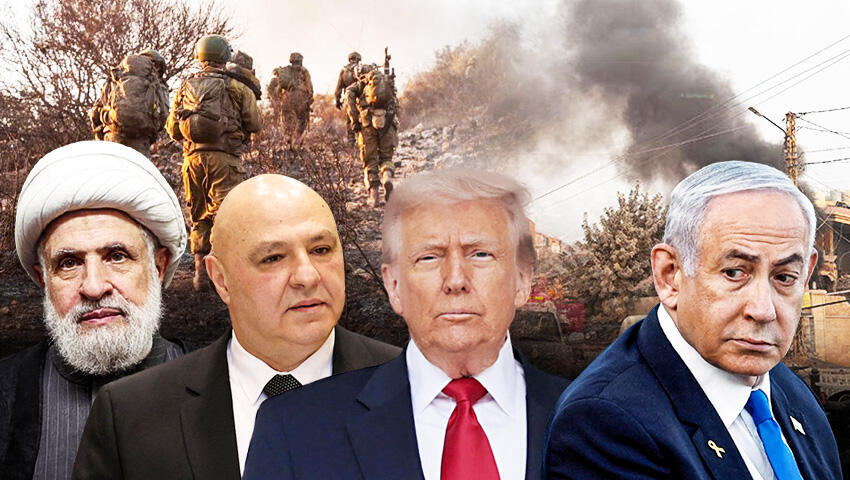
In a post on Truth Social, Trump said that a U.S. understanding with Iran was not tied to developments in Lebanon, but added that Washington would deal separately with Lebanon and Hezbollah.
“This deal is in no way subject to Lebanon,” Trump wrote, adding that the United States would work with Lebanon and address “the Hezbollah situation in an appropriate manner.” He then declared: “Israel will not be bombing Lebanon any longer. They are PROHIBITED from doing so by the USA. Enough is enough!!! Thank you!”
In a later post, Trump again separated Lebanon from the U.S.-Iran track and wrote: “Again! This deal is not tied, in any way, to Lebanon, but we will, MAKE LEBANON GREAT AGAIN!”
Shortly before Trump’s latest comments, Prime Minister Benjamin Netanyahu said in a recorded statement that Israel had agreed to a temporary ceasefire in Lebanon at Trump’s request.
“At the request of my friend President Trump, with whom we changed the Middle East and achieved tremendous gains, we agreed to a temporary ceasefire in Lebanon,” Netanyahu said. He said Israel was giving a chance to advance what he described as a combined political and military solution with the Lebanese government.
Netanyahu stressed that dismantling Hezbollah would not be achieved immediately. “It requires sustained effort, patience and endurance, and it requires prudent navigation in the diplomatic arena,” he said.
Trump announced Thursday that a 10-day ceasefire between Israel and Lebanon would begin at 5 p.m. Eastern time that day, or midnight in Israel and Lebanon, after what he called “excellent conversations” with Netanyahu and Lebanese President Joseph Aoun. The truce may be extended by mutual agreement and is meant to open the way to broader talks on a lasting peace and security arrangement. Trump also said he planned to invite Netanyahu and Aoun to Washington.
Despite the ceasefire announcement, the IDF has remained deployed in southern Lebanon. Israeli troops have positioned themselves along an anti-tank defense line stretching roughly 4 to 10 kilometers from the border and remain concentrated, especially around Bint Jbeil, where a small number of Hezbollah terrorists were said to still be present.
Israeli forces were described as holding defensive lines from the first row of demolished border villages to the Litani River, where the military maintains fire control and surveillance. Military officials, according to the report, say the troops are not pulling back but fortifying their positions.
Netanyahu, in his Friday video statement, said critics had asked what Israel had achieved in the north and answered that the country had made what he called “enormous gains.”
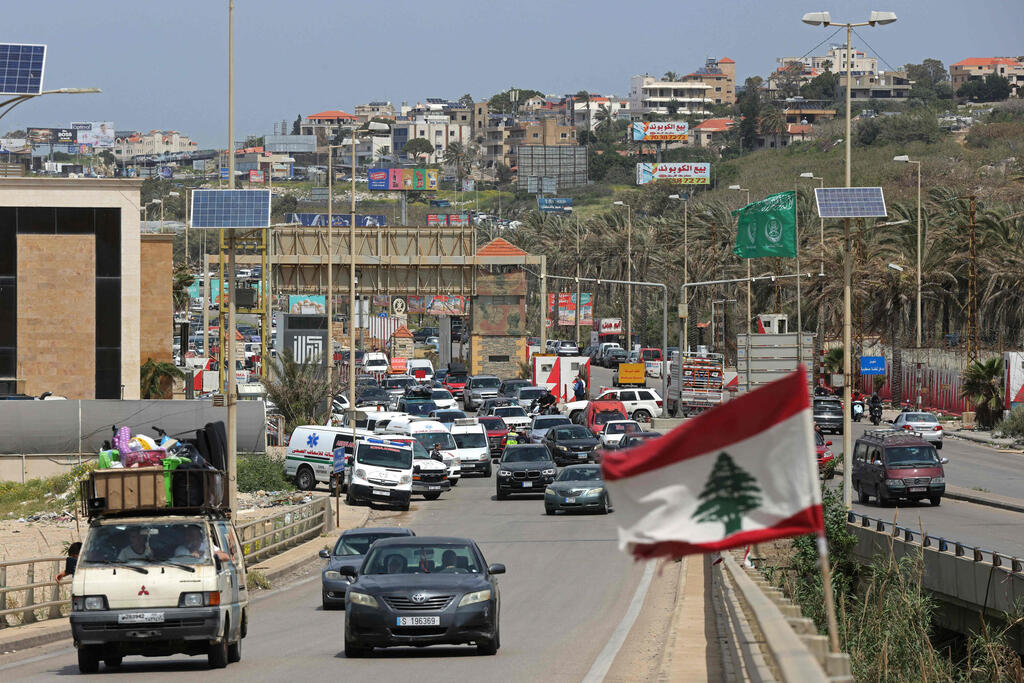
Sidon, southern Lebanon
(Photo: AFP)
He said Israel had faced two threats from Lebanon: a near threat of infiltration by thousands of terrorists and anti-tank fire on Israeli communities, and a more distant threat consisting of what he said were 150,000 missiles and rockets amassed over years by Hezbollah leader Hassan Nasrallah to devastate Israeli cities. “We removed both of these threats,” Netanyahu said.
He also said Israel had, for the first time, created a deep security zone along the entire northern frontier — from the Lebanese border to Mount Hermon, through the Golan Heights and to the Yarmouk area. “They wanted to encircle us with a ring of fire,” he said. “We created a ring of security.” Netanyahu said the zone had removed the immediate threat of invasion and anti-tank fire, and that Israeli troops were staying there to continue defending against those dangers.
On Hezbollah’s longer-range arsenal, Netanyahu said Israel had destroyed 90% of the missile and rocket stockpiles built under Nasrallah, killed Nasrallah himself and eliminated thousands of terrorists. “Hezbollah today is a shadow of what it was in Nasrallah’s heyday,” he said, while adding that Israel had not yet finished its campaign and was still planning further action against remaining rocket and drone threats.
He said Israel also remained committed to Hezbollah’s disarmament, but again cautioned that this would not happen overnight. If a formal agreement is reached, responsibility for that effort would shift to the Lebanese government, which has previously said it had demilitarized the south even though Israel says it has continued to find weapons caches there.
Netanyahu also pointed to what he called a diplomatic breakthrough, saying that for the first time in 43 years, representatives of Israel were speaking directly with representatives of Lebanon. “The road to peace is still long, but we have begun it,” he said. “One hand holds the weapon, and the other is extended for peace. One way or another, we will restore security to the residents of the north.”
The ceasefire terms outlined by the United States say Lebanon’s government is responsible for preventing attacks by armed groups such as Hezbollah, while Israel retains the right to self-defense but is to refrain from offensive operations in Lebanon during the truce.