

Prime Minister Benjamin Netanyahu warned Sunday that Israel could face a hostile U.S. administration in the future, potentially threatening its military assistance and strategic relationship with Washington, and said the country must develop new international alliances. At the same time, he announced plans to allocate approximately 450 billion shekels in additional defense spending over the next decade.
Netanyahu made the remarks during an event at which he presented his security doctrine, nine days before Israel's October 27 election. Just hours later, U.S. President Donald Trump publicly endorsed Netanyahu's reelection bid for the first time during the current campaign.
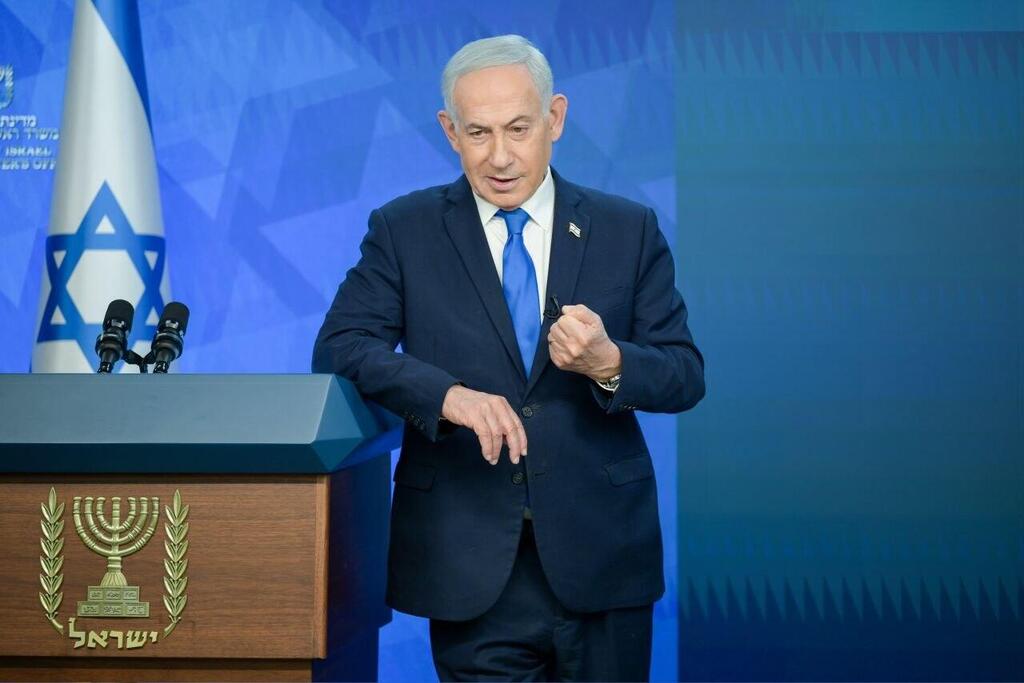
"In two years, a president, man or woman, could come to power who is very hostile to Israel," Netanyahu said. "How would you deal with that? How would you operate in relation to the United States? And beyond that, what solutions would be necessary?"
His remarks came against the possibility that a future U.S. administration could suspend military assistance to Israel or even join international sanctions and an arms embargo against the country.
Netanyahu said Israel must use the remaining years of Trump's presidency to strengthen its position while preparing for a potentially dramatic shift in American policy.
"First, we must do everything we can during these two years, and during the following two years, in the American arena, through good times and bad," he said. "The second thing is to create other alliances. That is what I am working on now with many countries in our region and outside it. India is not a small country, and there are many others."
He pointed to political developments in Latin America as another opportunity to expand Israel's network of allies.
"There is a major shift in Latin America, and there could be an enormous change in Brazil in just a few days," Netanyahu said. "We must expand our pool of alliances and develop capabilities that make us valuable to everyone."
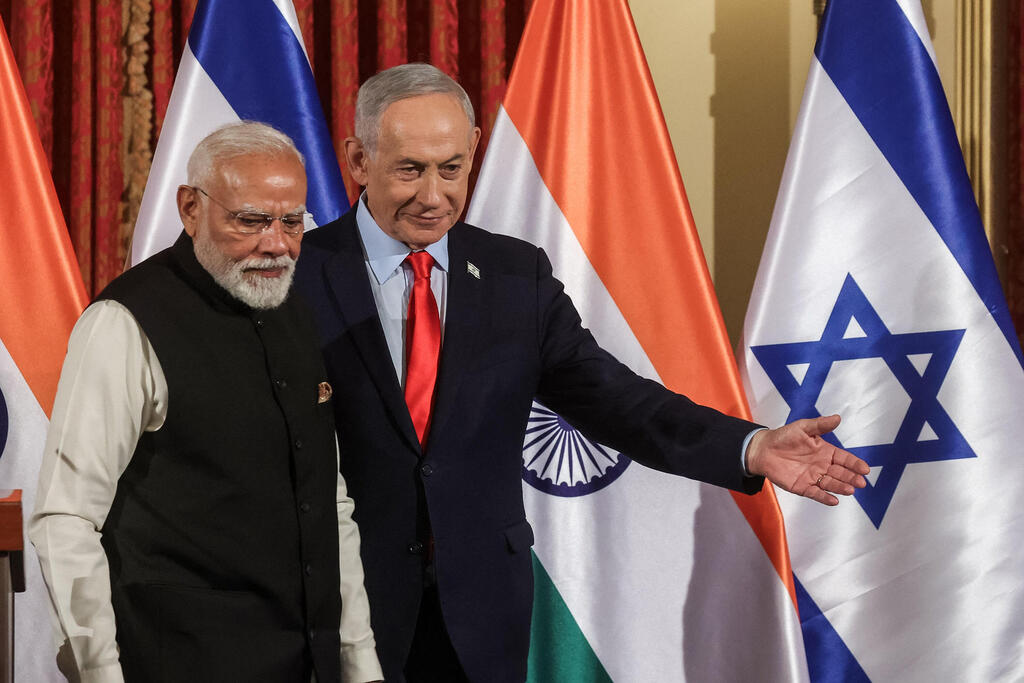
Netanyahu and Indian Prime Minister Narendra Modi
(Photo: GIL COHEN-MAGEN / POOL / AFP)
He also addressed Israel's strained relations with European countries, accusing some governments of publicly condemning Israel while continuing to seek cooperation with it.
"Countries that condemn us, and they have some nerve, by the way, condemn us and then come to us," he said. "I tell them: It depends on you. It depends on how you behave."
Netanyahu argued that Israel still possesses diplomatic leverage but would need considerable international expertise to navigate changes in Washington and other capitals.
In a separate social media post Sunday, Netanyahu appeared to acknowledge the possibility of a change in U.S. leadership, describing Trump's remaining time in office as an opportunity to advance Israel's strategic objectives.
"We have another two years of my friend President Trump's term, and this is exactly the time to complete our major missions on every front," he wrote.
On defense spending, Netanyahu said he intended to allocate approximately 450 billion shekels over the coming decade to strengthen Israel's military capabilities. An additional defense spending package of approximately 350 billion shekels had previously been agreed upon, according to earlier reports.
Addressing the future size of the Israel Defense Forces, Netanyahu said the military would have to expand, although technological advances, particularly artificial intelligence, could reduce some of its manpower requirements.
"As for a large army or a small army, the IDF definitely needs to grow," he said. "It will grow, but not at the rate we might have expected because AI reduces many requirements. Still, it needs to grow, and for that, of course, you need to allocate both funding and personnel."
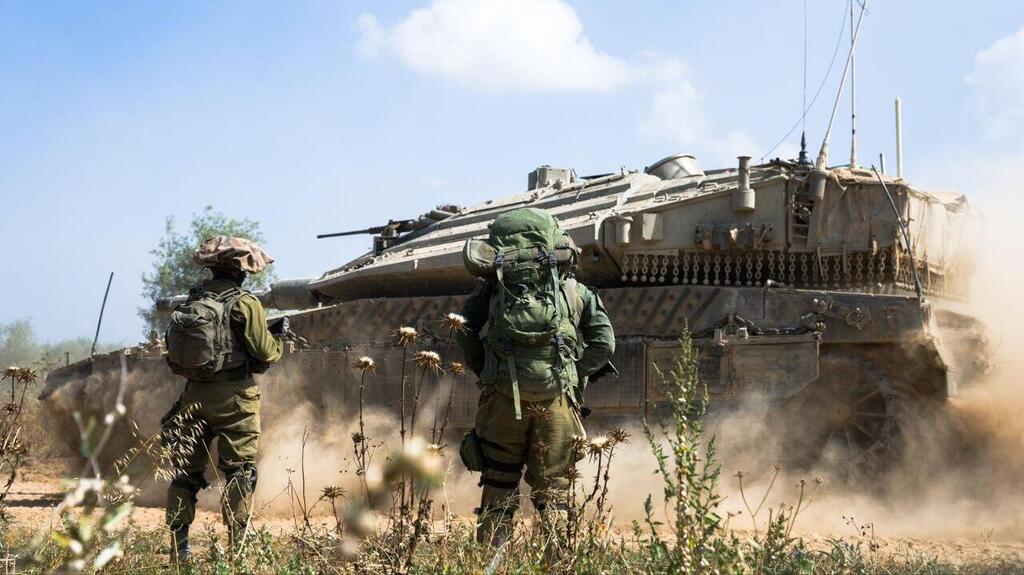
IDF tanks in Gaza
(Photo: IDF)
He added: "I am putting about 450 billion shekels into this so that we have the capabilities and the teeth."
Turning to Iran, Netanyahu said the regime remained a threat despite what he described as severe military and economic damage inflicted on it. He warned that Tehran would seek to rebuild its nuclear program, develop other unconventional weapons and restore its regional network of allied armed groups.
"Like cancer, this will not end as long as that regime remains in place," he said. "It will try to recover, renew its nuclear program, renew other unconventional weapons programs and rebuild the axis."
Netanyahu claimed that Israel had already accomplished approximately 90% of its objectives against Iran and described the Iranian leadership as severely weakened.
"Why aren't people taking to the streets? Because right now they are being killed. Simply killed. They are killing or wounding tens of thousands of their own people. That is the nature of this regime," he said.
He then explicitly stated that his policy was aimed at bringing down the Iranian government. "Our plan is very comprehensive and very determined, to bring about the downfall of the regime," Netanyahu said. "That is my plan. That is the directive I have given all the security agencies, and that is what will happen."
Netanyahu also discussed Israel's relationship with Russia, describing it as one based on competing national interests rather than consistent cooperation.
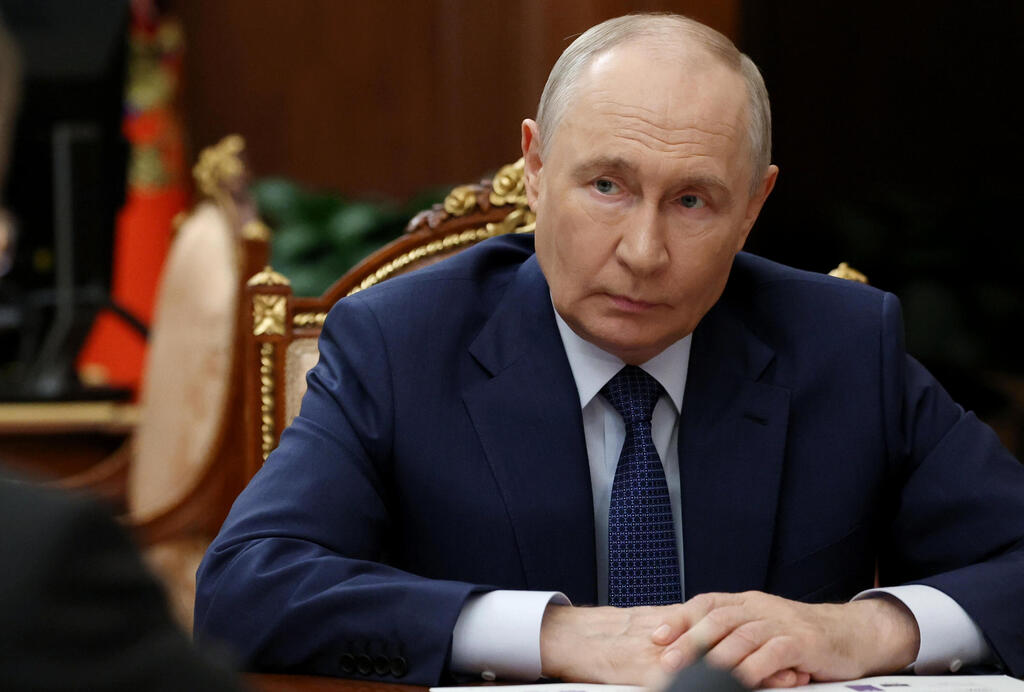
Russian President Vladimir Putin
(Photo: Vyacheslav Prokofyev, Sputnik, Kremlin Pool Photo via AP)
"We speak when necessary," he said. "But Russia has its interests, and we have the interests of the State of Israel, and they do not always overlap. Sometimes they even clash."
He cited Russia's cooperation with Iran during the war in Ukraine as an example of conflicting interests and also raised the issue of anti-Israel bot networks spreading what he described as extreme antisemitic content.
"We raise all these issues, and we do so very clearly," Netanyahu said. "And when there is an opportunity to cooperate, we do that as well."
Gadi Eisenkot, chairman of the opposition Yashar! party and a former IDF chief of staff, sharply criticized Netanyahu's presentation, describing it as an empty political exercise rather than a serious national security strategy.
"Nine days before the election and three years after the gravest failure and disaster in Israel's history, with every war front still open, Netanyahu decided to present his 'security doctrine' to the public," Eisenkot said.
"Two hollow pages, full of slogans that have nothing whatsoever to do with a security doctrine, reveal more than anything the strategic vacuum Netanyahu has left the State of Israel in and his disregard for the security of Israeli citizens."
Eisenkot accused Netanyahu of attempting to manipulate public opinion and spread fear ahead of the election.
"This is Netanyahu's method: manipulating perceptions, frightening people and trying to divert attention from the parade of lies and racism surrounding his campaign tonight," he said.