

A photo showing Prime Minister Benjamin Netanyahu’s personal phone with its camera covered by a sticker was circulated widely Tuesday on social media and Arabic news sites, drawing praise from Iranian-linked hacking groups and prompting debate about digital security and espionage.
Images of Netanyahu’s phone began spreading online in the Arab world, particularly in Iran, where some users lauded the Iranian hacker group Handala for its work in compromising communications of senior Israeli officials, such as former prime minister Naftali Bennett and Netanyahu's chief of staff Tzachi Braverman.
Gallery
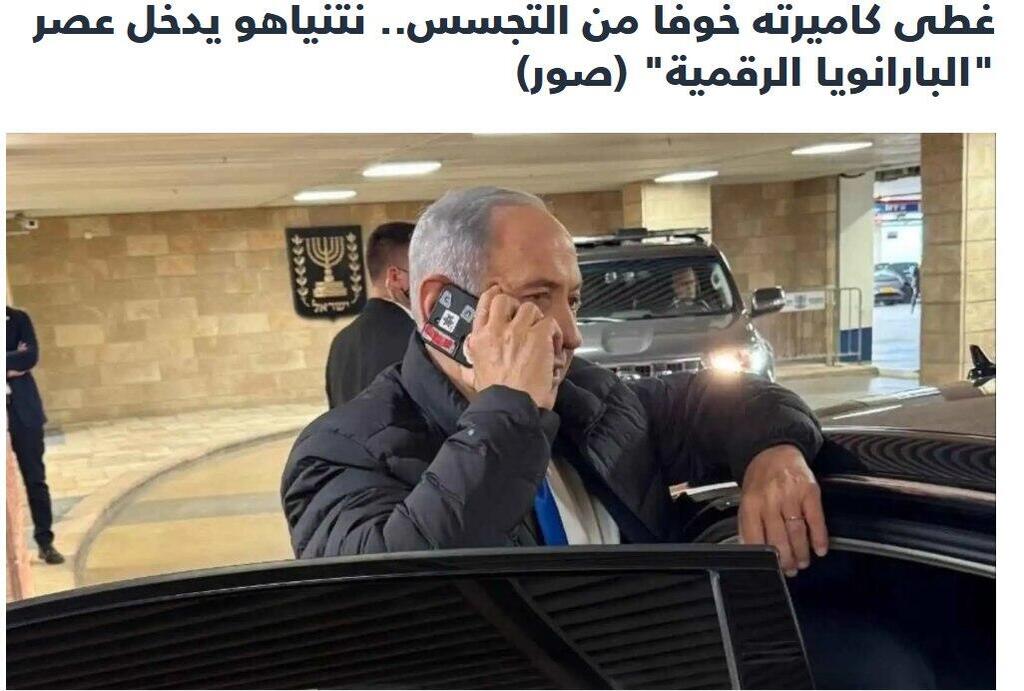
Prime Minister Benjamin Netanyahu speaks on his phone as he arrives for a meeting in Jerusalem, with a sticker covering the phone’s camera as part of heightened security precautions amid concerns over digital espionage
The Iranian state‑linked Press TV channel shared the photo on its Telegram page with the caption “Handala cyber resistance group clearly has an employee of the month.”
Israeli security officials and online commentators said the camera cover is a precautionary security measure intended to prevent unauthorized photography or remote spying, not evidence of a successful hack.
The move followed tightened security protocols in the Prime Minister’s Office, where all mobile phones entering the building now undergo similar protective measures. The policy also applies to phones belonging to Cabinet ministers and advisers attending government meetings.
Egyptian news site Youm7 also published the photo, questioning why Netanyahu covered his phone camera and noting that it comes after hacks on the phones of Israeli officials in recent weeks and months. The Emirati site Aram News headlined its story: “He covered the camera for fear of spying: Netanyahu enters a period of digital paranoia.”
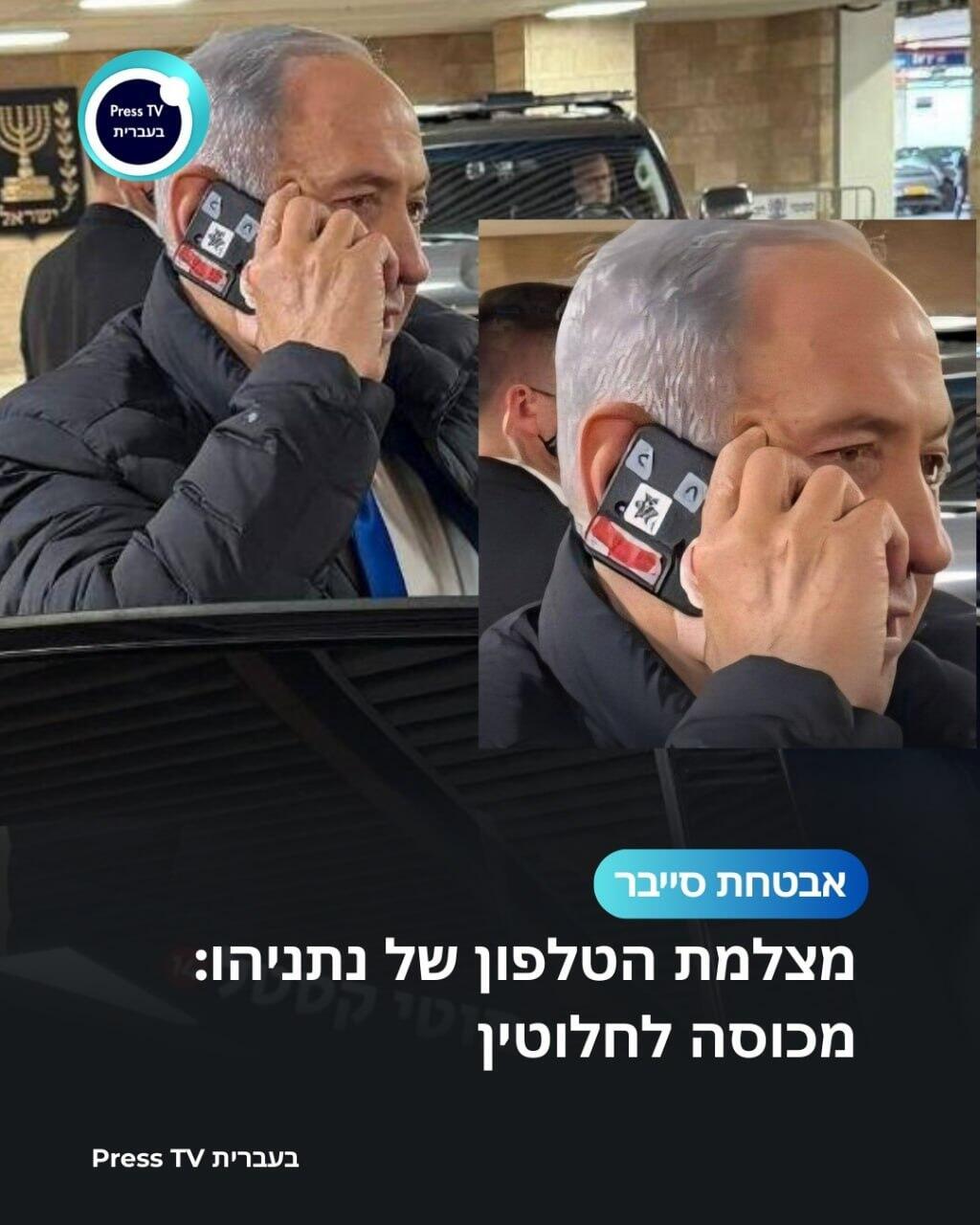
Composite image shared by Iran-linked Press TV's Hebrew-language Telegram channel
Jordanian site Rai Al‑Youm similarly asked why the prime minister covered his camera, saying the image “raises widespread debate about digital security and the threat of surveillance.” Sky News Arabia and Lebanese outlet Lebanon 24 picked up the photo and highlighted how it intensified public discussion about smartphone vulnerabilities, data leaks and privacy risks in the digital era.
Earlier this month, the Iranian hacker group Handala claimed it had breached the phone of former justice minister Ayelet Shaked, releasing photos of her in military uniform, with family, at social events and in work meetings. In the weeks prior, the group said it also accessed the phone of Netanyahu’s chief of staff, Tzachi Braverman, and the Telegram account of former prime minister Bennett.
Covering smartphone camera lenses with a physical sticker is a low‑tech method aimed at countering high‑tech threats such as remote spyware. In modern cyberwarfare, a device in the pocket of a strategic target can be turned into a surveillance tool; “zero‑click” attacks can activate cameras and microphones without any visible signs on the screen, such as indicator lights or alerts.
Security experts say a physical cover acts as a final fail‑safe barrier. Even if attackers manage to bypass all software defenses, the visual information captured will be darkness, preventing the collection of sensitive images of meetings, documents or exact locations.