

Iran and Oman are still working out details of a possible agreement governing navigation through the Strait of Hormuz, a senior Iranian source told Reuters on Wednesday, contradicting an earlier claim by an Islamic Revolutionary Guard Corps spokesperson that the two countries had reached an agreement on shipping routes.
It was not immediately clear how advanced the negotiations were. Iranian officials said earlier this month that an agreement over the strategic waterway was close.
Qatar, meanwhile, is also holding talks with Tehran. Qatari Foreign Ministry spokesperson Majed Al Ansari said in an X post that Prime Minister and Foreign Minister Sheikh Mohammed bin Abdulrahman Al Thani would travel to Tehran on Thursday for meetings with senior Iranian officials aimed at discussing ways to “de-escalate tensions & create the conditions conducive to dialogue.”
“The visit comes in line with the State of Qatar’s firm position that the diplomatic path is the best means of resolving differences & promoting security & stability in the region,” Al Ansari said. He said the talks would also address freedom of navigation through the Strait of Hormuz and “the need for it to return to the status quo prior to February 28.”
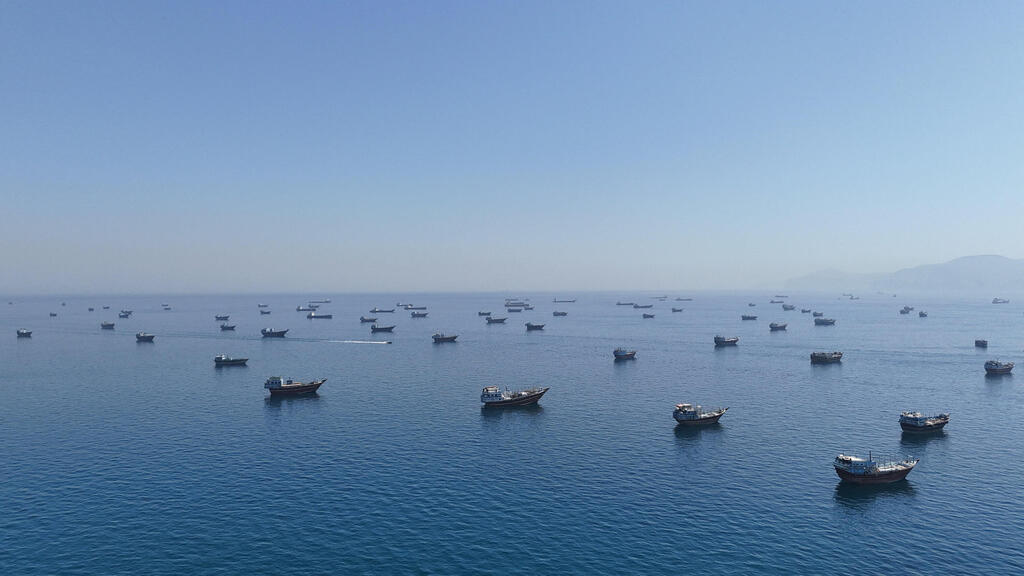
The strait, a narrow waterway between Iran and Oman connecting the Persian Gulf with the Gulf of Oman and Arabian Sea, is one of the world’s most important energy corridors.
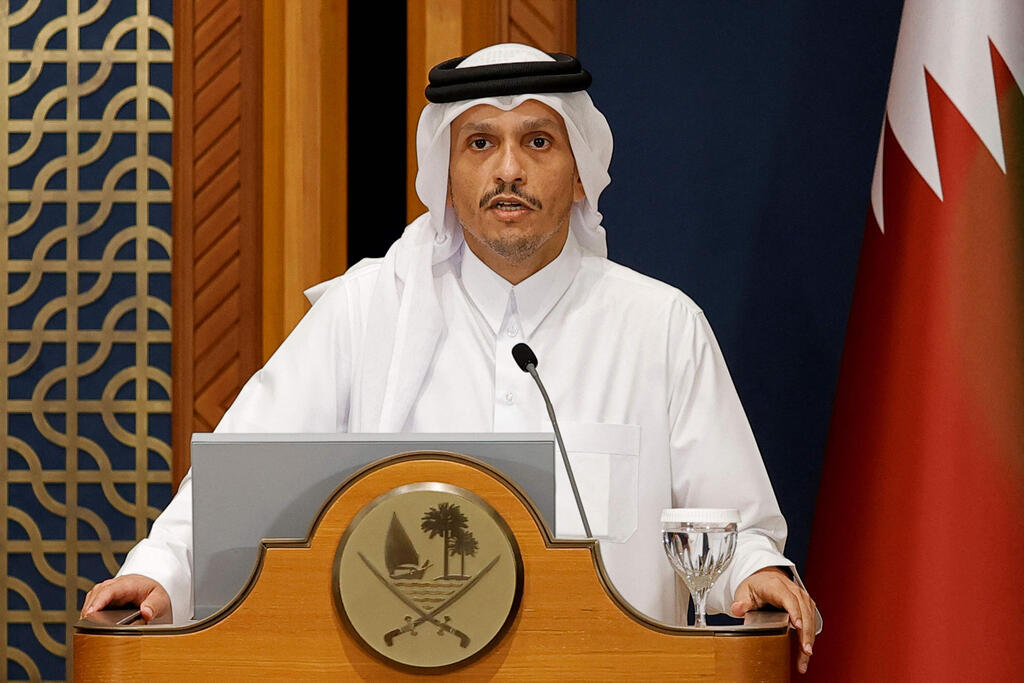
Qatari Prime Minister and Foreign Minister Sheikh Mohammed bin Abdulrahman Al Thani
(Photo: Karim JAAFAR / AFP)
Earlier Wednesday, IRGC spokesperson Hossein Mohebbi blamed the United States for delaying negotiations and warned that Iran would keep the strait closed unless Washington accepted Tehran’s conditions.
“If the United States does not accept our conditions, the Strait of Hormuz will not open,” Mohebbi said.
“The Strait of Hormuz is under our control, and there are no enemy warships in the Gulf,” he said, claiming that all hostile warships were at least 400 kilometers, or about 250 miles, from the strait. “From a military and regional perspective, no vessel can cross this waterway without Iran’s permission and management.”
Mohebbi said political disagreements were natural but called for unity “in the face of the enemy.”
“If the United States stops creating obstacles and returns to the memorandum of understanding, we can open the Strait of Hormuz,” he said. “The maritime corridor near Oman is under our full control. We have reached an agreement with Oman concerning our portion of the waters of Hormuz and the distribution of its revenues.”
The senior Iranian source who spoke to Reuters, however, said details of an agreement were still being worked out.
U.S. President Donald Trump said Wednesday that he was in no rush to return to negotiations with Tehran.
“I have no time schedule, none. I’m not in a hurry. I have no time schedule at all,” Trump said. “I have no time schedule; whatever it takes.”
Trump said the United States was “winning very big” as Iran suffered from inflation and an economy he described as collapsing. Trump has maintained that the Strait of Hormuz is open and safe for shipping and said Wednesday that the United States would achieve “a big victory in Iran very soon.”
Oil prices, meanwhile, fell more than 1.5% for a third consecutive day amid signs of renewed mediation efforts aimed at ending the war.
Iran declares Persian-language media ‘military targets’
Iran’s armed forces separately said several Persian-language media outlets operating outside the country, including BBC Persian, had been placed on what it called its list of “military targets,” accusing them of working for U.S. and Israeli intelligence agencies.
Iranian armed forces spokesperson Abolfazl Shekarchi said the list also included Iran International and Radio Farda.
Iran designated BBC Persian and Iran International as terrorist organizations in 2022.
“These hostile media outlets are soldiers of Zionism and the United States, and they are on our list of military targets,” Shekarchi said, accusing them of being “directly connected to Mossad, the CIA and enemy intelligence services.”
“Iran’s armed forces do not consider them media outlets,” he added.
Iranian authorities have repeatedly accused Persian-language news organizations based abroad of cooperating with Israel and Western governments. Access to many such outlets is restricted inside Iran, where viewers often use virtual private networks, or VPNs, to circumvent government controls.
The latest threat comes amid a broader crackdown on information since the war involving Iran, Israel and the United States began Feb. 28.
In mid-August, Iranian authorities seized control of a YouTube channel that had broadcast interviews with Iranian intellectuals and public figures discussing current political and social issues, accusing it of spreading “misinformation.”
The program’s founder and host, who lives in Iran, was also questioned by authorities and later released on bail.