

Eliyahu Ben Zion, a 70-year-old Israeli-born resident of Sydney, survived the deadly terror attack at Bondi Beach that left 15 Jews dead during a Hanukkah celebration. Speaking days after the massacre, he said he never believed such a scenario could unfold in Australia.
“In my darkest nightmare, I never imagined this would happen here,” Ben Zion said. “Australia was paradise. I haven’t slept for two days. I can’t close my eyes. The government here sold the Jews to the terrorists.”
Footage recorded by Eliyahu Ben Zion during the massacre
(Video: Eliyahu Ben Zion)


Ben Zion moved to Australia nearly 50 years ago and runs an independent business. Though he built his life in Sydney, he said he remained deeply connected to Israel, visiting every year between June and Simchat Torah.
During the terror attack, Ben Zion recorded harrowing video footage as gunfire echoed around him. In the recording, he can be heard describing the terrorist advancing toward him and his relatives. “He’s shooting at us. He’s right here next to us. He’s alone. Where the hell is the police?” he says. Moments later, he adds, “He’s loading more bullets. He’s getting closer. Go forward. He’s advancing toward us and there’s no police here.”
Sydney police later confirmed that the attackers were a father and son, Sajid Akram, 50, who was killed by police, and his son Naveed Akram, 24, who was critically wounded. Authorities said the father legally owned six firearms and that at least three long rifles were used during the attack.

Ben Zion disputed the official account, claiming he saw more gunmen. “I saw four terrorists with shotguns,” he said. “Three were on the bridge and one was about 200 meters from us. I didn’t lie down for a moment. I was looking for police and didn’t find any. I looked for a weapon and couldn’t find even a stick.”
He described seeing a terrorist reload as a police officer ran past him and hid behind a car instead of confronting the gunman. “A police officer was shot in the arm,” he said. “I told another Israeli, ‘Let’s do something,’ but I was completely helpless.”
His wife hid under plastic chairs and called their son, who later came to help evacuate them. “When I stood up, I saw two people behind me who had been shot, and I also saw the rabbi who had taken a bullet,” Ben Zion said. “My friend and I saw four terrorists. Why are they saying there were only two?”
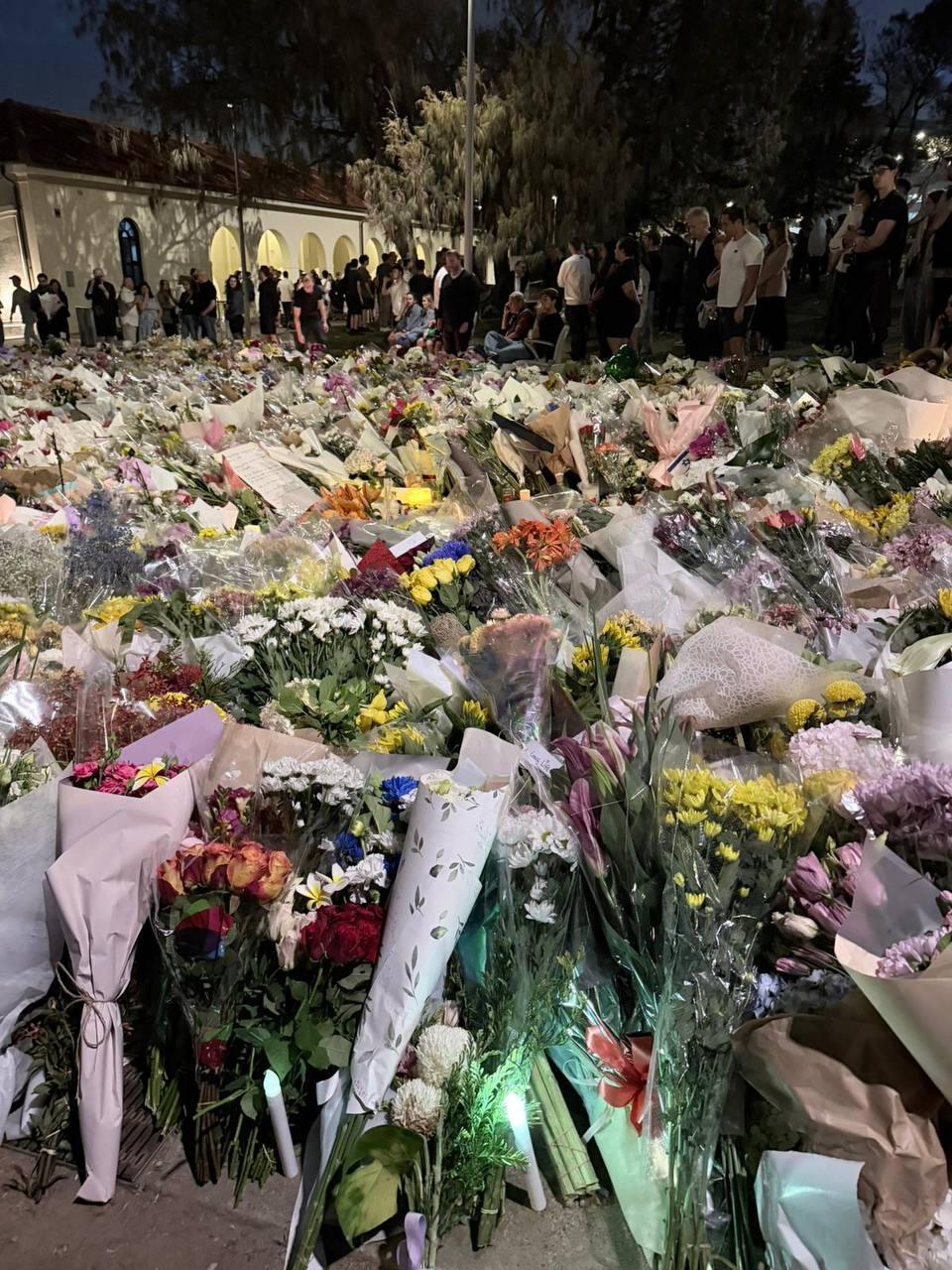
Wreaths and candles were placed at the site of the Bondi Beach attack
Ben Zion sharply criticized Australian Prime Minister Anthony Albanese. “Netanyahu was right in everything he said to him,” he said. “Ten years ago, people who threatened to blow up a plane got 30-year prison sentences here. Albanese’s naivety doesn’t interest him. To win votes from Arabs and immigrants, the feeling in our community is that Jews don’t matter to him. He sold the Jews to the terrorists.”
In the days following the attack, thousands gathered quietly at the scene at Bondi Beach, laying flowers and lighting candles until a large memorial formed. Local rabbis held a public lighting of the third Hanukkah candle, attended by Jews and non-Jews alike.
Youth groups sat on the ground singing softly by candlelight, scenes that reminded many Israeli expatriates of moments of collective mourning in Israel’s past. Members of a church choir from northern Sydney later arrived to sing in solidarity with the Jewish community.
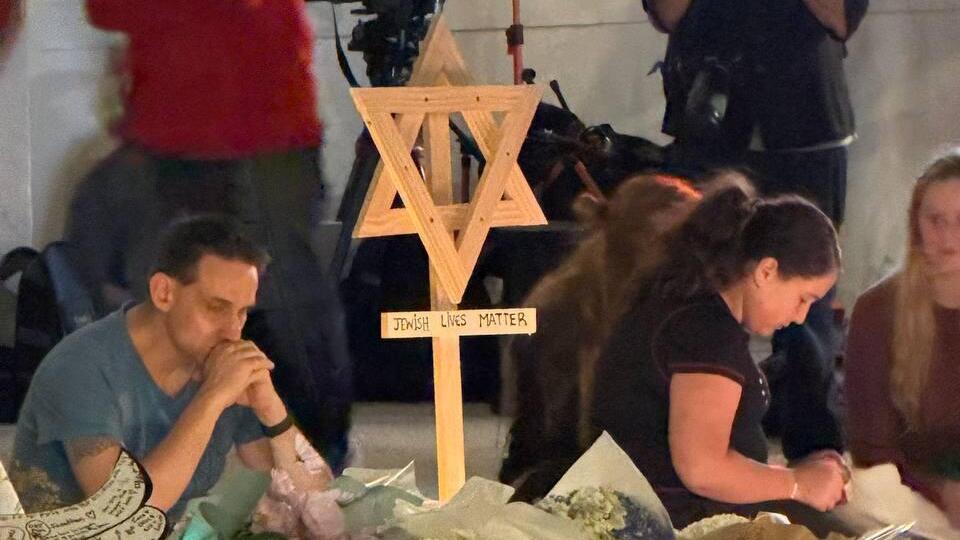
Rotem, an Israeli who moved to Australia several years ago, said she came to the beach to stand with the community. “We stood for a moment of silence again tonight,” she said. “This is our way of showing solidarity with a community that lost everything within minutes.”
She added that many Australians not connected to the Jewish community approached her to express condolences. “The shock is enormous,” she said. “For many Australians, this is a moment of national rupture. There have been mass killings here before, but not a terror attack and not one targeting a specific community.”
Jonathan, another Australian resident, said the past days felt different from anything before. “Australians are embracing us, and themselves,” he said. “Everyone understands something must change. The real question is whether that change will last.”
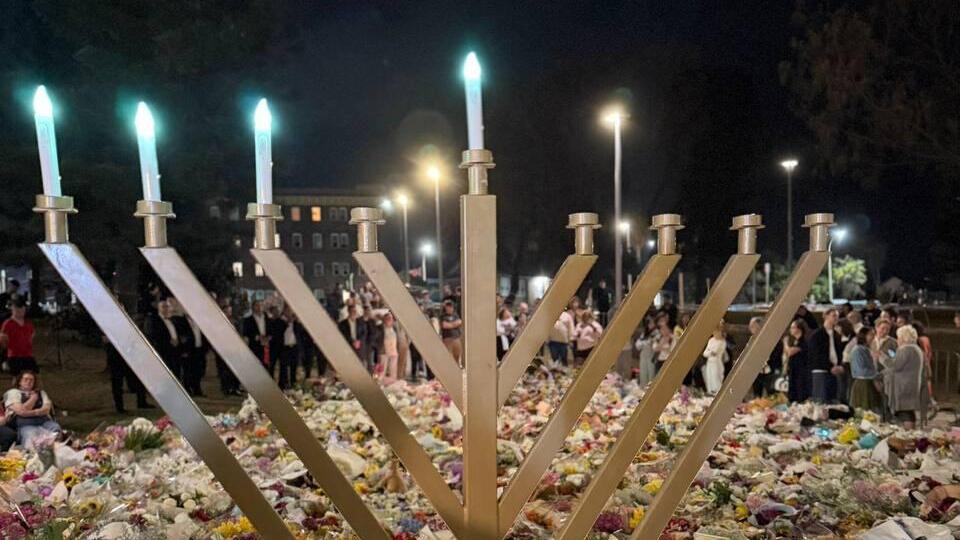
In Melbourne, Australia’s second-largest city and home to a Jewish population similar in size to Sydney’s, Hanukkah candle-lighting events were held for the first time since the attack, with heightened security. Attendance was lower than in previous years, as many chose to stay home out of fear.
“Especially now, it’s important for us to go out,” said Jacob, a local community member who attended with his family. “We need to show we’re not afraid, that the terrorists who murdered members of our community did not win. The light of Hanukkah wins.”
Among the wounded still hospitalized is a 14-year-old girl named Chaya, who was shot during the attack. According to members of United Hatzalah’s resilience delegation, after being wounded, she lay on top of two small children whose mothers had been killed, shielding them and saving their lives.
“She is a 14-year-old hero,” said Sharon Slater, a senior psychologist with United Hatzalah’s psychotrauma unit. “She was shot in the leg after covering the children. She underwent surgery this morning. There were many heroes at this event, and we will hear about them in the coming days.”
Slater said many victims were in shock that such an attack could happen in a place like Sydney. “In trauma, time fragments,” she said. “Our work is to help rebuild the narrative, to highlight strength and resilience so that what remains in memory are the moments of courage and control.”
United Hatzalah officials said they have handled more than 100 calls for psychological support since arriving in Sydney, assisting injured victims, bereaved families, community leaders and educators.
As Australia continues to mourn, Jewish communities across the country say they are determined to grieve, remember and stand firm, even as deep questions remain about security, accountability and the future.